Performance Standards of ECDIS
1. Use of Official Electronic Navigational Charts (ENCs)
ECDIS must use official ENCs approved by hydrographic authorities.
🔹 Simple meaning:
Only government-approved digital charts can be used for navigation.
2. Accurate Ship Position Display
ECDIS must show the ship’s position accurately using GPS or other sensors.
🔹 Simple meaning:
The ship’s location on the screen must match its real position at sea.
3. Continuous Real-Time Operation
ECDIS must work continuously during the voyage.
🔹 Simple meaning:
The system should always stay active while navigating.
4. Route Planning and Monitoring
ECDIS must allow officers to plan routes and monitor them in real time.
🔹 Simple meaning:
You can plan a voyage in advance and then track the ship as it follows the route.
5. Safety Settings and Alarms
ECDIS must provide alarms for:
- Shallow water
- Crossing safety contours
- Chart objects ahead
- Deviation from planned route
🔹 Simple meaning:
ECDIS warns the navigator before danger occurs.
6. Display of Navigation Information
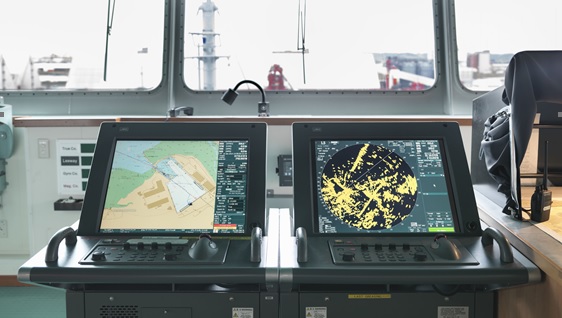
ECDIS must clearly show:
- Charts
- Own ship position
- Radar and AIS targets (if connected)
- Depth and navigational marks
🔹 Simple meaning:
All important navigation data must be easy to see on one screen.
7. Standard Display and Symbols
ECDIS must use standard colours, symbols, and layouts.
🔹 Simple meaning:
All ECDIS systems look and behave similarly, reducing confusion.
8. Updating of Charts
ECDIS must support regular chart updates.
🔹 Simple meaning:
Charts must stay current to reflect new dangers or changes.
9. Sensor Integration
ECDIS must connect with ship sensors such as:
- GPS
- Gyro compass
- Speed log
- Radar and AIS
🔹 Simple meaning:
ECDIS gathers information from other equipment to work accurately.
10. Backup Arrangement
ECDIS must have a backup system.
🔹 Simple meaning:
If the main ECDIS fails, another system or paper charts must be available.
11. Error Indication and Alarms
ECDIS must give warnings if:
- Sensor data is lost
- Charts are missing
- Position accuracy is reduced
🔹 Simple meaning:
The system alerts the crew when something is wrong.
12. User-Friendly Operation
ECDIS must be easy to use and allow simple menu navigation.
🔹 Simple meaning:
Officers should operate it without confusion or difficulty.
13. Recording and Playback (Voyage Data Recorder Support)
ECDIS must record navigation data for review.
🔹 Simple meaning:
Past navigation data can be checked if needed.
14. Compliance with IMO and IEC Standards
ECDIS must meet IMO and IEC technical requirements.
🔹 Simple meaning:
The system follows international safety and quality rules.
ECDIS Carriage Requirements (Brief)
Under SOLAS:
- Passenger ships
- Cargo ships ≥300 GT on international voyages
must carry ECDIS or approved alternatives.
Advantages of ECDIS Performance Standards
- Improves navigation safety
- Reduces grounding risk
- Enhances situational awareness
- Supports efficient voyage planning
- Standardizes navigation worldwide
Limitations of ECDIS
- Depends on correct settings
- Requires proper training
- Should not replace visual lookout
- Needs regular updates
Therefore, ECDIS must always be used together with radar, AIS, and proper lookout.
Conclusion
The performance standard of ECDIS onboard ship ensures that electronic navigation remains safe, accurate, and reliable. By following these standards, ECDIS helps navigators plan routes, monitor voyages, and avoid dangers effectively. However, safe navigation always depends on trained officers using ECDIS correctly and responsibly.
Disclaimer:This article is provided for general educational and informational purposes only. Although care has been taken to explain the ECDIS performance standards clearly, actual requirements and system features may vary depending on vessel type, flag state, company Safety Management System (SMS), and updates to IMO or IEC regulations. Readers should always consult official SOLAS conventions, IMO circulars, manufacturer manuals, and company procedures before operating ECDIS onboard ships. The author and website are not responsible for any actions taken based on this information.