Introduction
Fire remains one of the most dangerous emergencies at sea. When flames erupt onboard, the crew must act fast and rely on specialized safety gear. Among the most essential firefighting tools is the Fireman’s Outfit Onboard Ships. The SOLAS (Safety of Life at Sea) Convention makes it mandatory for every vessel to carry this equipment to ensure that trained seafarers can combat fires safely and efficiently.
What Is a Fireman’s Outfit?
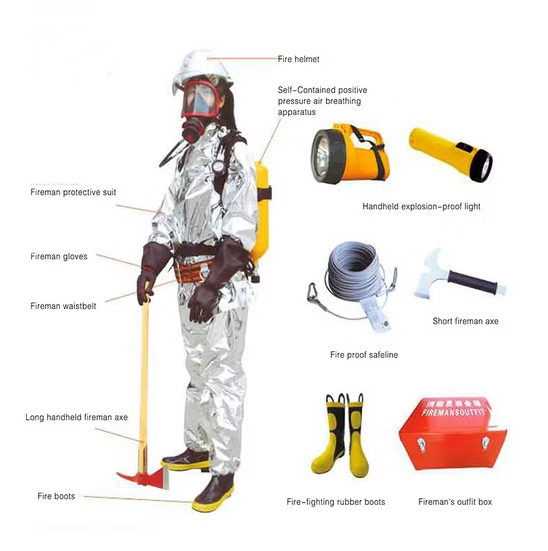
A Fireman’s Outfit is a complete set of protective gear that shields crew members from flames, smoke, and intense heat during fire emergencies. It enables seafarers to approach hazardous areas, carry out rescues, and extinguish fires without sustaining injuries.
The International Maritime Organization (IMO) outlines the design and quantity of this outfit under SOLAS Chapter II-2, Regulation 10, and the Fire Safety Systems (FSS) Code, Chapter 3.
Components of a Fireman’s Outfit as per SOLAS
Each outfit includes the following essential components:
- Protective Clothing:
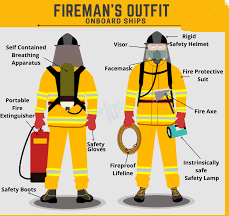
Flame-retardant clothing covers the entire body, protecting against heat, steam, and fire. It usually consists of a jacket, trousers, gloves, and boots. - Safety Boots and Gloves:
Non-conductive, oil-resistant boots and gloves provide insulation and flexibility, allowing safe movement during firefighting operations. - Fireman’s Helmet:
A sturdy helmet made of non-combustible materials like fiberglass or reinforced plastic shields the head and face. It also includes a visor for eye protection. - Fireman’s Axe:
The axe, equipped with an insulated handle, helps break open doors, panels, or compartments during rescue missions. - Safety Lamp:
The explosion-proof lamp offers visibility in smoky or dark environments, ensuring safe navigation during firefighting. - Lifeline:
A flame-resistant lifeline at least 30 meters long connects the fireman to a safe area, preventing disorientation in dense smoke. - Self-Contained Breathing Apparatus (SCBA):
The SCBA supplies breathable air for at least 30 minutes, enabling crew members to operate in smoke-filled spaces. Spare charged cylinders remain available for immediate replacement.
SOLAS Requirements for Fireman’s Outfit
Under SOLAS Chapter II-2, Regulation 10.10, ships must carry a specific number of fireman’s outfits based on type and size:
- All Ships:
Must carry at least two complete fireman’s outfits. - Passenger Ships:
Require a minimum of two outfits, plus one additional outfit for every 80 meters of ship length. These must be stored in separate, accessible locations. - Cargo Ships:
- Ships under 1,000 GT must carry at least two sets.
- Ships 1,000 GT or above must carry at least three sets.
- Tankers and Special Purpose Ships:
Must carry two additional sets, each with a spare charged SCBA cylinder.
Stowage of Fireman’s Outfit
To ensure quick access during an emergency, ships must store fireman’s outfits:
- In clearly marked lockers labeled “FIREMAN’S OUTFIT.”
- Away from machinery spaces and accommodation areas.
- Along with spare cylinders, safety lamps, and lifelines.
Proper stowage ensures that the gear remains dry, complete, and ready for immediate use.
Crew Training and Equipment Maintenance
- Training:
Crew members designated as firemen receive training to use the outfit effectively. Regular fire drills, as per the ISM Code and SOLAS, build confidence and speed in emergency response. - Maintenance:
Officers inspect and test the equipment weekly and monthly. They check air pressure, lamp functionality, and clothing integrity, recording results in the Safety Equipment Log Book. - Replacement:
Crew should immediately replace any damaged or expired gear. Clean and dry storage helps maintain the durability of fire-resistant materials.
Importance of Fireman’s Outfit Onboard Ships
The Fireman’s Outfit plays a crucial role in protecting lives and property at sea. It helps crew members:
- Enter burning or smoke-filled compartments safely.
- Perform rescue operations efficiently.
- Prevent the spread of fires.
- Comply with SOLAS and classification society regulations.
Without this equipment, even brief exposure to heat or smoke can result in severe burns or suffocation. Therefore, having properly maintained and accessible fireman’s outfits is essential for every ship’s safety system.
Conclusion
The Fireman’s Outfit Onboard Ships represents more than compliance — it stands as a lifeline during emergencies. By following SOLAS and FSS Code requirements, ships ensure that their firefighting teams remain fully prepared. Regular inspections, training, and readiness drills strengthen maritime safety and protect both crew and cargo.
Disclaimer:
This article aims to provide educational information about the Fireman’s Outfit Onboard Ships as per SOLAS and FSS Code. Always refer to official IMO documents, classification society rules, and vessel manuals for accurate and up-to-date compliance details.