Introduction
The sea can turn from calm to chaos in moments, and fire is one of the most critical emergencies a ship can face. During such incidents, smoke, toxic gases, and lack of oxygen make it nearly impossible to breathe. That’s why every vessel carries a Self-Contained Breathing Apparatus (SCBA) Set Onboard Ships — a vital piece of safety gear that protects seafarers from suffocation and allows them to fight fires or perform rescue operations effectively.
What Is an SCBA Set?
The Self-Contained Breathing Apparatus (SCBA) is a portable breathing device that provides the wearer with clean, breathable air from a high-pressure cylinder. Unlike standard respirators, the SCBA is independent of ambient air, meaning it allows safe breathing even in smoke-filled, oxygen-deficient, or gas-contaminated environments.
SCBA sets are mandatory equipment under the SOLAS (Safety of Life at Sea) regulations and are essential for the ship’s firefighting squad and rescue teams.
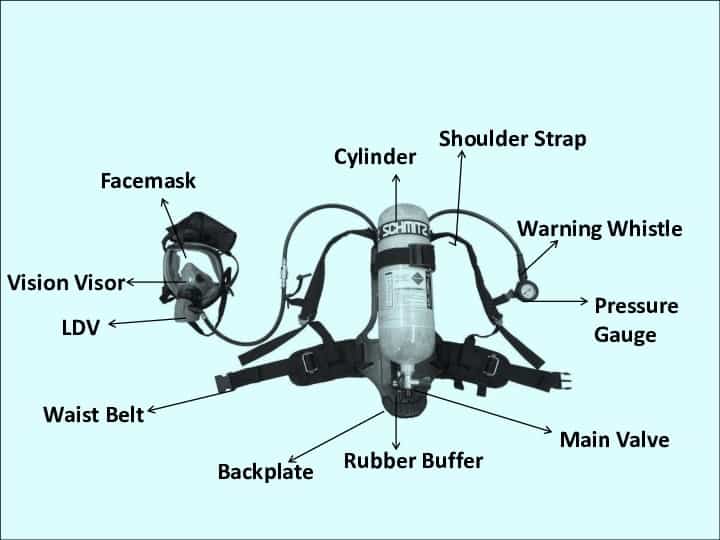
Components of SCBA Set Onboard Ships
- High-Pressure Air Cylinder:
- Usually made of steel or carbon-fiber composite.
- Stores compressed air at 200–300 bar pressure.
- Capacity typically ranges from 6 to 9 liters, providing about 30 to 45 minutes of air supply.
- Backplate and Harness Assembly:
- Designed to carry the cylinder comfortably on the wearer’s back.
- Made of flame-resistant and ergonomic material for easy movement during emergencies.
- Pressure Regulator and Demand Valve:
- Reduces cylinder pressure to a breathable level.
- The demand valve delivers air only when the wearer inhales, ensuring efficient usage.
- Full Face Mask:
- Provides a tight seal to prevent smoke or gases from entering.
- Equipped with a visor for clear vision and an internal speech diaphragm for communication.
- Pressure Gauge and Warning Whistle:
- Displays remaining air pressure.
- A low-pressure whistle sounds an alarm when air drops to around 55 bar, alerting the user to exit immediately.
- Carrying Case or Stowage Locker:
- SCBA sets are stored in dedicated, easily accessible lockers marked “SCBA” near firefighting stations.
Types of SCBA Used Onboard Ships
- Open-Circuit SCBA:
- The most common type used onboard.
- Exhaled air is released into the atmosphere.
- Closed-Circuit (Rebreather) SCBA:
- Exhaled air is purified, oxygen is replenished, and the same air is re-breathed.
- Used for longer-duration operations, such as in confined spaces.
Operation of SCBA Set Onboard
Step-by-Step Usage:
- Inspect the set — ensure the cylinder is full, and the pressure gauge reads at least 200 bar.
- Wear the harness securely and fasten the straps.
- Open the cylinder valve fully and check the low-pressure whistle.
- Fit the face mask tightly and ensure there’s no air leakage.
- Enter the affected area cautiously, keeping communication with the team.
- Monitor the pressure gauge regularly and exit before the whistle alarm sounds.
Proper donning and doffing drills are practiced during onboard fire drills as per SOLAS and ISM Code requirements.
Storage and Maintenance of SCBA Sets
- SCBA sets must be placed outside the engine room and accommodation in easily accessible lockers.
- Each locker must contain:
- 1 complete SCBA set
- 1 spare fully charged cylinder
- 1 face mask
- Maintenance routines include:
- Weekly: Pressure check and visual inspection for damage.
- Monthly: Air leakage test, cleaning of mask, and function test of warning whistle.
- Annually: Full servicing, hydrostatic testing of cylinders (as per maker’s recommendation).
All maintenance should be logged in the Fire Safety Equipment Record and verified by the Chief Engineer or Safety Officer.
SOLAS Requirements for SCBA Onboard
According to SOLAS Chapter II-2, Regulation 10:
- Every ship must carry at least two SCBA sets, and additional sets depending on vessel type and size.
- Passenger and tanker ships require extra sets and spare cylinders.
- The ship’s crew must conduct familiarization training and periodic fire drills involving SCBA use.
The FSS Code (Chapter 3) also outlines design and testing standards for SCBA performance.
Importance of SCBA in Firefighting and Rescue
- Protects from toxic gases like CO, CO₂, and smoke.
- Enables entry into confined or enclosed spaces safely.
- Allows firefighting teams to operate effectively in zero-visibility or high-heat areas.
- Reduces risk of asphyxiation, ensuring survival in life-threatening environments.
Without SCBA, even a trained firefighter can lose consciousness within seconds due to lack of oxygen or exposure to fumes.
Common Safety Tips for SCBA Users
- Never use a set below 200 bar pressure.
- Always test the whistle and demand valve before entry.
- Exit the area immediately when the whistle alarm activates.
- Clean and dry the face mask after every use.
- Participate regularly in fire drills and SCBA training sessions.
Conclusion
The SCBA Set Onboard Ships is not just another piece of equipment — it’s a lifeline during emergencies. It allows seafarers to breathe safely in smoke-filled environments and perform critical rescue and firefighting tasks. Regular maintenance, crew training, and strict adherence to SOLAS and FSS standards ensure that when danger strikes, the SCBA is ready to save lives.
Disclaimer:This article is written for educational purposes to help seafarers understand the SCBA Set Onboard Ships and its operation. Equipment specifications and procedures may vary by manufacturer and ship type. Always refer to the vessel’s Safety Management System (SMS), SOLAS, and manufacturer’s manual for official operational guidance.