Introduction
Fire is one of the most dangerous emergencies at sea. Because ships operate far from land-based firefighting support, onboard safety systems must work flawlessly. Among these, the Sprinkler System Onboard Ships plays a vital role in preventing fires from spreading and protecting both crew and cargo.
What Is a Sprinkler System?
A sprinkler system is an automatic, pressurized water-based firefighting setup that detects and suppresses fires in their early stages. When a fire raises the surrounding temperature, sprinkler heads open and discharge water directly onto the affected area, minimizing damage and reducing the chance of flashover.
Components of the Sprinkler System Onboard Ships
- Sprinkler Heads:
Heat-sensitive devices fitted to piping across accommodation areas, machinery spaces, and sometimes cargo holds. Each head operates independently, ensuring water is released only where needed. - Piping Network:
A network of pipes distributes pressurized water to sprinkler heads. It connects to a dedicated sprinkler pump and control valves. - Sprinkler Pump and Pressure Tank:
The pump maintains constant pressure in the system. A pressure tank partly filled with water and compressed air provides immediate discharge before the pump starts automatically. - Control Valves and Alarms:
The sectional control valve monitors flow and triggers an alarm when a sprinkler head activates. It also allows isolation of sections for maintenance. - Alarm Panel and Monitoring System:
The ship’s fire detection system connects to a control panel that sounds audible alarms and indicates which zone is affected.
How the Sprinkler System Works
- When a fire breaks out, the ambient temperature rises near the sprinkler head.
- The heat-sensitive bulb or fusible link inside the sprinkler head bursts at its rated temperature (usually 68°C–79°C).
- Water immediately sprays over the fire, cooling the area and cutting off oxygen supply.
- The pressure drop triggers the sprinkler pump, ensuring continuous water flow.
- Simultaneously, the fire alarm panel alerts the bridge and engine control room.
This automatic activation ensures the system works even if no crew member is present in the affected area.
Types of Sprinkler Systems Used on Ships
- Wet Pipe System:
The most common type, where the pipes remain filled with water under pressure. It reacts quickly but must be protected from freezing temperatures. - Dry Pipe System:
Used in cold areas, the pipes are filled with compressed air or nitrogen. Water enters only when a sprinkler activates. - Pre-Action System:
A hybrid system requiring both fire detection and sprinkler head activation before releasing water. This type prevents accidental discharge in sensitive areas like control rooms. - Deluge System:
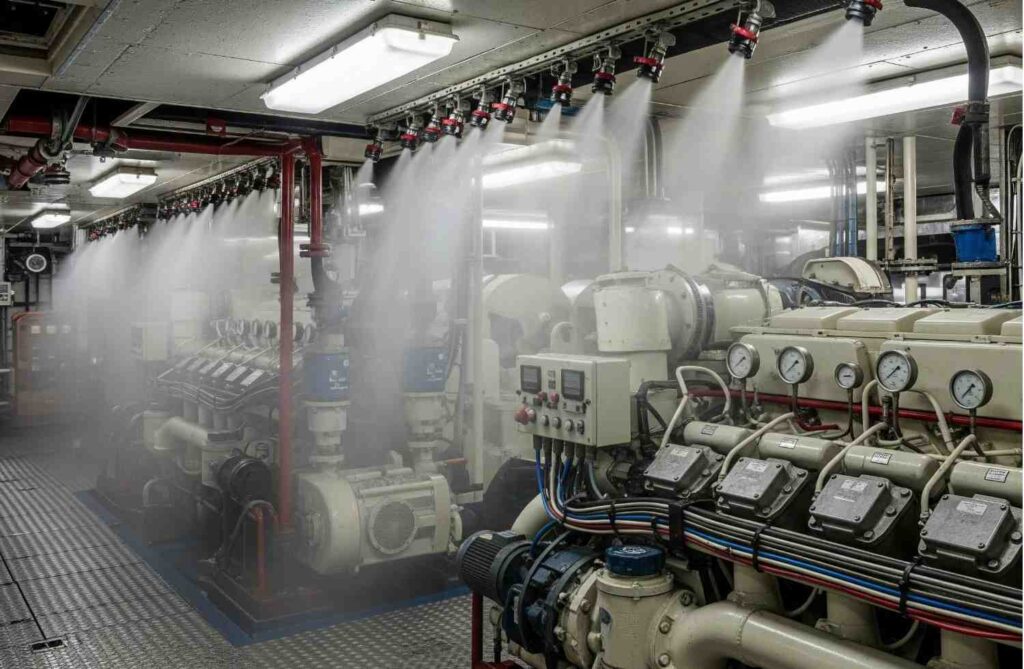
All sprinkler heads remain open, and water is released through all nozzles simultaneously when a fire detection signal activates. Commonly used in high-risk zones like engine rooms and pump rooms.
Areas Protected by Sprinkler Systems Onboard
- Accommodation spaces (cabins, corridors, mess rooms)
- Control rooms and navigation areas
- Galleys and pantries
- Cargo spaces carrying flammable goods (when required by SOLAS)
- Machinery spaces and workshops (via deluge or water-mist systems)
Maintenance and Testing Requirements
To ensure reliability, regular maintenance is mandatory:
- Weekly: Check pressure gauge readings and alarms.
- Monthly: Inspect pumps, valves, and verify automatic start of the sprinkler pump.
- Quarterly: Test alarm operation and verify flow switches.
- Annually: Conduct full-flow tests, check temperature bulbs, and examine corrosion or leakage.
All inspections must be recorded in the Ship’s Safety Equipment Log Book and certified by the Chief Engineer.
Advantages of Sprinkler Systems
- Provides automatic, immediate fire suppression
- Reduces damage and risk to human life
- Minimizes need for manual firefighting in early stages
- Helps comply with SOLAS Chapter II-2 and FSS Code requirements
- Increases insurance and safety ratings of vessels
Limitations
- Not suitable for electrical or oil fires without proper classification
- Water damage can affect sensitive electronic equipment
- Requires consistent maintenance and periodic inspection
Regulations and Standards
The International Maritime Organization (IMO) mandates sprinkler installations under:
- SOLAS Chapter II-2, Regulation 10 (Fire-fighting)
- FSS Code – Chapter 8 (Automatic Sprinkler, Fire Detection and Alarm Systems)
Ships carrying passengers or operating with large accommodation areas must have approved sprinkler systems with redundancy and alarm monitoring.
Conclusion
A well-maintained Sprinkler System Onboard Ship is a lifeline during fire emergencies. Its automatic operation gives the crew precious minutes to respond before flames spread. Regular testing, proper maintenance, and crew awareness ensure that this vital system works when it’s needed most. Investing time and care into fire protection isn’t just about compliance — it’s about saving lives and safeguarding maritime assets.
Disclaimer:This article is intended for educational and informational purposes only. It summarizes general principles of the Sprinkler System Onboard Ships based on standard maritime practices and SOLAS/FSS Code guidelines. Actual equipment, design, and procedures may vary depending on vessel type and classification society requirements. Readers and maritime professionals should always refer to official ship manuals, safety management systems (SMS), and IMO regulations for accurate operational guidance.