Fire Hydrant Onboard Ship as per FFA Code – A Complete Guide
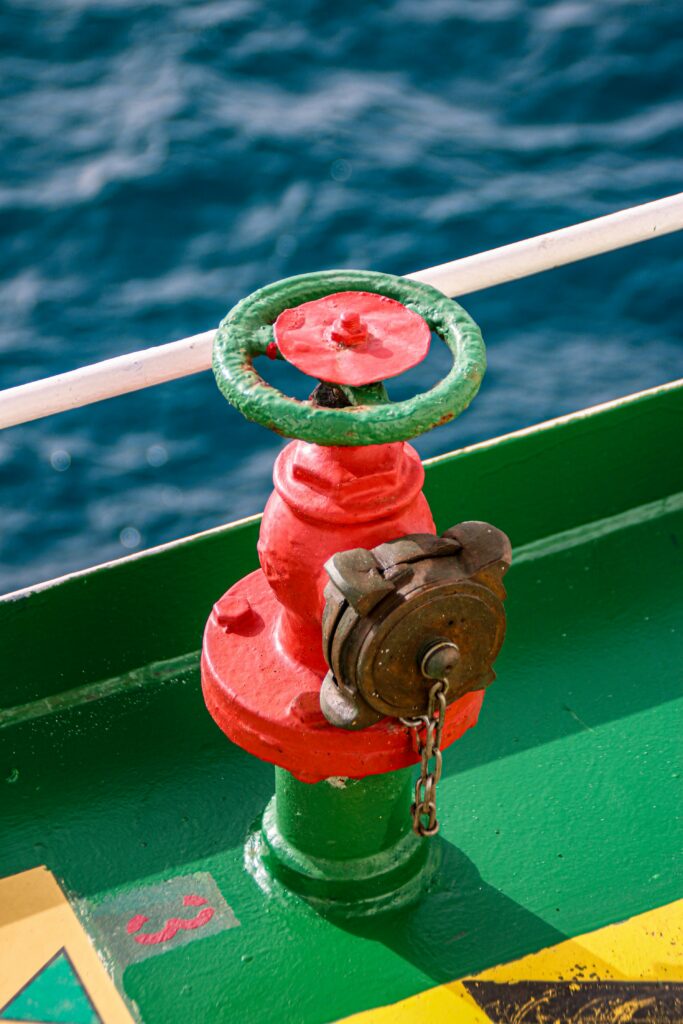
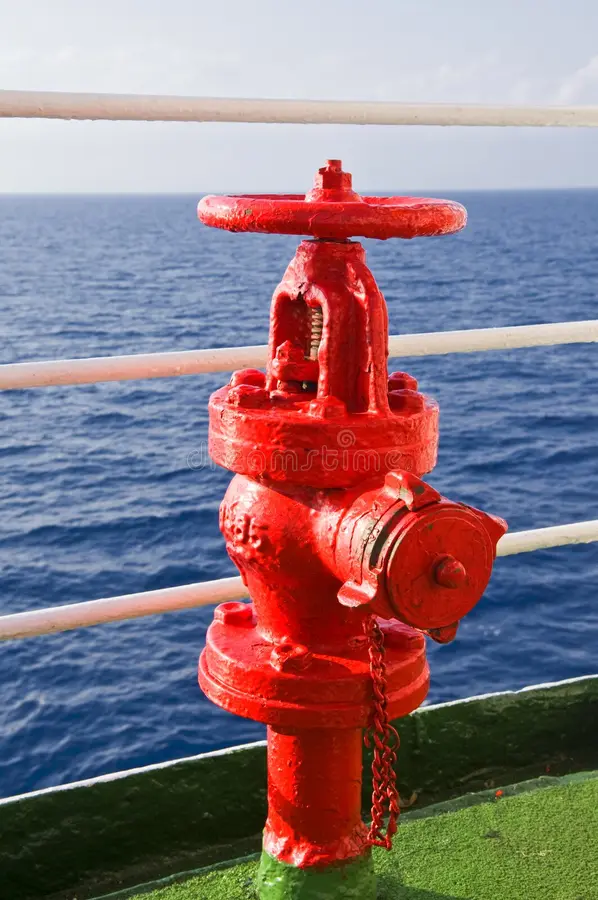
Fire Hydrant Onboard Ship playS a crucial role in shipboard firefighting arrangements. They allow the crew to quickly connect fire hoses and deliver seawater to the affected area. Moreover, the Fire Safety Systems (FSS) Code and SOLAS Chapter II-2 strictly define how many hydrants should be available and how they must function during an emergency.
Purpose of Fire Hydrants
Fire hydrants ensure an immediate supply of water to extinguish and control fires in any part of the vessel. Additionally, they help distribute firefighting resources conveniently throughout the ship.
Location Requirements
To enhance firefighting efficiency, SOLAS and the FSS Code specify the proper placement of hydrants:
✅ Available on open decks, engine room, accommodation, and cargo areas
✅ Well-spread so every space can be covered using two hoses connected to the nearest hydrants
✅ Protected from mechanical or heat damage
✅ Reachable during an emergency without obstruction
Furthermore, hydrants must be painted red for clear identification.
Pressure and Pumping Requirements
A fire hydrant works only if the water supply remains reliable. Therefore:
✅ Fire pumps must deliver adequate pressure at all hydrants simultaneously
✅ Crew should confirm minimum jet reach during testing
✅ The system should work even if one fire pump fails
This ensures continuous firefighting capability in worst-case situations.
Valve and Coupling Standards
Hydrant valves and couplings need to match the ship’s hose connections. Also, they must allow quick opening and closing to maintain water control safely during operations.
Number of Hydrants
The total count depends on:
- Ship type (tankers, cargo, passenger)
- Length and size of compartments
However, every hydrant must cover all parts of the area without gaps when using required hoses and nozzles. Thus, proper planning during ship design is mandatory.
Maintenance and Inspection
Consistent care increases reliability:
🔹 Monthly visual inspection for leaks and corrosion
🔹 Regular operational checks of valves
🔹 Pressure testing through drills to ensure performance
🔹 Lubrication of valve stems
🔹 Immediate repair of defective fittings
Since drills happen frequently, the crew always stays familiar with hydrant operations.
Training and Safety
Fire hydrants are only effective when the team knows how to use them. Training is essential to:
✅ Deploy hoses quickly
✅ Control pressure safely
✅ Prevent injuries due to sudden water surges
Along with equipment readiness, trained crew significantly improves firefighting success.
Conclusion
Fire hydrants remain a primary firefighting tool onboard ships. To guarantee maximum safety, they must meet SOLAS and FSS Code standards, stay well-maintained, and be operated by trained crew members. Because fires can spread rapidly at sea, effective hydrant arrangements can make the difference between a controlled incident and a major disaster.
Disclaimer:The information provided in this blog is intended for general knowledge and marine awareness purposes only. While we strive to ensure accuracy and compliance with SOLAS and FFA Code regulations, rules may change over time or vary based on ship type, flag state, and classification society requirements. Readers should always refer to official maritime documents, approved training manuals, and guidance from relevant authorities for latest and specific regulatory standards. The author and website are not responsible for any errors, omissions, or outcomes resulting from the use of this information.