Incident Overview
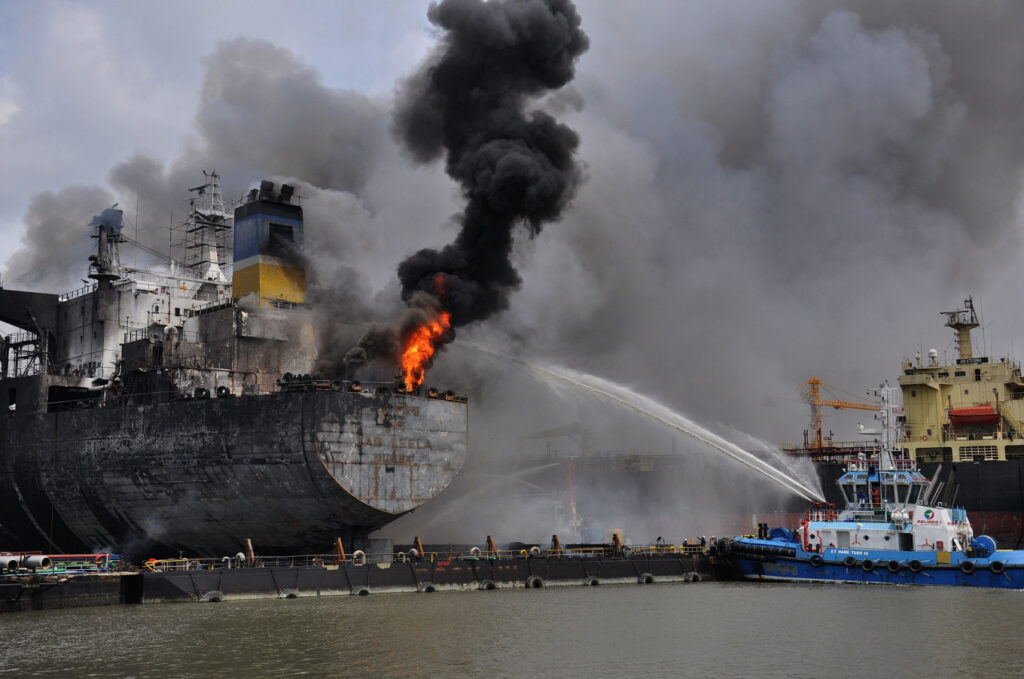
The tragic Fire and Explosion on Oil Tanker at Indonesian Shipyard Kills 10 and Injures 21, leaving the maritime community in deep shock. On 15 October 2025, the oil tanker MT Federal II caught fire and exploded at PT ASL Shipyard, located in Tanjung Uncang, Batam Island, Indonesia. The blast killed 10 workers and injured 21 others, including four critically.
Witnesses reported that flames suddenly erupted from a tank before a powerful explosion shook the vessel. Within moments, smoke and heat engulfed the shipyard, forcing a frantic rescue effort. Firefighters and emergency crews worked tirelessly to control the blaze and save trapped workers.
Sadly, this was the second fatal fire involving the same vessel in 2025 — a similar incident in June had already claimed four lives.
What Went Wrong?
Authorities believe that hot-work sparks ignited residual vapour inside one of the tanks. Poor ventilation may have allowed flammable gases to accumulate. The combination of heat, vapour, and oxygen triggered the explosion.
Investigators are focusing on whether the shipyard followed gas-freeing and hot-work permit procedures. Many experts say safety checks may have been rushed. The repeated accidents raise serious concerns about supervision and management control.
Human and Industrial Impact
The explosion caused heavy casualties and emotional distress among workers. Ten lives were lost, and 21 others sustained burns or smoke injuries. Families gathered outside hospitals, hoping for good news.
The tragedy also damaged the shipyard’s reputation. Insurance and regulatory investigations have already begun. The maritime community across Asia has called for stronger safety culture and training standards.
Key Safety Lessons for the Industry
This incident teaches important lessons to every shipyard and tanker operator:
- Control hot work carefully. Only carry out welding or cutting after tanks are gas-freed and tested.
- Ventilate enclosed spaces. Use fans and gas detectors to ensure safe atmospheres.
- Follow permit-to-work systems. Supervisors must confirm that all safety barriers are in place before work begins.
- Investigate repeat incidents deeply. Two similar fires in one year show systemic failure, not bad luck.
- Prepare for emergencies. Train workers to evacuate fast and conduct regular fire drills.
- Maintain accountability. Yard management must enforce safety rules and never ignore warning signs.
Why Such Disasters Keep Happening
Ship repair work combines welding, confined spaces, and fuel residues. Without strict control, these hazards can turn deadly. Many workers rely on temporary contracts and face pressure to work fast, sometimes ignoring safety procedures.
In developing shipyards, older equipment and poor maintenance add to the danger. This tragedy highlights why safety supervision and worker training must always come first.
Conclusion
The fire and explosion on MT Federal II in Batam should remind everyone that safety is never optional. Lives depend on discipline, communication, and enforcement of procedures.
If lessons are ignored, history will repeat itself. The maritime industry must act now to protect workers and ensure such tragedies never happen again.
Disclaimer: This article is for educational and awareness purposes. Official investigations are ongoing, and final results may differ from initial reports.