
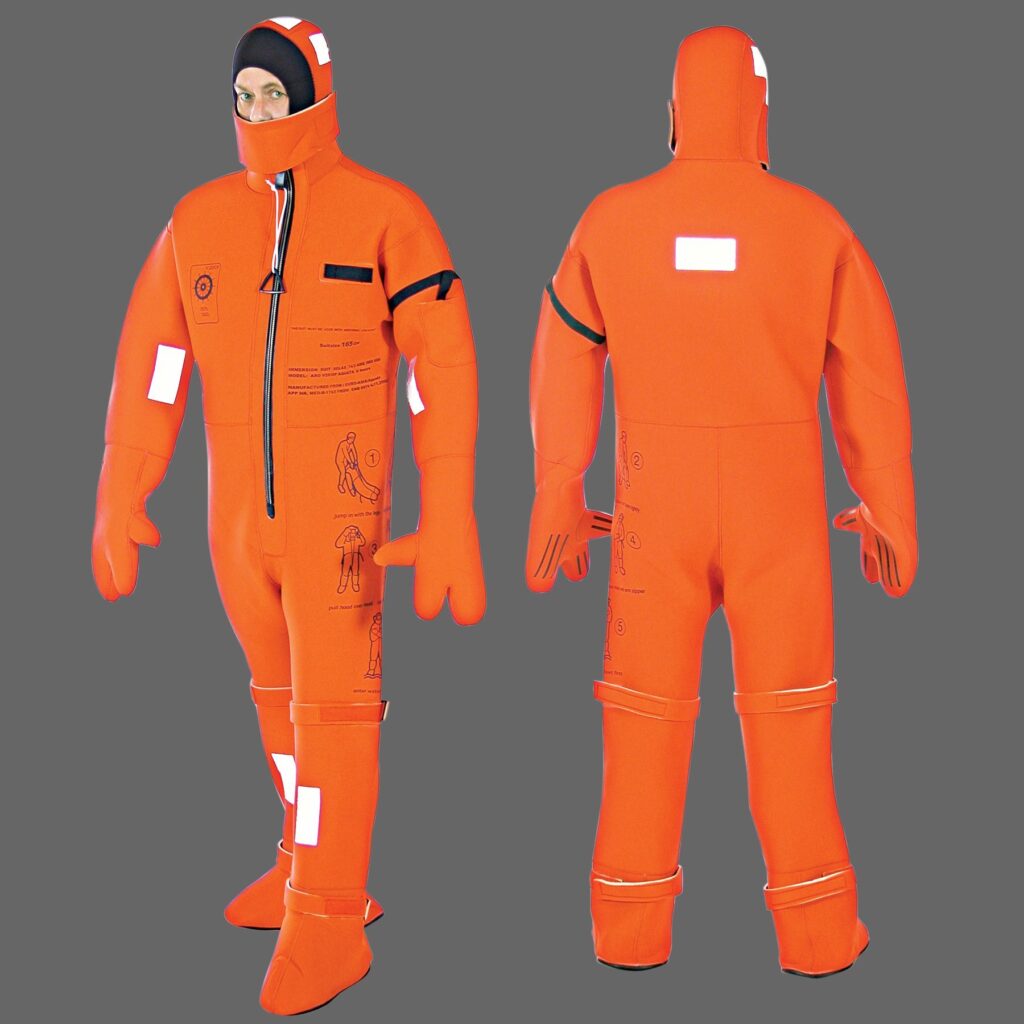
Safety at sea depends on preparation, training, and proper equipment. Among all life-saving appliances, the Immersion Suit Onboard Ship plays a crucial role during abandon-ship situations, especially in cold climates. The SOLAS Convention (Safety of Life at Sea) sets clear standards for the design, use, and storage of immersion suits to ensure survival and protection from hypothermia in extreme sea conditions.
⚓ What is an Immersion Suit?
An Immersion Suit, also known as a survival suit, is a waterproof, insulated garment designed to protect the wearer from cold water shock and hypothermia after abandoning ship. It covers the entire body, including hands, feet, and head, leaving only the face exposed for breathing.
As per SOLAS Chapter III, Regulation 32.3, all cargo and passenger ships must carry immersion suits that meet IMO and LSA Code (Life-Saving Appliances Code) standards.
📜 SOLAS Requirements for Immersion Suits
According to SOLAS Chapter III and the LSA Code Chapter II, Section 2.3, the following requirements apply to immersion suits carried onboard ships:
1. Number of Immersion Suits
- Every crew member must have one immersion suit of appropriate size in their cabin.
- Additional suits must be available at watchkeeping stations and muster areas.
- If the ship operates in cold waters (below 15°C), immersion suits are mandatory for all persons onboard.
2. Design and Construction Requirements
The LSA Code specifies that every immersion suit must:
- Cover the entire body, except for the face.
- Be made of waterproof material with thermal insulation to reduce heat loss.
- Allow the wearer to don the suit within 2 minutes without assistance.
- Permit movement and operation of life-saving appliances, such as paddling or climbing a ladder.
- Be compatible with a lifejacket, or include built-in buoyancy providing equal protection.
- Withstand flame exposure for 2 seconds without igniting or melting.
- Maintain body temperature above 35°C after 6 hours in water at 0–2°C.
- Allow the wearer to jump into the water from 4.5 meters without damage or water entry.
3. Thermal Protection Standards
To meet SOLAS and IMO performance standards, an immersion suit must:
- Limit core body temperature loss to less than 2°C after 6 hours in cold water.
- Maintain insulation properties even when wet.
- Provide at least 142N of buoyancy if not worn with a lifejacket.
4. Types of Immersion Suits Onboard Ship
There are three main types of immersion suits used onboard:
- Insulated (Neoprene) Immersion Suit:
Made from neoprene, provides insulation and buoyancy without additional layers. - Non-Insulated Immersion Suit:
Worn with additional thermal underclothing; common in moderate climates. - Inflatable Immersion Suit:
Compact and lightweight; inflates automatically upon water contact or manually via CO₂ cylinder.
🛠️ Storage and Maintenance of Immersion Suits
Regular inspection and proper storage are essential for the reliability of immersion suits.
Storage Requirements
- Suits must be stored in dry, accessible, and clearly marked locations.
- Each cabin or muster station must have easy access to a suit during emergencies.
- The container or bag should be watertight and UV-resistant.
Maintenance and Inspection
- Inspect suits every three months as part of the ship’s LSA maintenance schedule.
- Check for tears, punctures, damaged zippers, or worn seals.
- Test for air leaks or water ingress annually.
- Replace damaged suits immediately.
- Record all inspections and repairs in the LSA Maintenance Logbook.
🧍♂️ Donning and Usage of Immersion Suit
Every crew member must be able to:
- Locate their immersion suit quickly.
- Don it within two minutes without assistance.
- Climb ladders, swim, and board a lifeboat while wearing it.
- Use the hood, gloves, and face seal correctly to minimize heat loss.
Training and familiarization are mandatory under SOLAS, and regular abandon ship drills must include immersion suit practice.
❄️ How the Immersion Suit Protects from Hypothermia
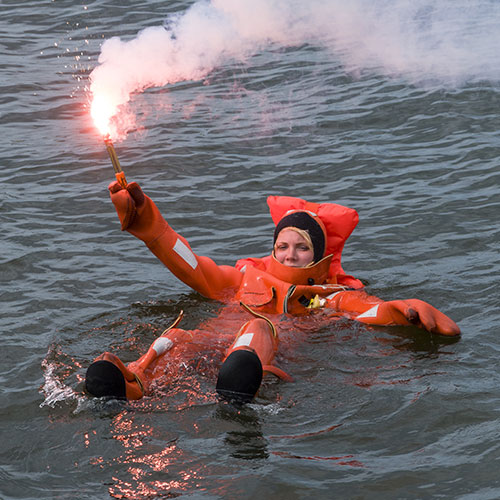
When a person falls into cold water, body heat is lost 25 times faster than in air. This leads to hypothermia, which can cause unconsciousness or death within minutes.
The Immersion Suit Onboard Ship slows down this process by:
- Preventing cold seawater contact with the skin.
- Trapping a thin layer of warm air around the body.
- Providing buoyancy to keep the head above water.
- Reducing shock from sudden cold exposure.
🚨 Testing of Immersion Suits
Every immersion suit must pass the following SOLAS-approved tests before certification:
- Leak Test: Ensures no water entry when submerged.
- Thermal Test: Confirms thermal insulation and buoyancy.
- Flame Test: Verifies fire resistance.
- Donning Test: Confirms that a person can wear the suit in under 2 minutes.
Manufacturers must obtain IMO Type Approval Certificates for compliance.
⚠️ Training and Drills
According to SOLAS Chapter III, Regulation 19, every crew member must participate in emergency drills that include:
- Demonstrating how to don the immersion suit properly.
- Checking zippers, seals, and hoods for correct fitting.
- Ensuring every new crew member receives familiarization training upon joining the ship.
✅ Conclusion
The Immersion Suit as per SOLAS is a critical life-saving appliance designed to ensure survival in cold and harsh sea conditions. Proper training, storage, and maintenance are as vital as the suit itself.
By following SOLAS and LSA Code requirements, ships ensure that every seafarer has reliable protection during abandon-ship situations, giving them the best chance of survival until rescue arrives.
⚠️ Disclaimer:This article is for educational and informational purposes only. Always follow the latest SOLAS and IMO standards for compliance.