
Introduction
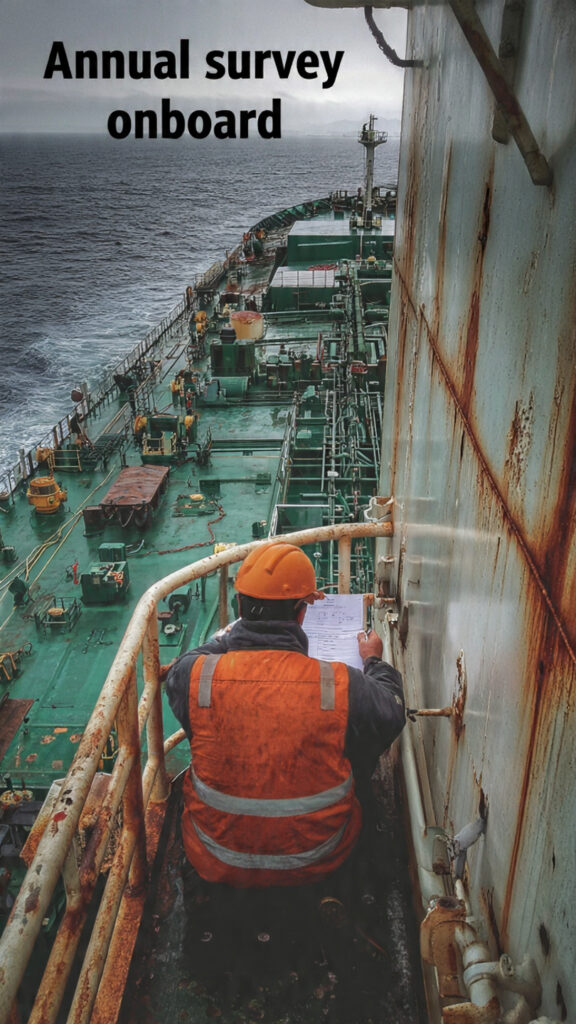
The Annual Survey onboard ship is one of the most essential inspections conducted under the Harmonized System of Survey and Certification (HSSC). Its purpose is to ensure that the ship and its equipment continue to meet the required safety, operational, and environmental standards. Conducted every year, this survey helps verify that the vessel remains seaworthy and compliant with conventions such as SOLAS, MARPOL, and the Load Line Convention.
Without regular annual surveys, a ship may lose its statutory certificates, leading to detentions or penalties during Port State Control inspections. Therefore, this survey is crucial for both safety and operational continuity.
Purpose of the Annual Survey
The main objective of the annual survey is to confirm that the ship’s structure, machinery, and safety systems remain in good condition since the last inspection. It identifies any signs of wear, corrosion, or malfunction that could compromise the vessel’s safety or efficiency.
In addition, it ensures that the ship’s pollution prevention systems—such as oil filtering equipment, sewage treatment plants, and incinerators—are functioning correctly and within environmental limits.
Frequency and Scheduling
The annual survey must be carried out every year within a window of three months before or after the anniversary date of the ship’s certificates.
This scheduling flexibility allows the ship to plan the survey based on operational convenience, without interrupting voyages unnecessarily.
Surveyors, usually from the Classification Society or Flag Administration, board the vessel to conduct physical checks and review documentation.
Scope of the Annual Survey
During the Annual Survey onboard ship, the inspection covers several key areas, including:
- Hull and Structure:
- External hull condition, including deck, sides, and bottom plating.
- Watertight integrity and corrosion levels.
- Machinery and Equipment:
- Main and auxiliary engines, boilers, and steering gear systems.
- Safety of propulsion and power generation systems.
- Safety Equipment:
- Lifeboats, life rafts, fire extinguishers, fire pumps, and sprinkler systems.
- Emergency lighting, alarms, and communication systems.
- Pollution Prevention Systems:
- MARPOL-related equipment, including oily water separators and sewage treatment plants.
- Verification of proper record-keeping in Oil Record Books and Garbage Logs.
- Navigation and Communication Equipment:
- Radar, AIS, gyro compass, and other bridge instruments.
- GMDSS equipment functionality and certification validity.
Through this thorough inspection, surveyors ensure that the ship operates safely and responsibly at sea.
Documents Checked During Annual Survey
Surveyors also review important documents such as:
- Safety Management Certificates (SMC)
- International Oil Pollution Prevention Certificate (IOPP)
- Load Line Certificate
- Cargo Ship Safety Equipment Certificate
- Fire control and safety plans
- Maintenance records and testing logs
This documentation verifies that routine checks and maintenance activities have been carried out as per regulations.
Common Deficiencies Found
During annual surveys, some frequent deficiencies include:
- Expired fire extinguishers or damaged hoses.
- Corrosion or cracks in structural areas.
- Faulty emergency lighting or alarms.
- Missing or outdated navigation charts.
- Poor maintenance records.
By identifying and correcting these deficiencies promptly, ships can maintain full compliance and prevent accidents.
Importance of Annual Survey Onboard
The Annual Survey plays a vital role in maritime safety and compliance. It ensures that:
- The ship remains seaworthy and operationally safe.
- All safety and pollution control systems are functional.
- The vessel continues to comply with IMO and flag state regulations.
- Crew and cargo safety are not compromised during operations.
- The ship avoids detentions and penalties during inspections.
Therefore, consistent adherence to the annual survey schedule reflects the professionalism and responsibility of the ship’s management team.
Conclusion
In conclusion, the Annual Survey onboard ship is a mandatory inspection designed to verify that the vessel remains in safe and efficient condition throughout its service life. It reinforces the ship’s commitment to maritime safety, environmental protection, and operational reliability.
By conducting these annual inspections diligently, shipowners not only comply with the Harmonized System of Survey and Certification (HSSC) but also ensure smooth sailing without unexpected interruptions.
Disclaimer:This article is for educational purposes only. Always refer to the latest IMO conventions and flag state requirements for official procedures.