Maritime safety equipment is designed with one goal in mind — to save lives at sea. When ships encounter emergencies such as sinking, capsizing, or fire, automatic safety mechanisms can mean the difference between survival and tragedy. One such device is the Hydrostatic Release Unit (HRU). Though small in size, it plays a crucial role in ensuring lifesaving equipment like liferafts and EPIRBs (Emergency Position Indicating Radio Beacons) are released and activated at the right time.
What is a Hydrostatic Release Unit (HRU)?
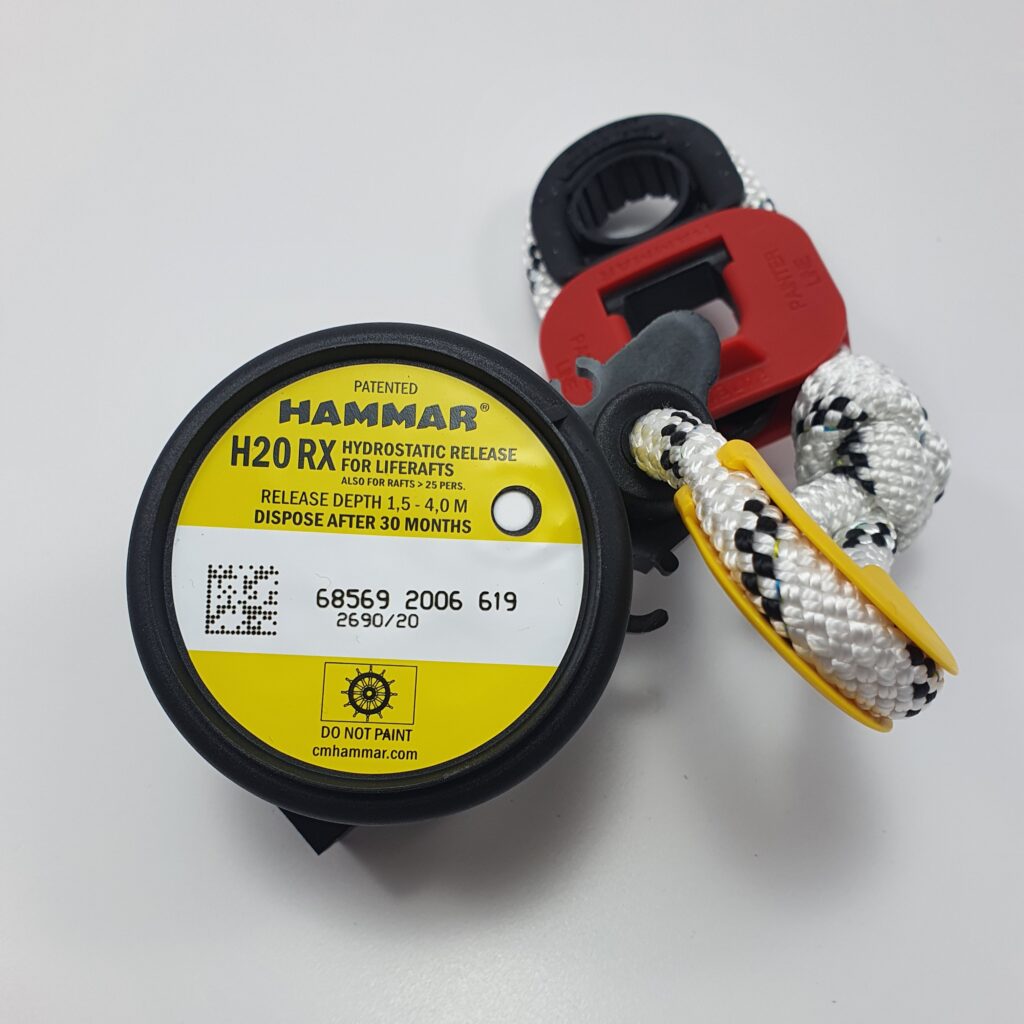
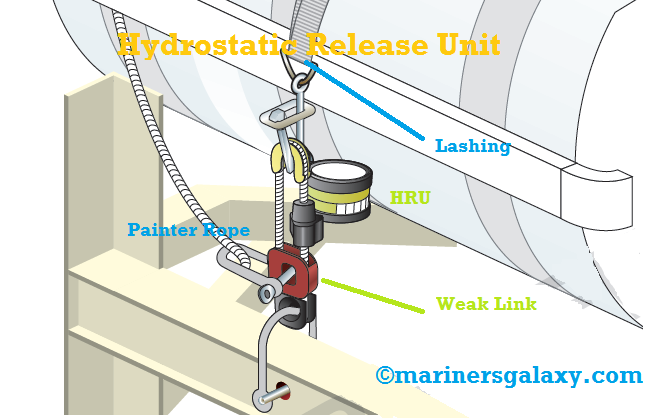
A Hydrostatic Release Unit (HRU) is a pressure-activated device that automatically releases survival equipment, such as liferafts or EPIRBs, from a sinking vessel. It works on the principle of water pressure: when a ship sinks to a certain depth (typically 1.5 to 4 meters below sea level), the HRU activates, cutting the securing mechanism and allowing the equipment to float free.
In simple words, the HRU ensures that even if the crew cannot manually launch lifesaving equipment, it will still deploy automatically.
How Does an HRU Work?
- Normal Condition:
The HRU holds the liferaft or EPIRB in place, secured to the ship’s deck or cradle. - Submersion:
As the ship sinks, the HRU senses the increasing water pressure. - Activation:
At the set depth, the HRU’s internal mechanism triggers, releasing the securing strap or pin. - Float Free:
- Liferafts rise to the surface, where they can inflate automatically.
- EPIRBs float free and activate to send distress signals.
This sequence ensures critical survival equipment is available to crew members, even if they cannot reach it during an emergency.
Importance of Hydrostatic Release Units
- Automatic Safety: Works without manual action, vital during sudden emergencies.
- Life-Saving Role: Ensures liferafts and EPIRBs reach the surface, increasing survival chances.
- Regulatory Requirement: Mandatory under the SOLAS Convention for ships to have HRUs fitted with liferafts and certain EPIRBs.
- Reliability: Functions even if the crew is incapacitated or unable to deploy equipment.
- Cost-Effective: Simple, compact, and inexpensive compared to the critical role it plays in survival.
Types of HRUs
For Liferafts: Attached between the liferaft and the deck. Releases the raft at a specific depth.
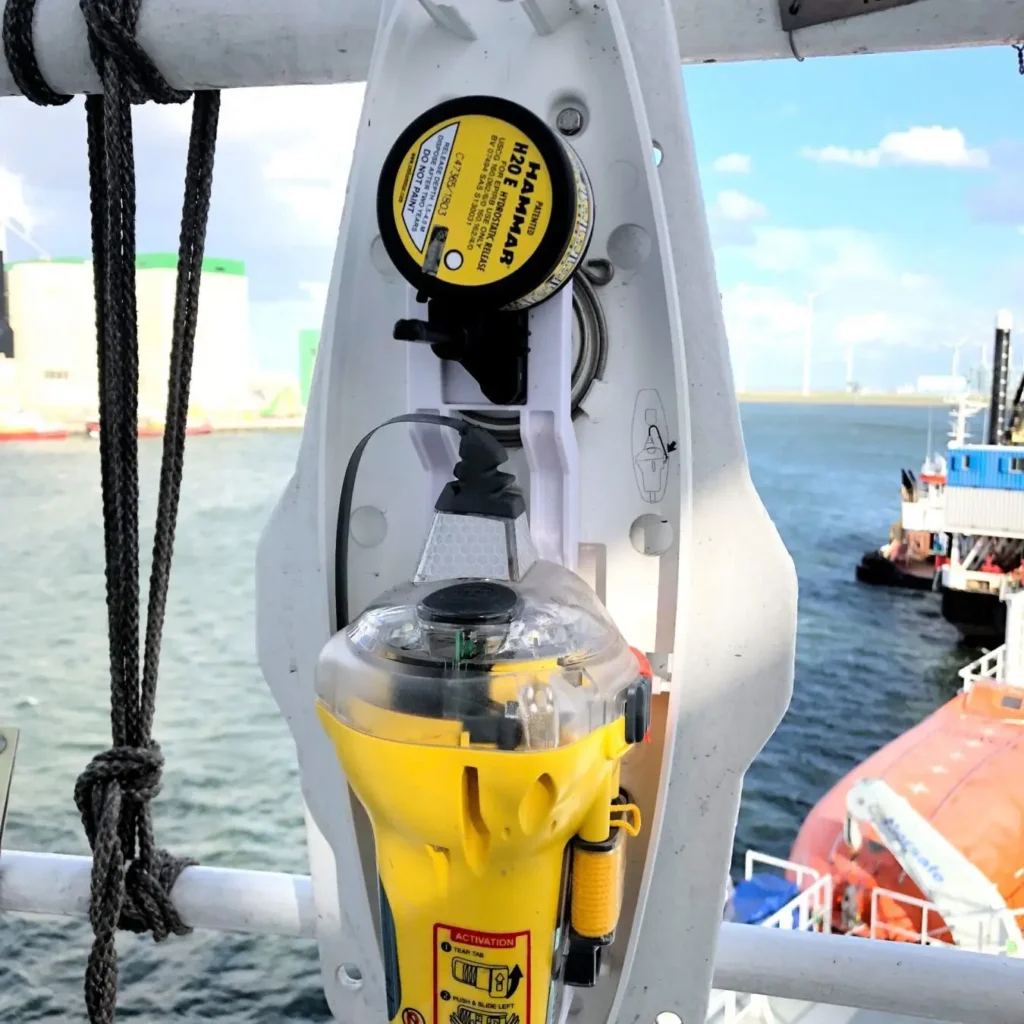
For EPIRBs: Mounted with the beacon to release and activate it automatically if the vessel sinks.
Maintenance of HRUs
An HRU is reliable only when properly maintained. Key maintenance practices include:
- Expiry Date Monitoring: Most HRUs have a service life of 2 years. They must be replaced before the expiry date.
- Regular Inspections: Check for corrosion, damage, or tampering during monthly safety checks.
- Correct Installation: Ensure HRUs are fitted as per manufacturer’s instructions and SOLAS requirements.
- Record Keeping: Document replacement dates and inspections in ship safety logs.
Real-Life Importance
Imagine a ship capsizing suddenly in bad weather. If crew members cannot access liferafts, the HRU ensures they float free and inflate on the surface. Similarly, if communication systems fail, an EPIRB released by an HRU can still transmit distress signals, guiding rescuers to the location. Many lives have been saved at sea thanks to these small but powerful devices.
Conclusion
The Hydrostatic Release Unit (HRU) may seem like a minor component of a ship’s safety equipment, but its role is vital. By automatically releasing liferafts and EPIRBs during emergencies, HRUs provide a critical layer of protection for seafarers. Proper maintenance and timely replacement ensure they function when needed most. For every ship, an HRU is not just a regulatory requirement — it is a silent guardian of life at sea.
Disclaimer:
This blog is for informational purposes only. Mariners must follow IMO regulations, manufacturer guidelines, and flag state requirements for HRU use and replacement.