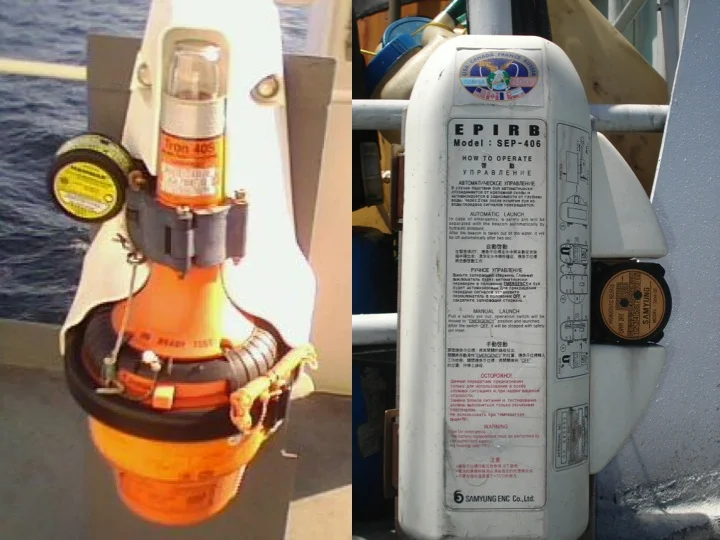
At sea, emergencies can happen without warning. Ships may face collisions, grounding, fire, flooding, or even sinking. In such moments, rapid communication with rescue authorities becomes critical. That’s where the Emergency Position Indicating Radio Beacon (EPIRB) comes in.
An EPIRB is a vital life-saving device that automatically sends distress signals to satellites, helping search and rescue (SAR) teams locate ships and crew in trouble.
Understanding EPIRB
An Emergency Position Indicating Radio Beacon (EPIRB) is a distress radio transmitter carried on ships and boats. When activated, it sends a coded message with the vessel’s identity and location to satellites, which then forward the information to the nearest Rescue Coordination Center (RCC).
It is one of the most essential safety devices required under the SOLAS Convention for all passenger and cargo ships engaged in international voyages.
How Does an EPIRB Work?
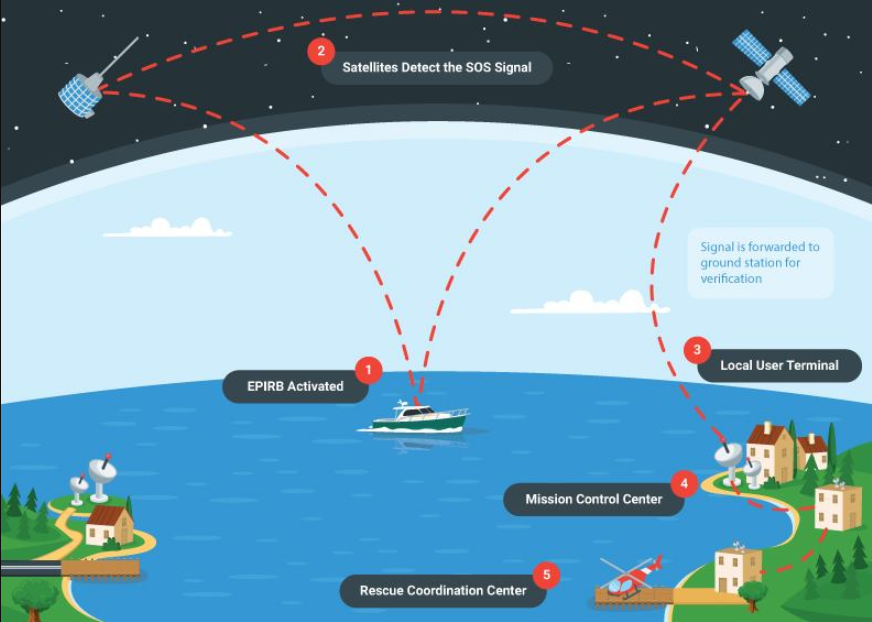
- Activation:
- Manual Activation: Crew can switch it on during emergencies.
- Automatic Activation: If a ship sinks, a hydrostatic release unit (HRU) frees the EPIRB, allowing it to float and start transmitting automatically.
- Transmission:
The beacon transmits a 406 MHz signal to COSPAS-SARSAT satellites. - Signal Relay:
Satellites relay the distress alert to the nearest ground station and Rescue Coordination Center. - Rescue Operations:
Authorities identify the vessel, confirm the emergency, and dispatch rescue teams to the transmitted location.
Types of EPIRBs
- Category I (Automatic Release):
Mounted on deck in a bracket with a hydrostatic release unit. They activate automatically when submerged. - Category II (Manual Release):
Kept inside the vessel and must be activated manually in an emergency.
Key Features of an EPIRB
- Satellite Communication (406 MHz): Provides global coverage through COSPAS-SARSAT.
- GPS-enabled Models: Give accurate location (within 100 meters).
- Strobe Light: Helps rescuers visually locate the beacon at night.
- Battery Life: Usually lasts for 48 hours once activated.
- Waterproof and Floatable: Designed to survive harsh marine conditions.
Importance of EPIRBs
- Saves Lives: Immediate distress alerts reduce rescue response time.
- Global Reach: Can send signals from remote oceans where no other communication is possible.
- Mandatory Equipment: Required by international maritime regulations (SOLAS Chapter IV).
- Reliable Backup: Works even if ship communication systems fail.
Maintenance and Testing
- Monthly Checks: Verify battery status, condition of HRU, and proper mounting.
- Annual Servicing: Must be inspected and tested by authorized service providers.
- Battery Replacement: Typically required every 4–5 years or after activation.
- Self-Test Function: Modern EPIRBs allow quick functional checks without transmitting a real distress alert.
Real-Life Importance
Many lives have been saved because of EPIRBs. For example, fishing boats lost in storms and cargo ships in distress have been quickly located after their EPIRBs transmitted emergency signals. Without such devices, locating survivors in vast oceans would be almost impossible.
Conclusion
The Emergency Position Indicating Radio Beacon (EPIRB) is a lifesaving device that bridges the gap between a ship in distress and global rescue services. By transmitting automatic distress alerts via satellite, it ensures rapid response and improves survival chances at sea. For mariners, carrying and maintaining a reliable EPIRB is not just a regulatory requirement—it is a lifeline when all else fails.
Disclaimer:
This blog is for informational purposes only. Mariners must follow IMO regulations, manufacturer instructions, and flag state requirements regarding EPIRB use and maintenance.



Pingback: Hydrostatic Release Unit (HRU) - Jhazi Bhaiya G