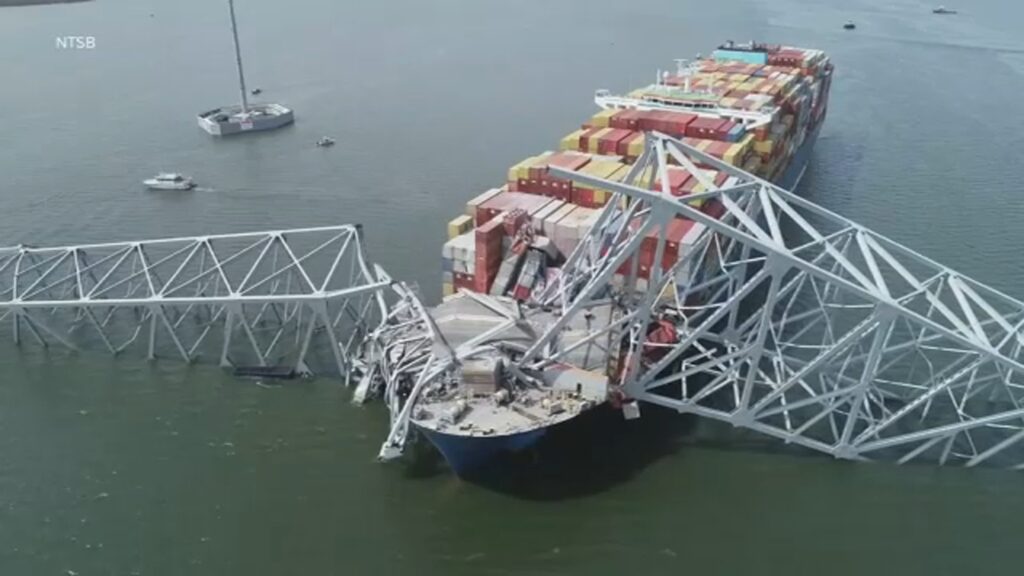
On March 26, 2024, the container ship MV Dali struck the Francis Scott Key Bridge in Baltimore, Maryland. The disaster, widely referred to as the MV Dali and the Francis Scott Key Bridge Collapse, caused the bridge to fall and exposed serious gaps in ship safety, infrastructure design, and emergency response. Below is a clear timeline of the events, findings from reports, and the wider implications of this tragedy.
What Is the MV Dali
The MV Dali is a Neopanamax container ship built in 2015 by Hyundai Heavy Industries. Grace Ocean Private Limited of Singapore owns the vessel, while Synergy Marine manages it. The ship sails under the Singapore flag. On the day of the incident, it carried about 4,680 containers (56,675 metric tons) of cargo bound for Colombo, Sri Lanka.
Timeline of Events: Key Moments Before the Collapse
The National Transportation Safety Board (NTSB) reconstructed a minute-by-minute timeline based on shipboard data and pilot reports.
| Time (EDT) | Event |
|---|---|
| 00:05 | Senior pilot and apprentice pilot board Dali at Seagirt Marine Terminal. |
| 00:30-00:40 | Dali departs the terminal, assisted by two tugboats. |
| 01:07 | Vessel enters the Fort McHenry Channel. |
| 01:24 | Dali is on course heading ~141° at about 8 knots speed. |
| 01:24:59 | First major blackout occurs: breakers trip unexpectedly, cutting main electrical power. Propulsion and steering fail. |
| 01:25:31 | Partial power returns; some lights restore. |
| 01:26:02 | System data resumes recording; vessel continues drifting. |
| 01:26:39 | Pilot requests tug assistance and notifies authorities of power loss. |
| 01:27:04 | Pilot orders port anchor dropped in an attempt to slow or stop drift. |
| 01:27:25 | Mayday call: Dali reports total power loss and imminent collision. |
| 01:28:44 | Dali collides with Pier 17 of the Key Bridge; central truss span collapses. |
| 01:29:27–01:29:39 | Collapse continues; bridge falls into the Patapsco River. |
Preliminary Report (May 2024)
The NTSB confirmed that the ship lost electrical power just before the crash. Breakers tripped when the vessel was 0.6 miles from the bridge, which shut down propulsion and steering systems. The same ship also suffered blackouts earlier while docked at port.
Investigative Update (June 2024)
Investigators examined the ship’s electrical components and found issues with a terminal block in the control line. This faulty part likely triggered the breaker trip. In addition, several containers carrying hazardous materials sustained damage, and pollution teams later noted a minor surface sheen on the water.
Casualties, Damage & Environmental Impacts
The disaster killed six construction workers who had been repairing potholes on the bridge deck. Another worker suffered severe injuries, and one crew member sustained minor wounds. The central spans of the bridge collapsed, crushing part of Dali’s forward deck. Out of the 56 containers with hazardous cargo, 14 sustained damage, which created a small pollution risk that response teams quickly contained.
What Investigators Still Need to Confirm
Investigators continue to study why the breakers tripped and why backup systems failed to keep propulsion and steering online. They also review whether earlier blackouts at port received proper attention. Finally, they are assessing why the bridge piers lacked modern collision protection despite high vessel traffic.
Broader Implications
The tragedy carries lessons for both maritime safety and infrastructure management. First, authorities need stronger redundancy in ship propulsion and electrical systems. Second, ports and vessel operators must act quickly on any blackout or power irregularity. Third, infrastructure agencies should reevaluate bridge protection standards, especially where large ships pass regularly.
Aftermath & Current Status
Crews removed wreckage using controlled demolition of bridge sections resting on the ship. The port gradually reopened once teams cleared debris, restoring shipping operations. Authorities tested the pilots and crew for drugs and alcohol, and all results came back negative. The NTSB expects to release its final report within 12–24 months of the incident.
Bottom Line
The MV Dali disaster shows how one technical fault can trigger devastating consequences when combined with weak safeguards. The timeline reveals several critical moments: the first blackout, the failed recovery, and the last-minute warnings. These events underline the urgent need for better ship maintenance, improved redundancy, and stronger infrastructure protection.
Disclaimer
This blog is based on official reports and verified timelines as of 2025. Final investigation results are pending. The content is for informational purposes only and should not be taken as legal or technical advice.


Pingback: The Case of Deck Cadet Karandeep Singh Rana Missing - Jhazi Bhaiya G