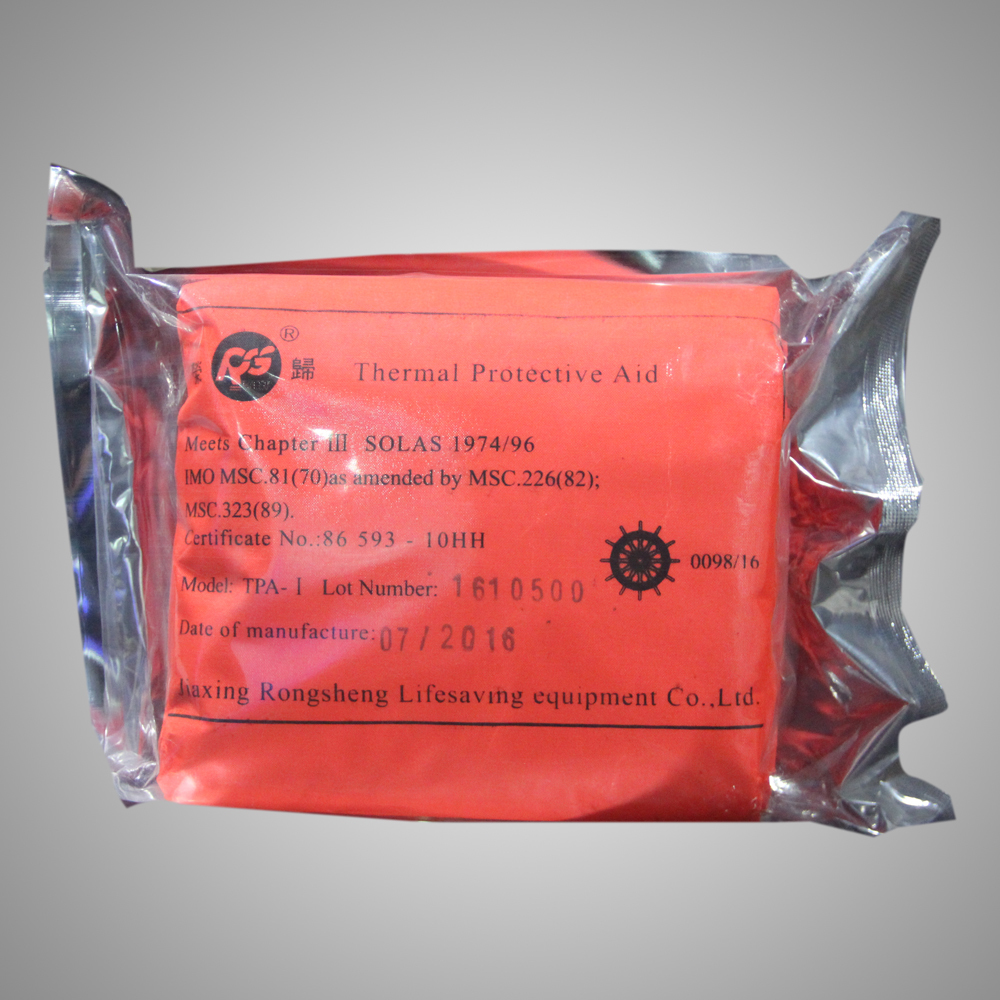
When it comes to survival at sea, every piece of life-saving equipment plays a vital role. Among them, the Thermal Protective Aid (TPA) is an essential item designed to prevent hypothermia and maintain body heat in cold weather conditions. The TPA as per SOLAS (Safety of Life at Sea Convention) ensures that seafarers have the necessary protection during emergencies like abandon ship or survival craft situations.
⚓ What is a Thermal Protective Aid (TPA)?
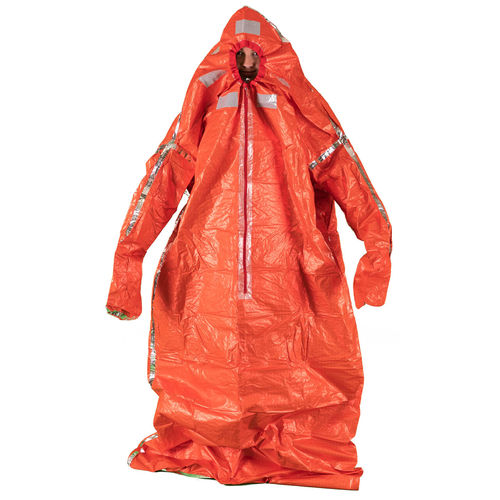
A Thermal Protective Aid (TPA) is a life-saving appliance made of waterproof material that reduces heat loss from the body. It covers most of the body except for the face and ensures that the user retains body warmth even in cold, wet, or windy environments.
According to SOLAS Chapter III, Regulation 4.1.5, every survival craft and rescue boat must carry TPAs for at least 10% of the total number of persons the craft is designed to accommodate, or two TPAs, whichever is greater.
🧍♂️ Purpose of TPA Onboard Ship
The main purpose of TPA onboard ship is to protect survivors from hypothermia after abandoning the ship or while waiting for rescue. It is particularly important in cold sea conditions where body heat can be lost rapidly through convection, conduction, and evaporation.
📜 SOLAS Requirements for Thermal Protective Aid (TPA)
The International Maritime Organization (IMO) has clearly defined requirements under SOLAS Chapter III, Regulation 34 and LSA Code (Life-Saving Appliances Code). Below are the key points:
1. Material Requirements
- TPA must be made of waterproof material capable of reducing convective and evaporative heat loss.
- The material must have a thermal resistance of at least 0.25 clo.
- It should be resistant to oil, seawater, and sunlight without losing its insulating properties.
2. Design and Construction
- The TPA should cover the entire body of a person wearing a lifejacket, except for the face.
- It must allow the wearer to remove it quickly without assistance.
- The size should be suitable for a person wearing bulky clothing or a lifejacket.
- The color should be bright orange or red to enhance visibility in the sea.
3. Storage and Quantity
- Each lifeboat and life raft must carry TPAs for 10% of the total capacity or at least two units.
- They must be stored in a readily accessible location, close to survival crafts.
4. Performance Standards
- It must allow the wearer to climb into a lifeboat or life raft and perform survival actions.
- It should retain its properties after being folded and stored for long periods.
- It must not impair movement or ability to use a whistle, light, or signaling device.
🧊 How TPA Prevents Hypothermia
When a person is exposed to cold seawater, body temperature drops rapidly, leading to hypothermia — a life-threatening condition. The TPA acts as a thermal barrier, keeping warm air trapped close to the body while reducing heat loss caused by wind and water.
Even though it doesn’t produce heat itself, it slows down the cooling rate, giving rescuers more time to reach the survivor safely.
🚨 Maintenance and Inspection of TPA
To ensure readiness during an emergency, regular inspection and maintenance of TPAs onboard are crucial.
- Check the condition of the bag and seals for cracks or deterioration.
- Ensure storage is dry and away from direct sunlight.
- Replace TPAs immediately if damaged or expired as per manufacturer guidelines.
- Record maintenance activities in the LSA Maintenance Log.
🛟 Training and Familiarization
Every crew member must be familiar with the location, use, and donning procedure of TPA. During shipboard drills, crew should practice handling and using TPAs to ensure efficiency during real emergencies.
⚠️ Conclusion
The Thermal Protective Aid (TPA) as per SOLAS is a small but vital piece of life-saving equipment that can make the difference between survival and tragedy at sea. By maintaining, inspecting, and understanding how to use TPA properly, seafarers ensure compliance with international regulations and enhance onboard safety standards.
⚠️ Disclaimer:This article is for educational and informational purposes only. Always refer to the latest SOLAS and IMO guidelines for official standards.