
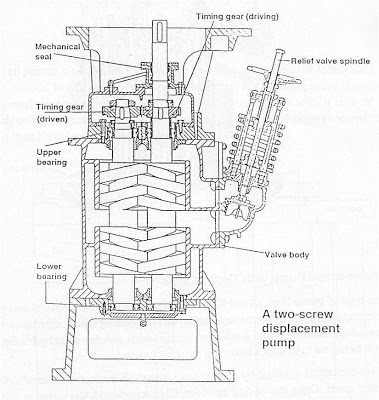
A screw pump is one of the most reliable positive displacement pumps used onboard ships. It moves liquid smoothly with the help of rotating screws, making it ideal for thick fluids like fuel oil and lube oil. Since ships depend on steady and clean fluid flow for engines and machinery, screw pumps play a vital role in daily operations.
How a Screw Pump Works
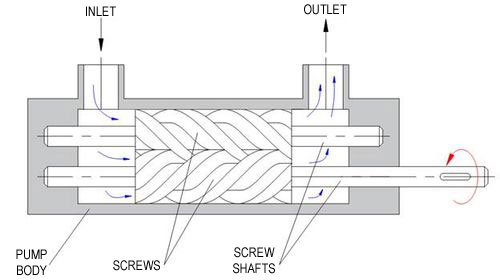
A screw pump works by rotating one or more screws inside a tight housing. As the screws turn, they push the liquid forward in a continuous flow. Unlike centrifugal pumps, screw pumps do not create sudden pressure changes. Therefore, the flow remains steady, quiet, and shock-free. This makes the pump perfect for delicate machinery and viscous liquids.
Types of Screw Pumps Used Onboard Ships
Various screw pump designs are used depending on pressure and flow needs. The most common types include:
1. Single-Screw Pump
- One screw rotates inside a rubber stator.
- It handles thick liquids easily.
- Often used for sludge and bilge transfer.
2. Twin-Screw Pump
- Two screws rotate in opposite directions.
- It offers smooth flow with low noise.
- Used for cargo pumping, fuel transfer, and lube oil systems.
3. Triple-Screw Pump
- Three screws work together in a metal casing.
- It provides high pressure and steady output.
- Commonly installed in main engine lube oil and fuel oil booster systems.
Each type serves a unique purpose, and the selection depends on viscosity, flow rate, and pressure requirements.
Where Screw Pumps Are Used Onboard Ships
Screw pumps appear in many ship systems because of their efficiency and reliability. They are widely used for:
- Main engine lube oil circulation
- Fuel oil transfer and booster supply
- Cargo oil transfer on tankers
- Hydraulic power units
- Sludge and bilge handling
- Boiler fuel oil supply
Since these systems require smooth and continuous flow, the screw pump becomes a trusted choice on most vessels.
Advantages of Screw Pumps
Screw pumps offer several benefits that make them popular onboard:
- They handle thick and viscous liquids effectively.
- They produce low noise and vibration.
- They deliver a constant flow without pressure shocks.
- They require less maintenance compared to many other pumps.
- They maintain efficiency even when liquid viscosity changes.
Because of these advantages, ship engineers prefer screw pumps for critical operations.
Maintenance of Screw Pumps
Proper maintenance ensures long and trouble-free pump life. Engineers usually:
- Check oil levels in pump bearings regularly.
- Inspect alignment between pump and motor.
- Monitor noise and vibration for early problem detection.
- Replace worn screws and casing parts when needed.
- Clean filters and strainers to prevent blockages.
Regular upkeep helps prevent failures and ensures uninterrupted engine and machinery performance.
Conclusion
Screw pumps play a crucial role in keeping ship systems running smoothly. Their ability to handle viscous liquids, deliver steady flow, and operate quietly makes them essential in fuel, lube oil, and sludge systems. With proper maintenance and correct operation, screw pumps remain one of the most reliable pieces of machinery onboard.
Disclaimer:This blog is intended for educational and informational purposes only. It does not replace official SOLAS, IMO, Class, or manufacturer guidelines. Readers should always follow their company’s Safety Management System and equipment manuals while operating or maintaining shipboard machinery.