Introduction
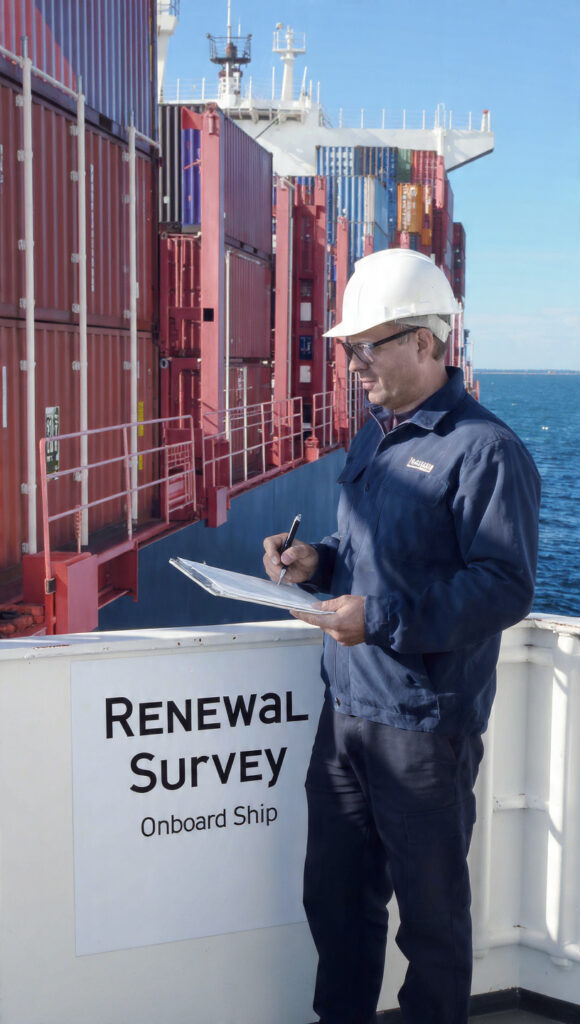
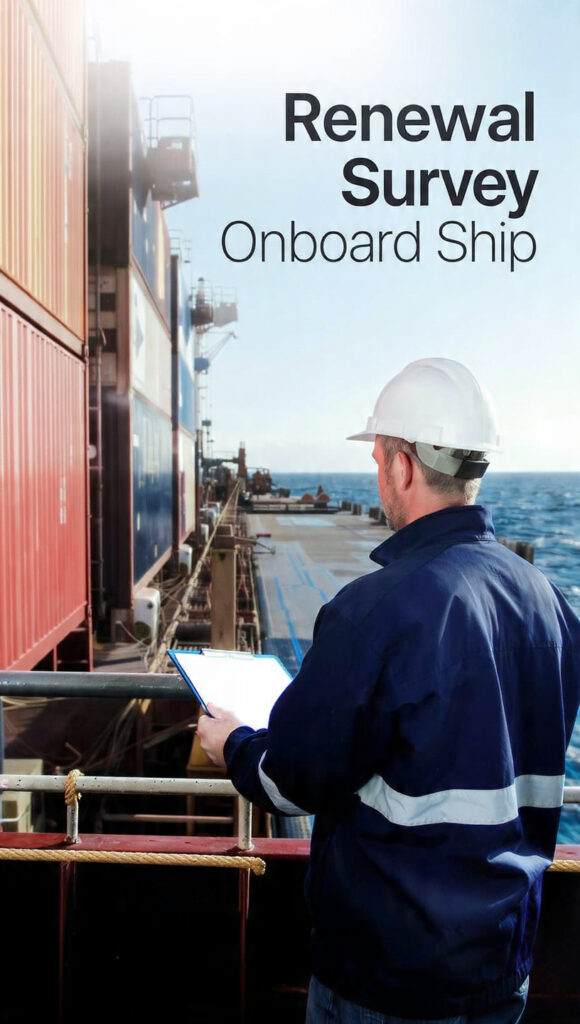
The Renewal Survey onboard ship, also called the Special Survey, is the most detailed inspection in the Harmonized System of Survey and Certification (HSSC). Conducted every five years, it ensures that the vessel continues to meet international safety, operational, and environmental standards. Unlike annual or intermediate surveys, the renewal survey thoroughly examines the ship, often requiring dry-docking to inspect underwater structures and systems.
By completing this survey successfully, shipowners maintain statutory certificates, comply with SOLAS, MARPOL, and Load Line conventions, and ensure that the vessel remains fully seaworthy for its next certification cycle. Consequently, this survey safeguards both crew and cargo while supporting uninterrupted operations.
Purpose of the Renewal Survey
The Renewal Survey serves multiple objectives:
- Verify structural integrity: Surveyors examine the hull, decks, bulkheads, and other structural components for wear, cracks, or corrosion.
- Assess machinery and safety systems: Inspect engines, pumps, steering gear, lifesaving appliances, and fire safety equipment to confirm proper functioning.
- Renew statutory certificates: Successful completion allows the ship to continue international trade without disruption.
Thus, this survey acts as a “reset” for the ship’s certification cycle, confirming readiness and compliance for the next five years.
When Is the Renewal Survey Conducted?
Surveyors usually schedule the Renewal Survey every five years around the anniversary date of the ship’s certificates. Shipowners often align the survey with planned dry-docking or major maintenance activities. This coordination allows surveyors to inspect parts of the ship that cannot be checked while afloat, such as the hull, rudder, and propeller.
By planning the survey in advance, owners minimize operational downtime and ensure smooth compliance with flag state requirements.
Scope of the Renewal Survey
The Renewal Survey examines every critical area of the ship, including:
1. Hull and Structural Inspection
- Inspect hull plating, decks, bulkheads, and structural members.
- Identify corrosion, cracks, or other damage affecting strength.
- Verify watertight integrity and load line markings.
2. Machinery and Equipment
- Test main and auxiliary engines, pumps, and steering systems.
- Check emergency power sources and operational reliability.
- Confirm proper maintenance of all mechanical and electrical systems.
3. Safety and Firefighting Systems
- Inspect lifeboats, life rafts, life jackets, and immersion suits.
- Test fire detection, pumps, sprinkler systems, and extinguishers.
- Ensure alarms, emergency lighting, and communication systems operate correctly.
4. Pollution Prevention and Environmental Compliance
- Examine MARPOL Annex I, IV, V, and VI equipment.
- Verify operational records and environmental compliance.
5. Navigation and Communication Systems
- Test radar, AIS, gyro compass, and other bridge instruments.
- Check GMDSS radio and emergency communication devices.
6. Documentation and Records
- Review statutory certificates, maintenance logs, and safety manuals.
- Verify crew certifications and compliance with international conventions.
Through this comprehensive inspection, surveyors confirm that the vessel remains safe, compliant, and seaworthy.
Dry-Docking and Special Inspections
During the renewal survey, ships often undergo dry-docking. This process allows surveyors to:
- Examine underwater hull structures.
- Inspect propellers, rudders, and shafts.
- Check sea chests, hull coatings, thrusters, and stabilizers.
Dry-docking ensures that hidden defects or corrosion are detected and corrected before certificates are renewed. As a result, the ship remains safe and fully operational for the next certification period.
Importance of Renewal Survey Onboard Ship
The Renewal Survey plays a crucial role because it:
- Confirms long-term structural integrity and machinery performance.
- Ensures continuous compliance with international maritime regulations.
- Protects crew safety and cargo integrity.
- Prevents penalties or detentions during Port State Control inspections.
- Supports long-term maintenance planning by identifying potential risks early.
Therefore, completing the renewal survey diligently safeguards the vessel, crew, and shipowner’s interests.
Conclusion
In conclusion, the Renewal Survey onboard ship is the cornerstone of maritime certification. It provides a thorough assessment of the ship’s safety, structural condition, machinery, and environmental compliance. By conducting this survey every five years, shipowners uphold international standards, protect the crew and cargo, and ensure uninterrupted operations.
Ultimately, the renewal survey represents not only regulatory compliance but also a strong commitment to safety, reliability, and environmental responsibility at sea.
Disclaimer:This article is for educational purposes only. For official procedures, always refer to the latest IMO conventions and flag state regulations.