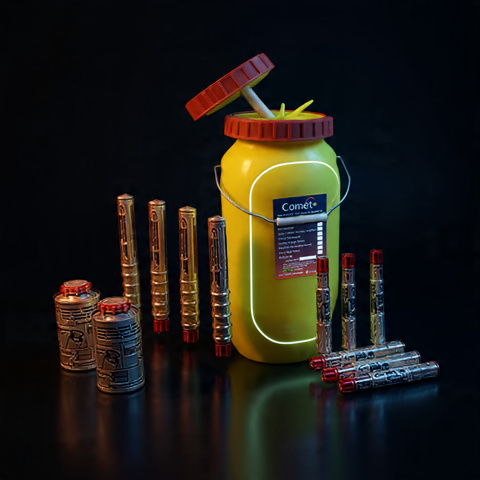
At sea, emergencies can occur without warning — from engine failures to abandon-ship situations. In such moments, communication with rescuers becomes critical. When radios fail or visibility is poor, Pyrotechnics Onboard Ship provide reliable visual signals to indicate distress.
Under the SOLAS (Safety of Life at Sea) Convention, ships must carry specific types of pyrotechnics — including rocket parachute flares, hand flares, buoyant smoke signals, and the Line-Throwing Appliance (LTA) — to ensure effective distress communication and rescue operations.
⚓ What Are Pyrotechnics?
Pyrotechnics are devices that produce light, smoke, or sound through a controlled chemical reaction. Onboard ships, they are used as distress signals to indicate that a vessel or person is in danger and needs immediate assistance.
These devices are designed to operate effectively in all weather conditions — day or night — and can be seen from long distances by nearby ships, aircraft, or rescue services.
📜 SOLAS Requirements for Pyrotechnics Onboard Ship
The carriage and performance standards of pyrotechnics are governed by SOLAS Chapter III, Regulation 6 and 7, and the LSA (Life-Saving Appliances) Code, Chapter III, Section 3.1–3.3.
The following are the main pyrotechnic signals required onboard:
1. Hand Flares
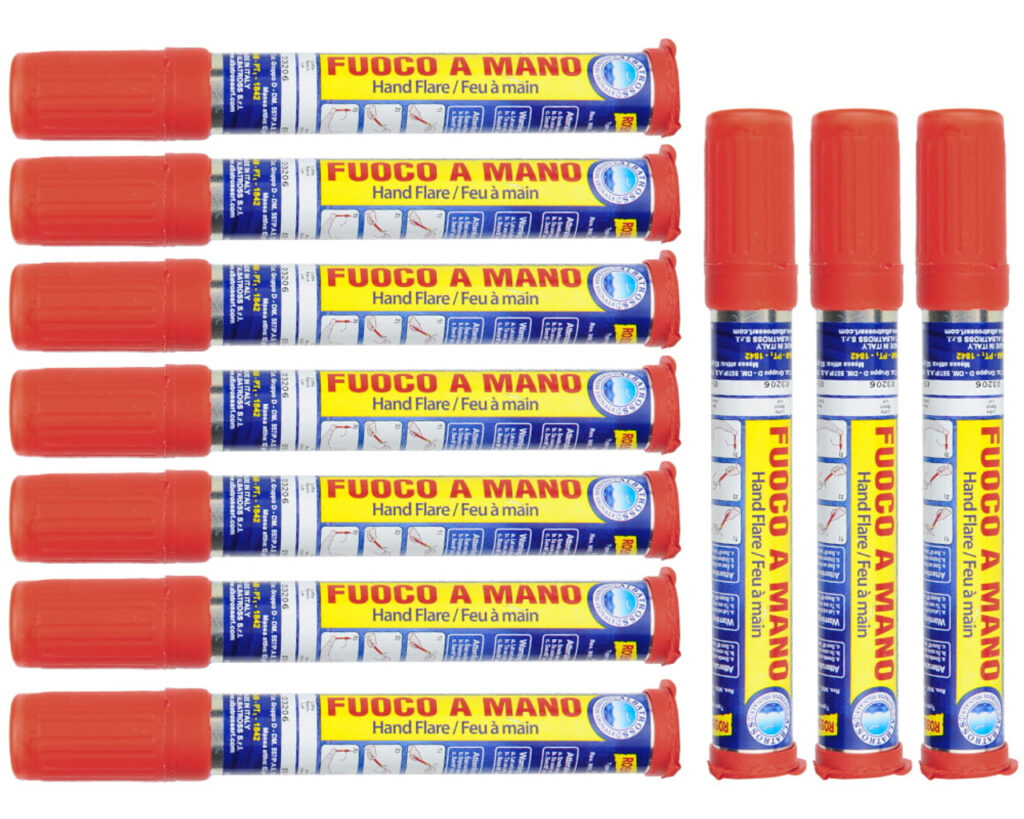
- Purpose: Used for short-range signaling to attract the attention of nearby ships or rescuers.
- Quantity Required (SOLAS Regulation 7.1):
- Each lifeboat and life raft must carry at least six (6) hand flares.
- Performance Standards:
- Must burn with a bright red color for at least 1 minute.
- Must be visible in all directions and remain safe to handle.
- Must continue burning even after being dropped in water.
2. Rocket Parachute Flares
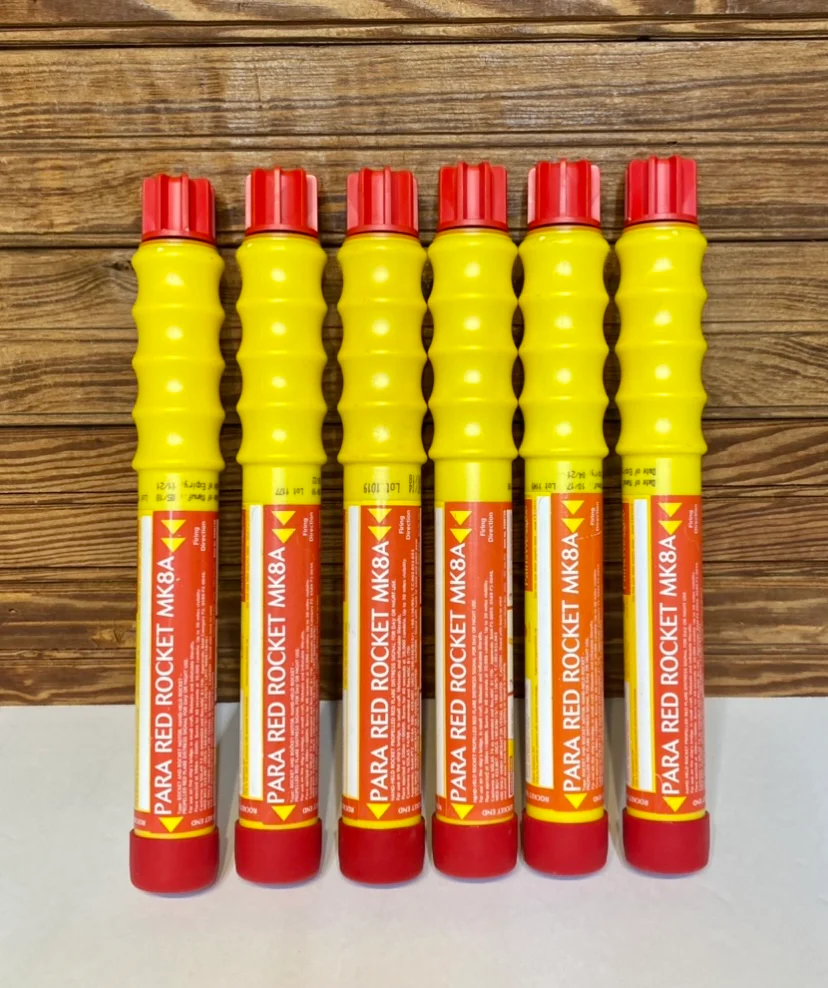
- Purpose: Used for long-range distress signaling; visible from several miles away.
- Quantity Required:
- Every ship must carry at least 12 rocket parachute flares on the navigational bridge.
- Performance Standards:
- Must reach an altitude of at least 300 meters.
- Must burn with a bright red light for at least 40 seconds.
- The light must have a luminous intensity of not less than 30,000 candelas.
- The flare must descend slowly by parachute.
3. Buoyant Smoke Signals
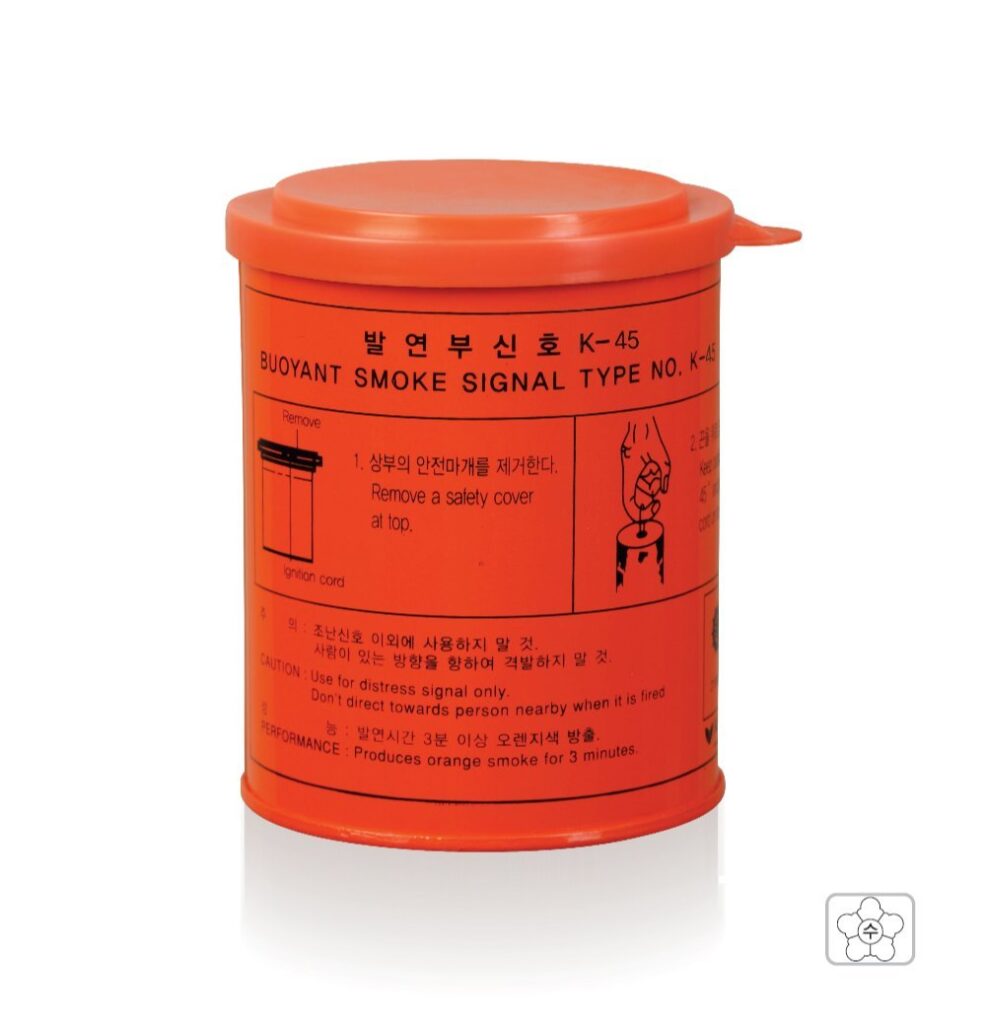
- Purpose: Used during the day to indicate the ship’s or lifeboat’s position to rescuers.
- Quantity Required:
- Each lifeboat and life raft must carry at least two (2) buoyant smoke signals.
- Performance Standards:
- Must emit highly visible orange smoke for at least 3 minutes.
- Must continue emitting smoke when floating on water.
- Must not emit flame during operation.
4. 🧭 Line-Throwing Appliance (LTA)
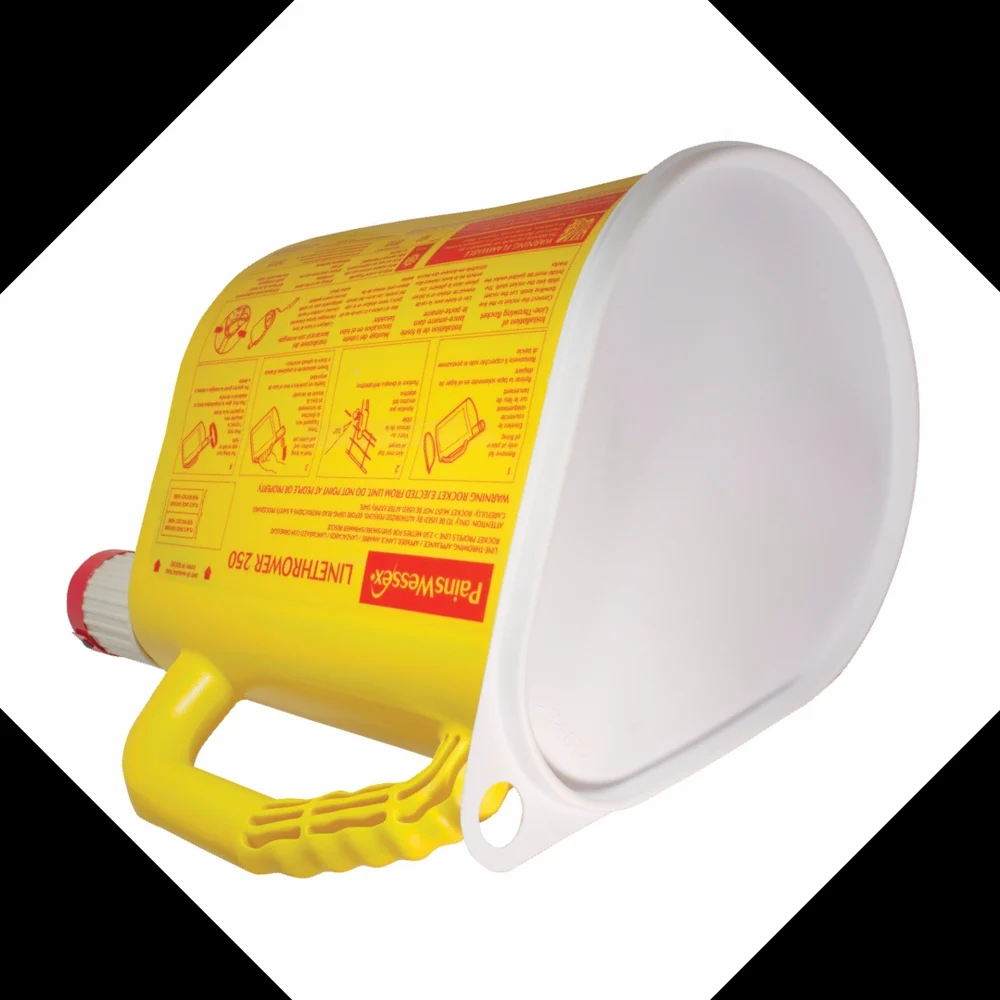
- Purpose: The Line-Throwing Appliance is used to establish a line connection between a ship and another vessel, or between a ship and shore, in emergencies such as rescue operations, towing, or mooring.
- Location: Stored on the bridge or another easily accessible area.
- Quantity Required (as per SOLAS Chapter III, Regulation 18):
- Every SOLAS ship must carry at least one Line-Throwing Appliance.
- Each set must contain four (4) projectiles and four (4) lines.
- Performance Standards (LSA Code 7.1):
- Each projectile must carry the line for at least 230 meters in calm weather.
- The line must be easily detachable and capable of floating on water.
- The device must be safe to handle and remain functional under marine conditions.
- Usage: LTAs are used to connect rescue lines to distressed vessels or to aid survivors by passing ropes across open water.
🧭 Storage of Pyrotechnics Onboard
To ensure safety and quick accessibility, SOLAS specifies clear guidelines for the storage of pyrotechnics onboard ships:
- Must be stored in watertight and corrosion-resistant containers.
- Containers must be clearly marked: “DISTRESS SIGNALS – PYROTECHNICS.”
- Storage areas should be cool, dry, and away from direct heat or sunlight.
- Pyrotechnics on the bridge must be easily accessible during emergencies.
- Those in lifeboats and life rafts should be stowed securely in the equipment locker.
- Expired or used pyrotechnics must be disposed of as per flag-state and port authority regulations — never thrown overboard.
🔧 Maintenance and Inspection
Regular checks are vital to ensure all pyrotechnics remain serviceable and safe for use.
Inspection Guidelines:
- Inspect monthly as part of the ship’s Safety Equipment Maintenance Schedule.
- Verify expiry dates (usually valid for 3 years from manufacture).
- Check seals, labels, and physical condition for damage or corrosion.
- Replace any expired items immediately.
- Record inspections in the LSA Maintenance Log.
🧑✈️ Crew Training and Familiarization
Under SOLAS Chapter III, Regulation 19, all crew members must be trained in the use and operation of pyrotechnics.
During emergency drills, officers must explain:
- The different types of pyrotechnics and their functions.
- Safety precautions during handling and activation.
- Proper disposal of expired or malfunctioning devices.
Training ensures that during real emergencies, the crew can use these devices effectively and safely to signal for help.
⚠️ Safety Precautions When Handling Pyrotechnics
- Never use pyrotechnics for testing or entertainment.
- Always point away from people, lifeboats, and the ship’s structure.
- Handle with dry hands and protective gloves.
- Activate only when rescue or nearby vessels are visible.
- Do not open or tamper with the device casing.
🌊 Importance of Pyrotechnics Onboard Ship
Pyrotechnics are not just mandatory; they are lifesaving tools.
- Rocket parachute flares attract distant rescuers.
- Hand flares and smoke signals guide nearby vessels.
- The Line-Throwing Appliance helps establish a physical connection in rescue or towing operations.
Together, these devices form a complete emergency communication system, ensuring that even in the worst conditions, the ship can signal for help and coordinate rescue efforts effectively.
✅ Conclusion
The Pyrotechnics Onboard Ship as per SOLAS regulations are essential components of maritime safety. By carrying, maintaining, and using these distress signals correctly, ships ensure compliance with international safety laws and, more importantly, safeguard the lives of all onboard.
Proper training, inspection, and readiness are the keys to ensuring that when the time comes, the crew can use pyrotechnics effectively to signal for rescue.
⚠️ Disclaimer:This article is for educational purposes only. Always follow the latest SOLAS and IMO guidelines for accurate maritime safety compliance.