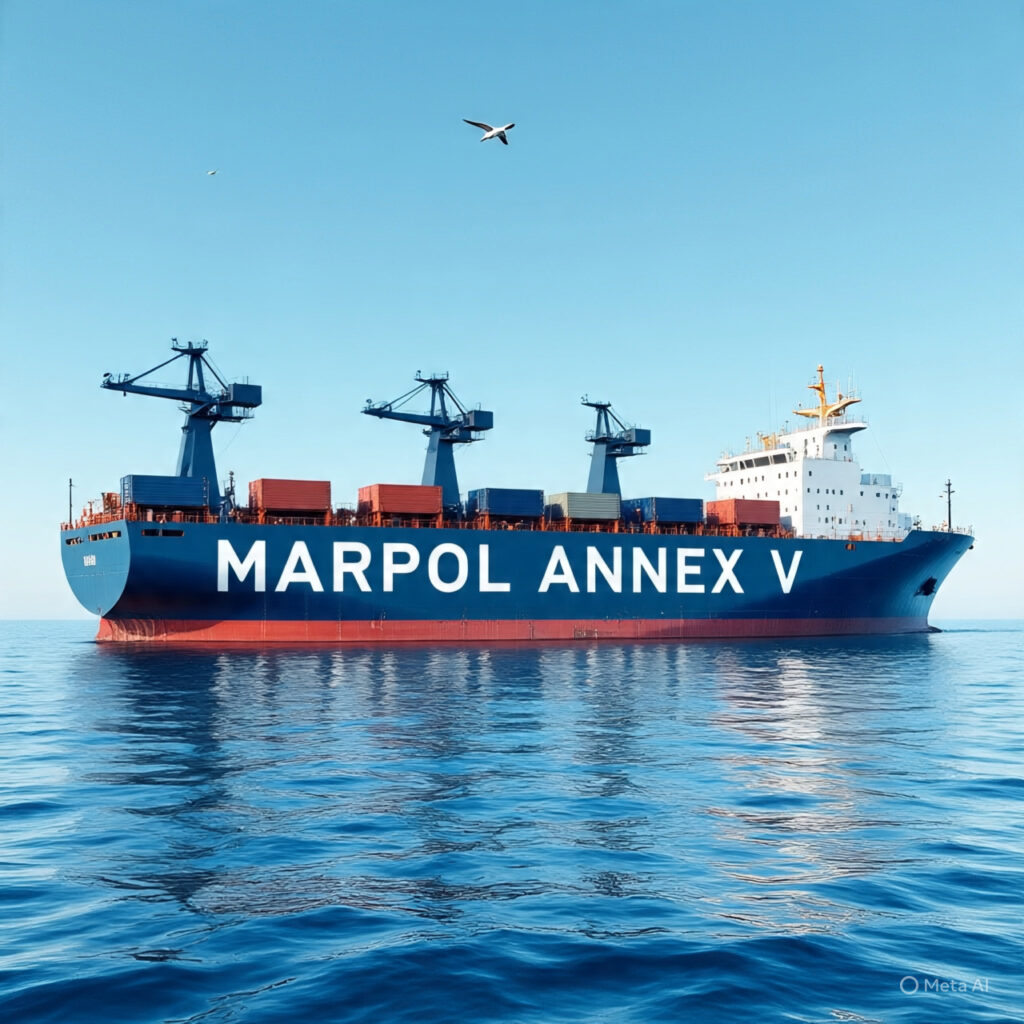
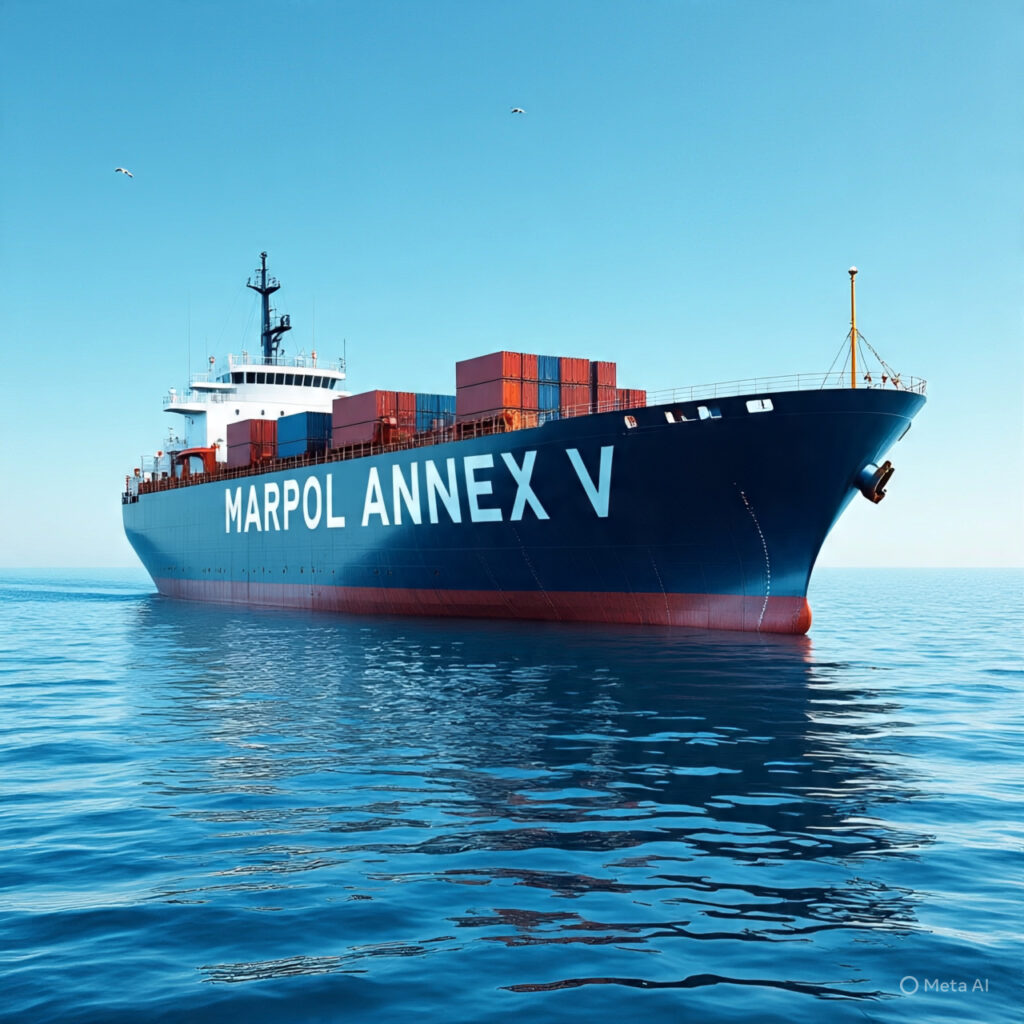
The International Convention for the Prevention of Pollution from Ships (MARPOL 73/78) sets the global framework for preventing marine pollution. Among its six annexes, MARPOL Annex V focuses on the Prevention of Pollution by Garbage from Ships. It entered into force on 31 December 1988 and has since been strengthened through amendments to reduce marine litter effectively.
Objective of MARPOL Annex V
The primary objective of MARPOL Annex V is to eliminate or reduce garbage discharges from ships into the sea. Garbage, especially plastics, seriously threatens marine life, human health, and coastal ecosystems. Therefore, the annex establishes clear rules on what garbage ships can discharge, where, and under what conditions.
Applicability of MARPOL Annex V
Unlike other annexes, MARPOL Annex V applies to all ships, regardless of type or size. It includes:
- Cargo ships,
- Passenger ships,
- Offshore platforms, and
- Small vessels.
Consequently, no vessel can ignore garbage management rules.
Key Regulations under MARPOL Annex V
MARPOL Annex V provides a detailed framework for managing ship-generated garbage.
1. Categories of Garbage
The annex divides garbage into several categories, each assigned a color code to simplify segregation and handling.
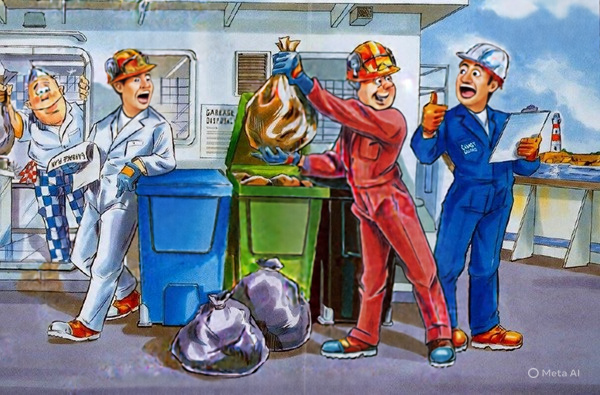
🚢 MARPOL Annex V Garbage Categories and Color Codes
- Plastics ♻️ → Blue
- Examples: plastic bags, ropes, fishing nets, bottles.
- Discharge: Ships cannot discharge plastics anywhere at sea.
- Food Waste 🍲 → Green
- Examples: galley leftovers, biodegradable food.
- Discharge: Ships may discharge food waste beyond 3 or 12 nautical miles, depending on treatment.
- Domestic Waste 🏠 → Black
- Examples: paper, rags, glass, cardboard, packaging.
- Discharge: Discharge is restricted; only allowed outside Special Areas under strict conditions.
- Cooking Oil 🛢️ → Brown
- Examples: used cooking oil, kitchen grease.
- Discharge: Ships must deliver this waste to port reception facilities.
- Incinerator Ashes 🔥 → Grey
- Examples: ash from burning garbage, especially plastics and metals.
- Discharge: Ships cannot discharge incinerator ash into the sea.
- Operational Waste ⚙️ → Yellow
- Examples: cleaning agents, maintenance waste, cargo-associated material.
- Discharge: Rules depend on the region and waste type.
- Cargo Residues (Non-Harmful to Marine Environment) 📦 → White
- Examples: leftover cargo residues not harmful to the sea.
- Discharge: Allowed under specific conditions while en route.
- Cargo Residues (Harmful to Marine Environment – HME) ⚠️ → Red
- Examples: cargo classified as harmful under MARPOL Annex V.
- Discharge: Ships must discharge residues only to port reception facilities.
- Animal Carcasses 🐟 → Pink
- Examples: remains of animals transported as cargo or generated onboard.
- Discharge: Allowed only outside Special Areas and far from land.
- Fishing Gear 🎣 → Orange
- Examples: old fishing nets, lines, gear.
- Discharge: Prohibited at sea; if gear is lost, crews must report it.
2. General Prohibition of Plastics
Plastics create long-lasting harm to marine ecosystems. Therefore, ships cannot discharge any plastic items, including ropes, nets, bags, or incinerator ash containing plastics.
3. Discharge Rules for Other Garbage
- Ships may discharge food waste only under distance and treatment requirements.
- Crews can discharge non-harmful cargo residues under specific conditions while underway.
- Ships may only dispose of animal carcasses under IMO guidelines and far away from shore.
4. Garbage Management Plans and Records
- Ships of 100 gross tonnage and above, or carrying 15 or more persons, must carry a Garbage Management Plan.
- Ships of 400 gross tonnage and above, or carrying 15 or more persons on international voyages, must also maintain a Garbage Record Book.
- Offshore platforms must follow the same requirements.
5. Placards
Ships of 12 meters or more in length must display placards in crew and passenger areas, explaining Annex V garbage rules.
Special Areas under MARPOL Annex V
MARPOL Annex V identifies several Special Areas where stricter discharge rules apply due to high sensitivity.
List of Special Areas:
- The Mediterranean Sea
- The Baltic Sea
- The Black Sea
- The Red Sea
- The “Gulfs” area (Persian Gulf)
- The North Sea
- The Antarctic Area (south of latitude 60°S)
- The Wider Caribbean Region, including the Gulf of Mexico and the Caribbean Sea
Rules in Special Areas
- Ships cannot discharge garbage in these zones, except for food waste under distance restrictions.
- In the Antarctic Area, even food waste discharge is prohibited.
- Ships must use port reception facilities for disposal in Special Areas.
Enforcement and Compliance
Authorities enforce Annex V through:
- Flag States, which issue certificates and check Garbage Management Plans.
- Port States, which inspect Garbage Record Books, placards, and segregation systems.
If ships fail to comply, they risk fines, detention, or even port entry bans.
Importance of MARPOL Annex V
MARPOL Annex V plays a crucial role in:
- Protecting marine ecosystems from plastic and other waste pollution.
- Preserving biodiversity, including turtles, seabirds, and fish.
- Safeguarding human health from microplastics in seafood.
- Encouraging sustainable waste management practices onboard ships.
- Promoting global consistency in shipping regulations.
Conclusion
MARPOL Annex V provides a robust framework to regulate garbage discharge from ships. With its color-coded categories, strict rules, and designation of Special Areas, the annex ensures that ships handle garbage responsibly. Therefore, compliance with Annex V is not only a legal obligation but also an environmental commitment to protect the world’s oceans.
✅ Disclaimer: This blog is for educational purposes and awareness only. For professional advice, always consult the official MARPOL text and IMO guidelines.