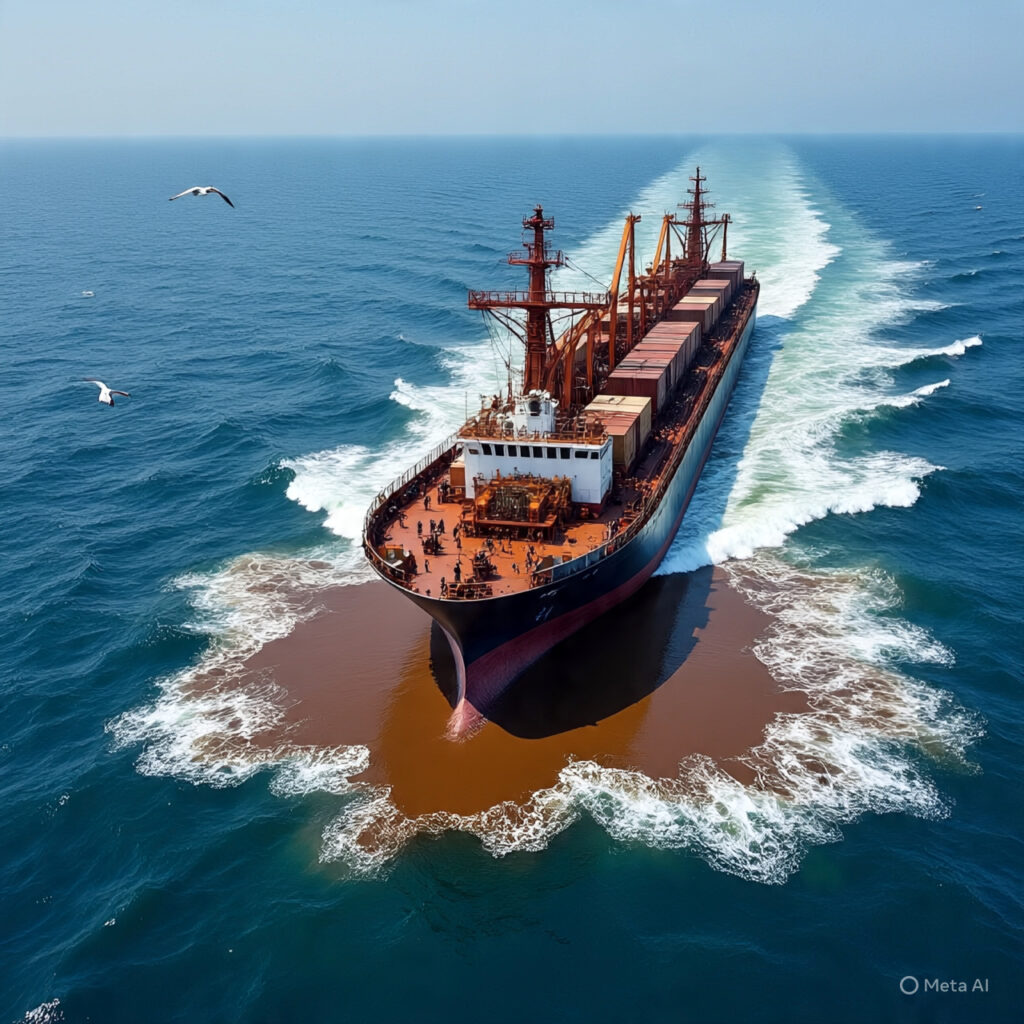
Oil pollution remains one of the biggest threats to our oceans. Even a small spill can damage marine life, harm birds, and destroy sensitive coastal ecosystems. To prevent such disasters, the International Maritime Organization (IMO) introduced the MARPOL Convention – the International Convention for the Prevention of Pollution from Ships.
MARPOL has six annexes, each addressing different types of pollution. Among them, MARPOL Annex I – Regulations for the Prevention of Pollution by Oil plays the most important role because it focuses on oil pollution caused by ships. Let’s explore its rules and requirements in simple language.
What is MARPOL Annex I?
Annex I came into force in 1983. It applies to all ships carrying oil as fuel or cargo, including oil tankers, offshore platforms, and drilling units. Moreover, it sets strict discharge criteria to stop oil and oily water from entering the sea.
Its goal is clear: prevent oil pollution and protect the marine environment.
Main Rules Under MARPOL Annex I
1. Oil Discharge Regulations
Ships cannot freely discharge oily water into the sea. They may only discharge if all of the following conditions are met:
- The ship is en route (moving).
- The oil content of the effluent stays below 15 ppm (parts per million).
- An Oily Water Separator (OWS) with a 15 ppm alarm and automatic stopping device treats the water.
- The ship sails outside a Special Area.
👉 In Special Areas, all discharge of oil or oily mixtures is completely banned.
2. Special Areas Under Annex I
The IMO designated certain regions as Special Areas because they are especially vulnerable to oil pollution. These include:
- Mediterranean Sea
- Baltic Sea
- Black Sea
- Red Sea
- “Gulfs Area” (Persian/Arabian Gulf region)
- Gulf of Aden
- Antarctic Area (south of latitude 60° S)
- North West European Waters (including North Sea & English Channel)
- Oman area of the Arabian Sea
Therefore, ships must avoid any discharge in these areas except during emergencies for safety.
3. Oil Record Book (ORB)
Every ship must keep an Oil Record Book to record all operations related to oil. Crews must enter activities such as:
- Loading and discharging cargo oil.
- Ballasting and cleaning of fuel or cargo tanks.
- Discharging bilge water through the OWS.
- Collecting and disposing of sludge.
The rule applies to:
- Oil tankers 150 GT and above.
- All other ships 400 GT and above.
Since port authorities often inspect this book, accurate entries help ships avoid penalties.
4. Shipboard Oil Pollution Emergency Plan (SOPEP)
Ships of 400 GT and above and oil tankers of 150 GT and above must carry a SOPEP Manual.
This manual explains:
- What actions the crew should take in case of an oil spill.
- How to notify coastal states and authorities.
- Which equipment to use for reducing pollution.
As a result, crews can act quickly during emergencies and limit environmental damage.
5. Pollution Prevention Equipment
Ships must carry the following equipment:
- Oily Water Separator (OWS) – separates oil from bilge water.
- 15 ppm Bilge Alarm & Automatic Stop Device – prevents illegal discharge.
- Sludge Tanks – store oil residues safely.
- Standard Discharge Connection – transfers oily residues to port facilities.
Thus, the equipment ensures that ships handle oil in a safe and compliant manner.
6. Port Reception Facilities
Ports must provide facilities for ships to discharge oily residues and sludge safely. In this way, vessels avoid polluting the sea and dispose of waste properly.
7. Surveys and Certification
Ships undergo regular inspections to ensure compliance with Annex I:
- Initial Survey – before entering service.
- Renewal Survey – every 5 years.
- Intermediate Survey – halfway through the certificate’s validity.
- Annual Survey – once every year.
After passing these surveys, ships receive the International Oil Pollution Prevention (IOPP) Certificate, which remains valid if they maintain compliance.
Why MARPOL Annex I Matters
Annex I protects marine life and coastal environments from oil pollution. It also promotes safe ship operations and holds shipowners accountable. Furthermore, it reduces the risk of accidents turning into environmental disasters.
Challenges in Real Life
However, implementation is not always easy. Some ships still make illegal discharges to save costs. Maintaining pollution-prevention equipment can also be expensive. In addition, monitoring vast ocean areas remains difficult for authorities. Therefore, proper crew training and strict enforcement are essential.
Conclusion
MARPOL Annex I – Regulations for the Prevention of Pollution by Oil stands as the foundation of global efforts to stop oil pollution at sea. By enforcing strict discharge limits, requiring oil record books, mandating emergency plans, and creating special areas, it ensures responsible ship operations.
For every seafarer, the golden rules are:
✅ Never discharge above 15 ppm
✅ Never discharge in Special Areas
✅ Always record actions in the Oil Record Book
When ships follow these rules, they not only avoid penalties but also help protect the oceans for future generations.
Pingback: MARPOL Annex II – Regulations for the Control of Pollution by Noxious Liquid Substances in Bulk - Jhazi Bhaiya G
Pingback: MARPOL Annex VI: Prevention of Air Pollution from Ships - Jhazi Bhaiya G
Pingback: MARPOL Annexes I–VI: Objectives & Special Areas - Jhazi Bhaiya G