Introduction
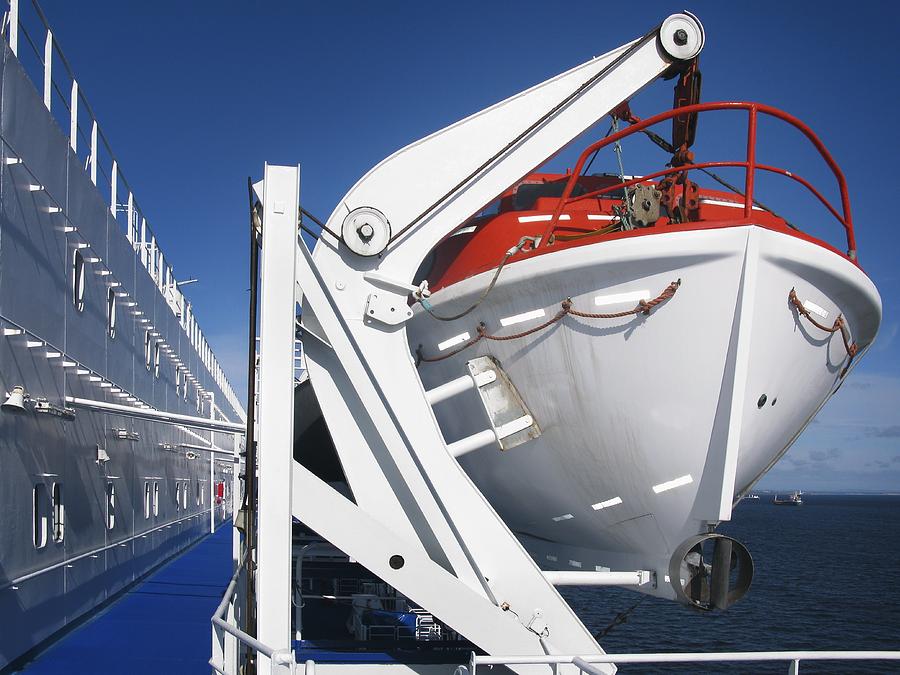
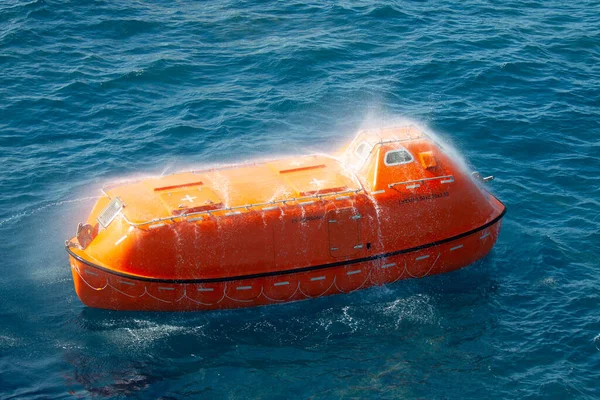
The Lifeboat Onboard Ship plays a vital role in saving lives at sea. According to the International Convention for the Safety of Life at Sea (SOLAS), every seagoing vessel must carry lifeboats that can accommodate all persons on board in the event of an emergency. These boats act as the last line of safety when evacuation becomes necessary.
Lifeboats are designed, built, and equipped under SOLAS Chapter III, which specifies detailed standards for their construction, launching arrangements, and equipment. Understanding these requirements helps seafarers handle lifeboats correctly during drills or emergencies.
Types of Lifeboats Onboard Ship
SOLAS recognizes several types of lifeboats, each designed for specific purposes and vessel types:
- Open Lifeboat.
- No roof or cover.
- Used mainly on older ships.
- Offers minimal protection from weather or waves
- Partially Enclosed Lifeboat
- Provides overhead cover for protection.
- Easier to launch and operate.
- Common on cargo ships.
- Totally Enclosed Lifeboat
- Fully covered with a watertight canopy.
- Protects occupants from fire, heat, and rough seas.
- Mandatory on oil tankers and chemical carriers.
- Free-Fall Lifeboat
- Launched from a ramp, sliding freely into the sea.
- Allows quick evacuation even during fire or heavy listing.
- Usually installed at the ship’s stern.
- Rescue Boat (Fast Rescue Craft)
- Used to recover persons from the water.
- Carries limited persons but high maneuverability.
SOLAS Requirements for Lifeboats
Under SOLAS Chapter III – Life-Saving Appliances and Arrangements, every ship must meet specific requirements for lifeboats:
1. Carriage Requirements
- Each ship must carry lifeboats for 100% of the total persons onboard.
- Passenger ships must carry additional lifeboats or life rafts for at least 25% more.
- Lifeboats should be distributed equally on both port and starboard sides.
2. Construction Requirements
- Lifeboats must be strong, durable, and fire-resistant.
- They must remain afloat and upright when fully loaded.
- The hull should be capable of withstanding drops from the embarkation deck to the water.
- Materials must resist corrosion and mechanical damage.
3. Launching Arrangements
- Lifeboats must be ready for launching within 5 minutes after the abandon-ship order.
- They must be launchable when the ship is listed up to 20° or trimmed by 10°.
- Davit systems must allow safe, controlled lowering even in rough weather.
- Free-fall systems must enable rapid escape without delay.
4. Capacity and Markings
- Each lifeboat must clearly show:
- Capacity (number of persons)
- Maker’s name and serial number
- SOLAS approval number
- Launching instructions
- The lifeboat must have at least two independent means of propulsion (manual and mechanical).
Equipment Carried in Lifeboats (as per SOLAS)
Every lifeboat must contain a SOLAS-approved equipment kit to ensure survival at sea. Items include:
- Rations and water (10,000 kJ per person, 1.5 liters of water)
- Sea anchor and painter line
- Floating knife and bailer
- Drinking cup, bucket, and sponges
- First-aid kit and seasickness tablets
- Flares – 4 rocket parachute signals, 6 hand flares, 2 smoke signals
- Compass and daylight signaling mirror
- Flashlight and spare batteries
- Whistle, fishing kit, and repair tools
- Thermal protective aids (TPA) – for at least 10% of persons onboard
- Manual pump and paddles
- Survival instructions and training manual
Maintenance and Testing Requirements
Regular inspection ensures that lifeboats remain functional and safe. SOLAS mandates:
- Weekly Inspection: Check condition of falls, release hooks, securing devices, and engines.
- Monthly Inspection: Inspect davits, winches, lashings, and operational readiness.
- Annual Inspection: Certified personnel from an approved organization must test the launching and engine systems.
- 5-Yearly Load Test: Conduct full load testing of falls, on-load release gear, and structure integrity.
Proper records of all tests and maintenance must be entered in the Safety Equipment Logbook.
Drills and Training
Under SOLAS Regulation 19, every crew member must participate in abandon-ship drills at least once every month. During these drills:
- Lifeboats are lowered to the water.
- Engines are run for at least three minutes.
- Release hooks and communication systems are checked.
These drills help ensure that the crew can operate lifeboats confidently in real emergencies.
Safety Features of Modern Lifeboats
Modern lifeboats are equipped with:
- Automatic sprinkler systems to reduce heat.
- Air supply units for toxic or smoky environments.
- Self-righting capability in case of capsizing.
- Radar reflectors and VHF radios for easy detection by rescuers.
- Insulated hulls and seating for comfort in cold climates.
These innovations make lifeboats much safer and more reliable than older models.
Importance of Lifeboats
Lifeboats are the final safeguard for seafarers. They ensure that every life onboard has a chance of survival, even in catastrophic conditions. Because emergencies at sea can happen suddenly, training, maintenance, and readiness are essential.
Conclusion
The Lifeboat Onboard Ship, as required by SOLAS, serves as a crucial lifesaving appliance. Its design, equipment, and operation are strictly regulated to guarantee safety for everyone onboard. With regular inspections, drills, and awareness, seafarers can rely on lifeboats as their best chance of survival during emergencies.
Disclaimer:This article is for educational purposes only. Always follow company SMS, flag-state circulars, and latest SOLAS amendments for compliance.