Introduction
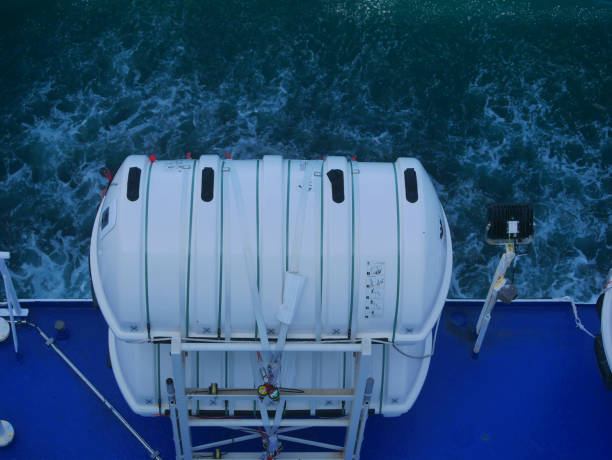
The Life Raft Onboard Ship is one of the most important life-saving appliances required by the International Convention for the Safety of Life at Sea (SOLAS). In the event of an emergency such as fire, collision, or sinking, life rafts give crew and passengers a safe means to abandon the ship and survive at sea until rescue arrives.
SOLAS Chapter III outlines the design, construction, carriage, and maintenance requirements for life rafts. Every seafarer must understand these details to ensure proper operation and survival during emergencies.
What Is a Life Raft?
A life raft is an inflatable survival craft designed to support people in distress at sea. It automatically inflates when released and provides protection from waves, cold, and wind.
Unlike a lifeboat, a life raft is lightweight, compact, and launched using hydrostatic release units or manually by pulling the painter line.
Types of Life Rafts
- Inflatable Life Raft:
- Commonly used on ships.
- Stored in a fiberglass canister or valise and inflated by compressed gas.
- Rigid Life Raft:
- Non-inflatable type.
- Used mainly on smaller vessels or as standby equipment.
Requirements of Life Rafts as per SOLAS
According to SOLAS Chapter III, Regulations 31–34, the following requirements apply:
1. Carriage Requirements
- All ships must carry sufficient life-saving capacity for everyone onboard.
- Life rafts must be distributed on both port and starboard sides.
- If lifeboats cannot accommodate everyone, additional life rafts must be provided.
- Cargo ships of 500 GT and above must carry at least one life raft forward and one aft.
2. Capacity
- Each life raft must carry at least six persons.
- The total capacity of life rafts and lifeboats combined must exceed the ship’s complement by 25 %.
3. Launching Arrangements
- Life rafts should be stowed with hydrostatic release units (HRU) for automatic release if the ship sinks.
- They must be launched easily within 5 minutes, even when the ship is listed up to 20° or trimmed up to 10°.
- Davit-launched life rafts are required on passenger and larger cargo vessels.
4. Inflation and Float-Free Operation
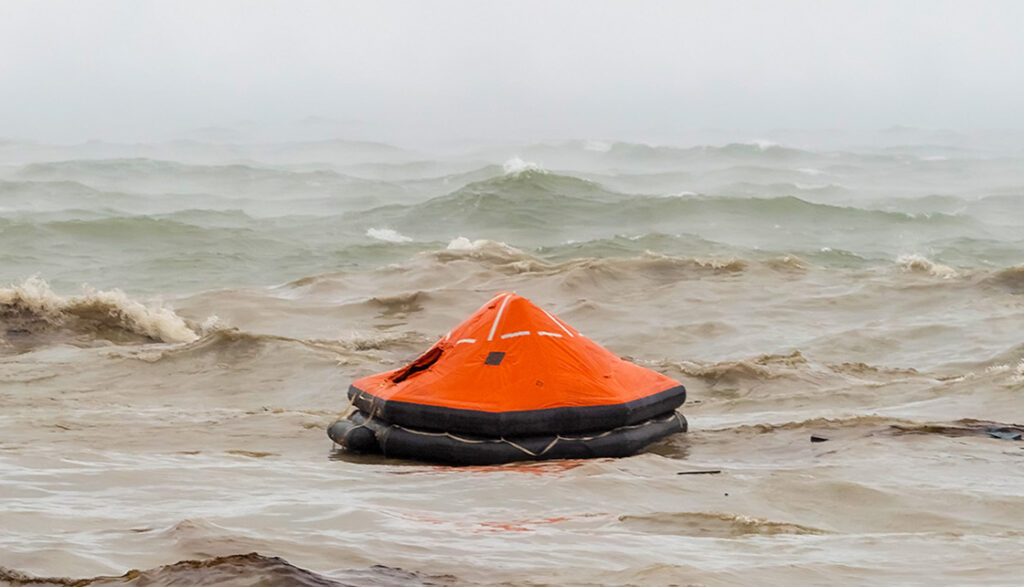
- When submerged to a depth of about 4 meters, the HRU automatically cuts the securing strap, releasing the raft.
- Pulling the painter line inflates the raft using compressed CO₂ or N₂ gas within 30 seconds.
- The raft remains attached by a weak link, which breaks if the ship sinks, allowing it to float free.
5. Marking and Identification
Each life raft must display:
- Manufacturer’s name and serial number
- Date of manufacture
- Capacity (number of persons)
- SOLAS approval mark
- “SOLAS A” or “SOLAS B” pack indication
Life Raft Equipment (SOLAS Pack Contents)
Every life raft carries survival equipment, divided into SOLAS A and SOLAS B packs depending on the voyage type.
SOLAS A Pack (for international voyages)
Includes:
- Rescue quoit and line
- Sea anchor
- Floating knife
- Bailing bucket and sponge
- Drinking water (1.5 litres per person)
- Rations (10,000 kJ per person)
- First-aid kit
- Thermal protective aids (TPA)
- Whistle and signaling mirror
- Flares: 2 parachute rockets, 2 hand flares, 2 smoke signals
- Flashlight and batteries
- Fishing kit and anti-seasickness tablets
SOLAS B Pack (for short voyages)
Similar items but with reduced quantities of food and water.
Maintenance and Inspection
To ensure reliability, SOLAS mandates strict maintenance schedules:
- Monthly Inspection:
Crew must check the canister, HRU expiry date, securing straps, and launching arrangements. - Annual Inspection:
Life rafts must be serviced at an approved service station every 12 months. - Hydrostatic Release Unit:
Must be replaced before expiry, typically every 2 years. - Record Keeping:
All inspections and replacements must be entered in the ship’s Safety Equipment Logbook.
Launching Procedure
During an emergency, follow these steps:
- Check the area for safe launching.
- Remove lashings and secure the painter line to a strong point.
- Throw the canister overboard.
- Pull the painter line sharply to trigger inflation.
- Board the raft using the boarding ladder or rope.
- Cut the painter line after everyone is onboard.
- Deploy the sea anchor and maintain position until rescue arrives.
Survival Inside the Life Raft
Once onboard:
- Keep the canopy closed to prevent water entry.
- Use bailers and sponges to remove excess water.
- Distribute rations and water wisely.
- Use signaling equipment (flares, mirrors, torch) to attract attention.
- Maintain crew morale and communication.
Proper behavior inside the raft increases survival chances until rescue teams arrive.
Importance of Drills and Training
SOLAS requires regular abandon-ship drills to ensure crew are familiar with launching procedures and equipment use. These drills help avoid panic, reduce mistakes, and ensure a coordinated evacuation when time is critical.
Conclusion
The Life Raft Onboard Ship is a crucial lifesaving appliance that provides safety and survival during maritime emergencies. As per SOLAS Chapter III, ships must carry approved, well-maintained life rafts with proper equipment and trained personnel.
When properly maintained and used, life rafts can make the difference between tragedy and survival at sea.
Disclaimer:This article is for educational purposes. Always follow your company’s safety management system (SMS) and the latest SOLAS regulations during operations.