Introduction
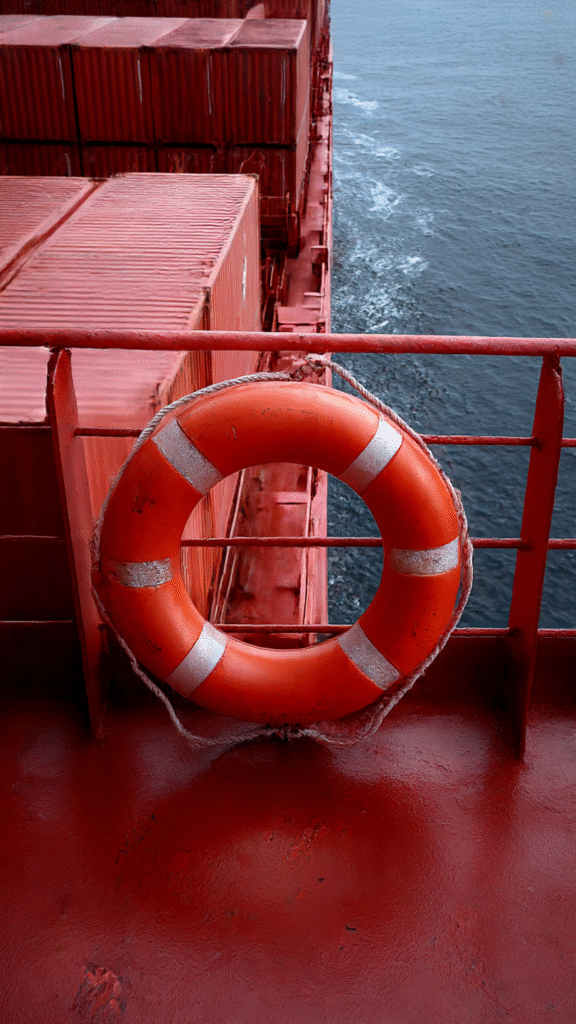
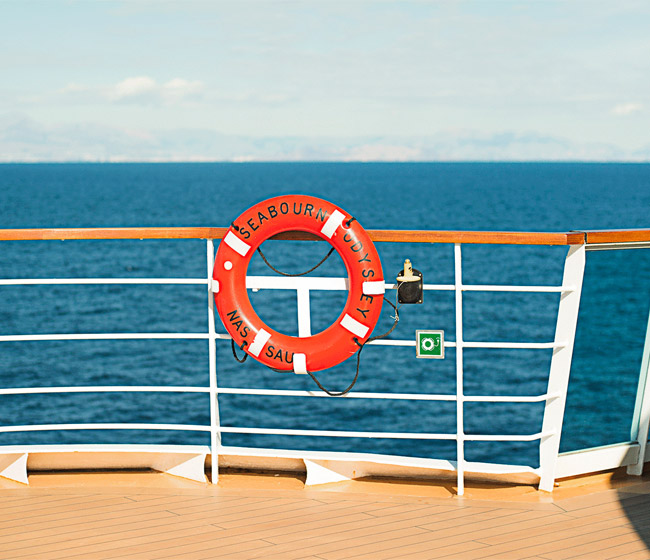
A Life Buoy Onboard Ship is one of the most essential lifesaving appliances required by international maritime law. It acts as a floating ring that provides immediate support to anyone who falls overboard, helping them remain afloat until rescued. According to the International Convention for the Safety of Life at Sea (SOLAS) Chapter III – Regulation 7.1, every ship must carry a specific number of life buoys that meet strict standards for construction, performance, and placement. These requirements ensure that the equipment is always accessible, reliable, and effective during an emergency at sea.
Purpose of Life Buoy
The primary purpose of a life buoy is to:
- Provide instant flotation support to a person overboard.
- Help the crew mark the position of a person in the water.
- Allow the ship’s crew to quickly throw the buoy during a man-overboard situation.
- Assist in rescue operations, especially at night with the help of self-igniting lights and smoke signals.
Therefore, proper maintenance and correct placement of life buoys are crucial for onboard safety.
Construction Requirements (as per SOLAS)
Under SOLAS Chapter III Regulation 7.1, all life buoys must meet specific construction standards:
- They must be circular in shape and made of rigid, non-inflammable, and water-resistant material.
- The outer diameter should not exceed 800 mm, and the inner diameter should not be less than 400 mm.
- The weight of each life buoy should be at least 2.5 kg but not more than 6 kg to ensure easy throwing and sufficient buoyancy.
- The buoy must support at least 14.5 kg of iron in freshwater for 24 hours, ensuring it stays afloat even when damaged.
- Each buoy must have a grab line made of buoyant rope, secured at four equidistant points around the circumference, forming four equal loops. The grab line must be at least 9.5 mm in diameter and not less than four times the outer diameter of the buoy.
Number and Location of Life Buoys (as per SOLAS)
According to SOLAS Chapter III Regulation 7.1.1, the number of life buoys depends on the length of the vessel:
| Ship’s Length | Minimum Number of Life Buoys Required |
|---|---|
| Less than 100 m | 8 |
| 100 m to 150 m | 10 |
| 150 m to 200 m | 12 |
| 200 m and above | 14 or more |
Location Requirements:
- Life buoys must be distributed evenly on both sides of the ship.
- At least one buoy must be located near the stern for immediate use.
- Each buoy must be ready for instant release without obstruction.
Proper placement ensures that a Life Buoy Onboard Ship is always within reach during an emergency.
Markings on Life Buoys
Each life buoy must be clearly marked with the following details:
- Ship’s name and port of registry.
- Retro-reflective tapes for night visibility.
- SOLAS approval marks and manufacturer’s identification.
These markings not only aid visibility but also confirm that the buoy meets international standards.
Life Buoys with Self-Igniting Lights and Smoke Signals
To improve visibility at night or in poor weather, certain life buoys must have self-igniting lights or smoke signals, as required by SOLAS Regulation 7.1.3.
- Life Buoys with Self-Igniting Lights
- At least half of the total life buoys must have a self-igniting light.
- The light must be white and burn for at least two hours continuously.
- It must illuminate the water and remain waterproof and corrosion-resistant.
- Life Buoys with Smoke Signals
- At least two life buoys must be fitted with combined self-igniting light and smoke signals.
- The smoke must be dense orange and last for at least 15 minutes.
- These buoys are usually positioned on each bridge wing and can be released remotely from the bridge.
Such combinations greatly improve the chances of locating a person in the water, especially during darkness.
Life Buoy with Lifeline (Buoyant Line)
As per SOLAS Regulation 7.1.2, at least two life buoys on every vessel must be fitted with buoyant lifelines of not less than 30 meters in length. These lines allow the crew to pull the person toward the ship or provide extra support during recovery.
Colour and Visibility
All life buoys must be painted in bright orange, which is universally recognized for safety and high visibility. This color stands out sharply against both the sea and the ship’s structure.
Maintenance and Inspection
Regular maintenance ensures that every Life Buoy Onboard Ship remains fully operational. The crew should:
- Inspect all life buoys weekly for cracks, deformation, or missing parts.
- Verify that lights, smoke signals, and lifelines are functioning.
- Test release mechanisms periodically.
- Replace expired batteries or smoke canisters immediately.
- Record inspections and repairs in the Lifesaving Appliances (LSA) logbook.
Consistent inspection helps avoid failure during an emergency and ensures full compliance with SOLAS requirements.
Importance of Life Buoys
Life buoys are the most immediate response tool during a man-overboard situation. They provide buoyancy, visibility, and tracking for the person in distress. Moreover, they enable rescuers to mark the exact location quickly, even at night or in rough seas.
Conclusion
In conclusion, the Life Buoy Onboard Ship is not merely a floating ring but a critical lifesaving device governed by SOLAS Chapter III, Regulation 7.1. Compliance with these standards ensures that every buoy is properly designed, placed, marked, and maintained.
By following these regulations carefully, ships can uphold safety standards, enhance readiness, and ultimately save lives at sea.
Disclaimer:This article is for educational purposes only. Always follow the latest SOLAS Consolidated Edition and Flag State guidelines for official life buoy standards and certification requirements.