Introduction
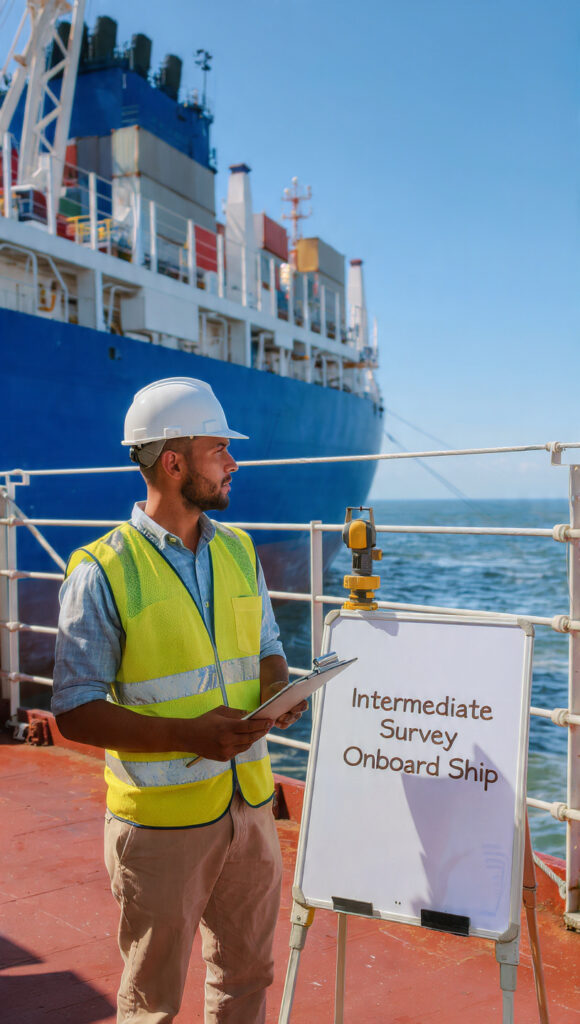
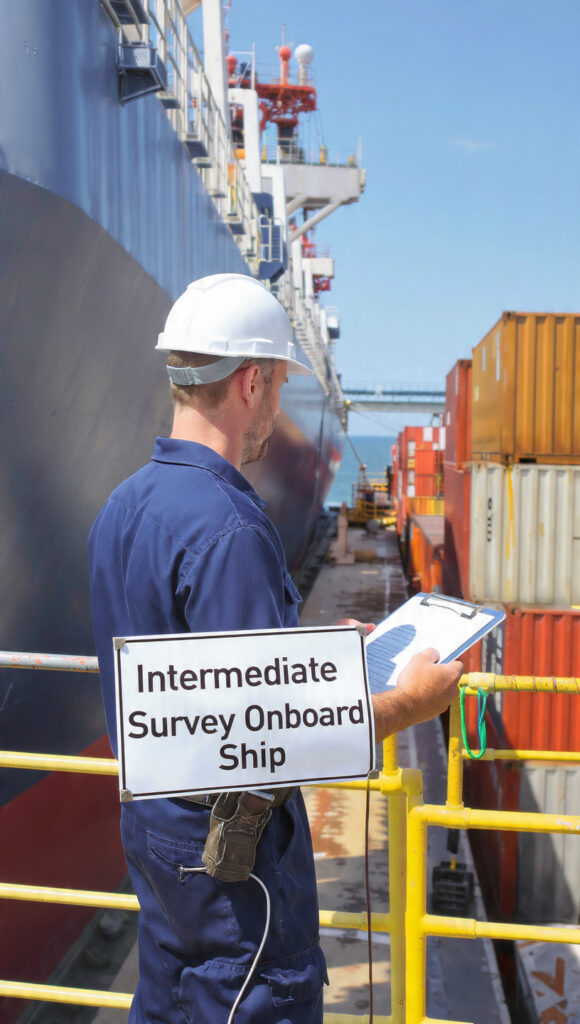
The Intermediate Survey onboard ship is an essential inspection that ensures a vessel continues to meet international safety and operational standards between major surveys. Conducted as part of the Harmonized System of Survey and Certification (HSSC), this survey occurs between the second and third anniversary of the ship’s statutory certificates. Unlike the annual survey, which is routine, the intermediate survey is more detailed and serves as a mid-term check on the vessel’s condition.
By conducting this survey, shipowners maintain compliance with SOLAS, MARPOL, and Load Line conventions while ensuring the vessel remains safe, efficient, and seaworthy.
Purpose of the Intermediate Survey
The primary objective of the Intermediate Survey is to verify that the ship has maintained the required standards since the last annual survey. It identifies any structural, mechanical, or equipment issues before the Renewal (Special) Survey, which occurs every five years.
Additionally, the intermediate survey helps prevent unexpected operational failures, improves crew safety, and ensures the ship retains its statutory certificates without interruption.
When Is the Intermediate Survey Conducted?
The intermediate survey is typically scheduled between the second and third anniversary dates of a vessel’s certificates. Flag administrations or recognized organizations (ROs) set precise dates based on the ship’s previous inspections.
Shipowners usually plan the intermediate survey in conjunction with scheduled maintenance or dry-docking activities to optimize time and minimize operational downtime.
Scope of the Intermediate Survey
The Intermediate Survey is more comprehensive than the annual survey but less extensive than the renewal survey. Key areas inspected include:
1. Hull and Structural Integrity
- Examination of the hull plating, decks, and bulkheads.
- Inspection of corrosion, cracks, or any signs of weakening in structural areas.
- Assessment of watertight doors, hatches, and bulkhead closures.
2. Machinery and Equipment
- Testing of main and auxiliary engines, pumps, and steering gear systems.
- Verification of emergency power systems and operational reliability.
3. Safety and Firefighting Systems
- Lifeboats, life rafts, and other lifesaving appliances.
- Fire detection, fire pumps, and extinguishing systems.
- Emergency alarms and lighting systems.
4. Pollution Prevention Systems
- Inspection of MARPOL-related equipment such as oily water separators, sewage treatment plants, and garbage management facilities.
- Verification of operational logs and compliance with pollution control regulations.
5. Navigation and Communication Equipment
- Testing of radar, AIS, gyro compass, and bridge instruments.
- Checking GMDSS radio and emergency communication devices.
6. Documentation
- Review of ship certificates, maintenance records, and safety manuals.
- Verification of crew certifications and statutory compliance documents.
Common Findings During Intermediate Surveys
During intermediate surveys, surveyors often note:
- Minor corrosion on decks, bulkheads, or hull areas.
- Wear and tear on machinery or safety equipment.
- Outdated charts or navigational publications.
- Fire safety or lifesaving appliances requiring maintenance.
Prompt rectification of these issues ensures that the ship passes its upcoming Renewal Survey without delays or penalties.
Importance of Intermediate Survey Onboard Ship
The Intermediate Survey is critical because it:
- Detects potential safety and operational risks before they escalate.
- Maintains statutory compliance with international maritime conventions.
- Ensures crew and cargo safety by confirming proper functioning of all systems.
- Prevents costly delays or detentions during Port State Control inspections.
- Supports long-term vessel maintenance planning by identifying emerging issues early.
In short, this survey protects both the ship and the interests of its owners, operators, and crew.
Conclusion
The Intermediate Survey onboard ship is an indispensable part of maritime safety and regulatory compliance. By bridging the gap between annual and renewal surveys, it ensures that the vessel remains in excellent condition and continues to meet international standards.
Shipowners who adhere to intermediate survey requirements demonstrate commitment to safety, operational efficiency, and environmental responsibility, while providing confidence to crews, insurers, and regulators alike.
Disclaimer:This article is for educational purposes only. Always refer to the latest IMO conventions and flag state regulations for official requirements.