Introduction
The Initial Survey onboard ship marks the very first step before a vessel begins service. It plays a crucial role in confirming that the ship’s structure, machinery, and equipment comply with all international conventions such as SOLAS, MARPOL, and Load Line. In essence, this survey ensures that the vessel is completely safe and ready for operation according to maritime standards.
What Is an Initial Survey?
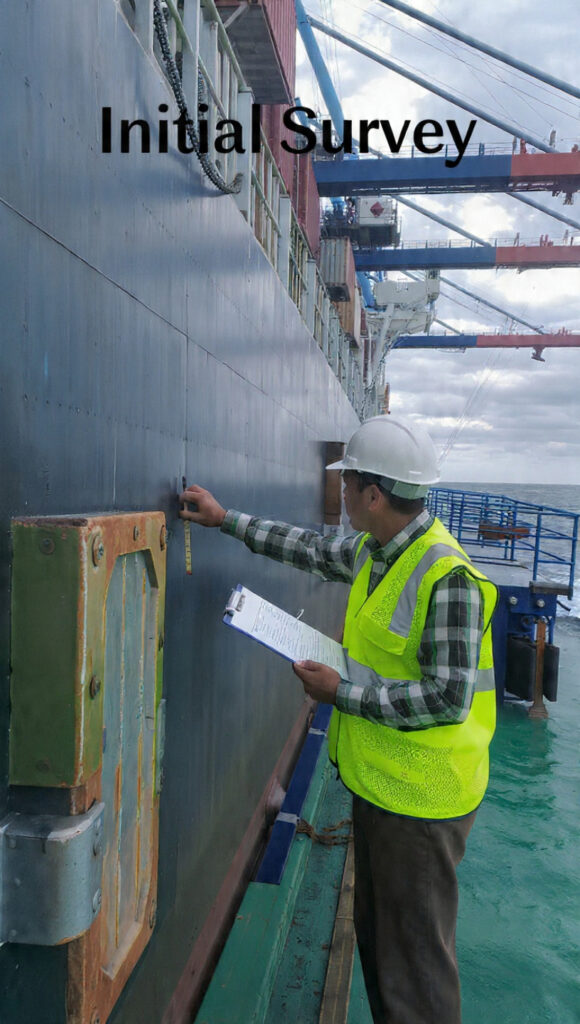
An Initial Survey is a detailed inspection carried out by the flag administration or a Recognized Organization (RO), usually a classification society, before the ship starts trading.
During this process, surveyors check whether the ship has been built and equipped in line with approved plans and international rules. Unlike later surveys, the initial one confirms that every system works correctly before the vessel sets sail.
Therefore, it acts as the foundation for all future inspections under the Harmonized System of Survey and Certification (HSSC).
Purpose of the Initial Survey
The purpose of this survey is not limited to a simple inspection. It aims to:
- Verify that the ship is constructed according to approved standards.
- Check that all machinery and safety systems operate correctly.
- Confirm that pollution prevention equipment meets MARPOL standards.
- Ensure that load line markings, stability data, and construction details match the approved plans.
- Test all lifesaving and firefighting appliances for functionality.
By covering all these aspects, the survey guarantees that the ship can begin operations safely and efficiently.
When Is the Initial Survey Conducted?
Surveyors usually conduct the initial survey:
- Before the ship enters into commercial service.
- After construction but prior to registration or certification.
- After a major modification that affects the vessel’s structure or safety systems.
In each case, the goal remains the same — to ensure full compliance before the ship operates at sea.
Main Areas Covered During the Initial Survey
1. Hull and Structure
Surveyors examine the hull and structural components carefully. They check watertight integrity, strength, and corrosion protection. Moreover, they verify that load line markings are applied correctly.
2. Machinery and Systems
The inspection includes main and auxiliary engines, steering gear, bilge, ballast, and electrical systems. Additionally, emergency power sources are tested to confirm proper operation during blackouts.
3. Fire Safety Equipment
The survey includes fire detection systems, alarms, pumps, hydrants, and extinguishers. Each piece of equipment is tested to ensure that it functions properly in an emergency.
4. Lifesaving Appliances
Surveyors also inspect lifeboats, life rafts, lifejackets, and immersion suits. They confirm that launching arrangements and emergency lights work as expected.
5. Pollution Prevention Systems
The team checks the oily water separator, sewage treatment plant, and garbage management plan. In addition, they confirm compliance with MARPOL Annex I and VI regulations.
6. Navigation and Communication Equipment
All navigation aids, such as radar, compass, and AIS, undergo performance testing. Likewise, radio and GMDSS equipment are verified for proper operation.
7. Documentation and Records
Surveyors review plans, manuals, and certificates. They also confirm that the crew holds valid certification as per international requirements.
Certificates Issued After Initial Survey
Once the vessel meets all requirements, the surveyors issue several statutory certificates under HSSC. These include:
- Cargo Ship Safety Construction Certificate
- Cargo Ship Safety Equipment Certificate
- Cargo Ship Safety Radio Certificate
- International Load Line Certificate
- International Oil Pollution Prevention (IOPP) Certificate
- International Air Pollution Prevention (IAPP) Certificate
Each certificate verifies compliance with a specific convention and remains valid for five years, subject to intermediate and annual surveys.
Importance of the Initial Survey
The Initial Survey plays a vital role in the maritime safety system. It ensures that the vessel enters service in a safe, seaworthy, and environmentally responsible condition. Furthermore, it builds confidence among shipowners, insurers, and flag states by confirming that the ship adheres to global standards.
By identifying issues early, this survey also helps shipowners avoid costly delays and repairs later. Consequently, it sets a strong foundation for the ship’s operational life.
Who Conducts the Initial Survey?
The survey is conducted by flag state surveyors or by Recognized Organizations (ROs) like Lloyd’s Register (LR), DNV, ABS, or Indian Register of Shipping (IRS). These organizations act on behalf of the flag state and follow IMO-approved procedures.
Because of their expertise, they ensure that every inspection remains consistent, transparent, and globally accepted.
Conclusion
In conclusion, the Initial Survey onboard ship is the cornerstone of maritime certification. It confirms that a newly built or modified vessel complies with all IMO conventions before entering service. By following this process, shipowners achieve international recognition, ensure safety, and maintain environmental standards.
Without this essential survey, no vessel can operate legally or safely in international waters.
Disclaimer:This blog is for educational use only. For official guidelines, please refer to the latest IMO and flag state regulations.


Pingback: Harmonized System of Survey and Certification (HSSC) - Jhazi Bhaiya G
Pingback: Types of Surveys Onboard Ship - Jhazi Bhaiya G
Pingback: Annual Survey Onboard Ship - Jhazi Bhaiya G
Pingback: Intermediate Survey Onboard Ship - Jhazi Bhaiya G
Pingback: Renewal Survey Onboard Ship - Jhazi Bhaiya G
Pingback: Additional Survey Onboard Ship - Jhazi Bhaiya G