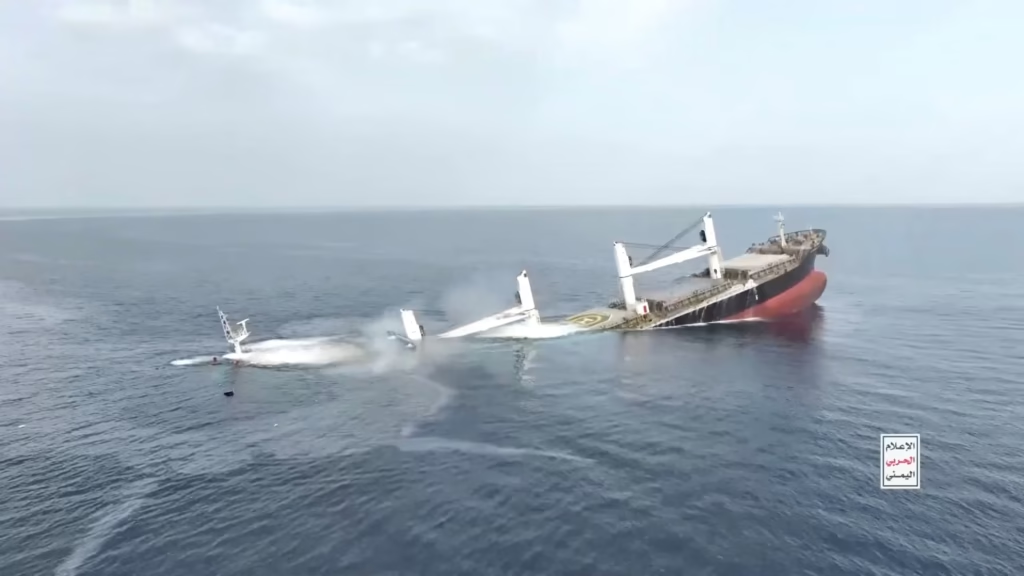
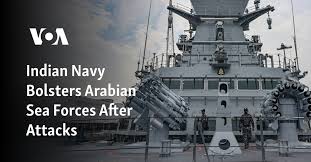
The Indian Navy warships deployed after Arabian Sea drone attacks have sent a strong and clear message — India will not compromise on maritime safety. In the wake of multiple drone strikes targeting merchant vessels in the Arabian Sea, the Navy has swung into action, deploying heavily armed warships and increasing security patrols to counter the growing threat.
A Surge in Maritime Incidents Sparks Action
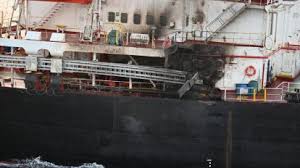
Late 2023 witnessed a distressing trend, as a series of drone and piracy attacks targeted merchant vessels traversing the Red Sea, Gulf of Aden, and the Arabian Sea. Among these, notable incidents included the drone strike on MV Chem Pluto, approximately 220 nautical miles off Porbandar, as well as a hijacking attempt on MV Ruen nearly 700 nautical miles away, along with several other hostile actions. Consequently, the Indian Navy swiftly ramped up its naval and aerial presence in order to protect Indian maritime interests while also ensuring the safety of civilian shipping.
Naval Deployment: Deterrence in Action
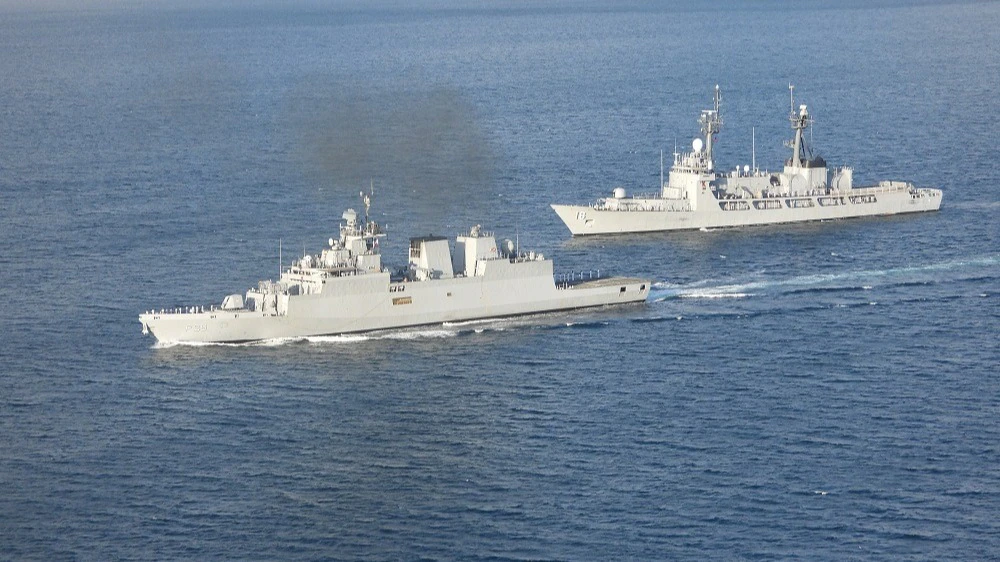
By December 31, 2023, the Indian Navy had deployed an impressive flotilla comprising frontline destroyers — INS Kolkata, INS Kochi, INS Mormugao, INS Chennai, and a Talwar-class frigate — across key zones of the Arabian Sea and near the Red Sea entrance .
Specifically:
- INS Kolkata positioned near the Red Sea entrance.
- INS Kochi placed south of Socotra Island.
- INS Mormugao patrolling western Arabian Sea.
- INS Chennai operating centrally along the Arabian Sea corridor .
Eyes in the Sky: Aerial Surveillance and Maritime Awareness
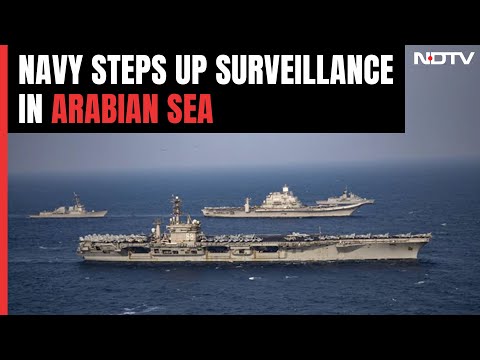
To complement its sea-based deterrence, the Navy also enhanced aerial surveillance by deploying P-8I long-range maritime patrol aircraft, MQ-9B SeaGuardian drones, Predator RPAs, as well as Dornier surveillance planes. In addition, these assets operated in coordinated missions with surface vessels so that real-time intelligence could be gathered and shared. As a result, the force ensured comprehensive maritime domain awareness (MDA) throughout India’s Exclusive Economic Zone and beyond, thereby strengthening its ability to detect, deter, and respond to potential threats.
Rapid Response: Rescuing Threatened Vessels
This convert-strength was clearly put to use when, in January 2024, the destroyer INS Visakhapatnam intercepted and responded to an emergency distress call by the drone-attacked merchant vessel MV Genco Picardy in the Gulf of Aden. The Navy’s EOD team boarded, assessed damage, and deemed the vessel safe to continue — all without any casualties .
Additionally, INS Kolkata had earlier assisted other vessels like MV Islander and MSC Sky II, showcasing the effectiveness of rapid, on-site naval intervention Wikipedia.
Strategic Significance: What This Means for India
This response underscores several strategic pillars:
- Proactive regional security: Strong naval presence reassures merchant shipping and secures maritime routes.
- Deterrence and reassurance: Demonstrates capability and willingness to act swiftly against non-state threats.
- Enhanced maritime awareness: Integrated use of air and sea assets reflect India’s modern naval doctrine.
- Coordination across agencies: Seamless integration with the Coast Guard and national maritime bodies ensures comprehensive maritime governance.
Looking Ahead
The Indian Navy remains committed to sustaining this heightened readiness. Moreover, with multiple concurrent operations — anti-piracy and anti-drone support — it is actively safeguarding key shipping zones while also ensuring maritime security in the face of volatile geopolitical dynamics.
In Summary
The deployment of Indian Navy warships such as INS Kolkata, Kochi, Mormugao, and others in the Arabian Sea marks a robust and decisive response to a growing maritime security challenge. The Indian Navy Warships Deployed After Arabian Sea Drone Attacks showcase enhanced surveillance and swift rescue capabilities, particularly amid recent strikes on civilian vessels. This move reflects India’s rising role as a net security provider in the Indian Ocean Region, ensuring the safety of trade routes and reinforcing global maritime stability.
Final Word
The waters of the Arabian Sea may be tense, but with the Indian Navy on high alert, one message is loud and clear — India will defend its maritime domain, and the Arabian Sea is not an easy target.