Introduction
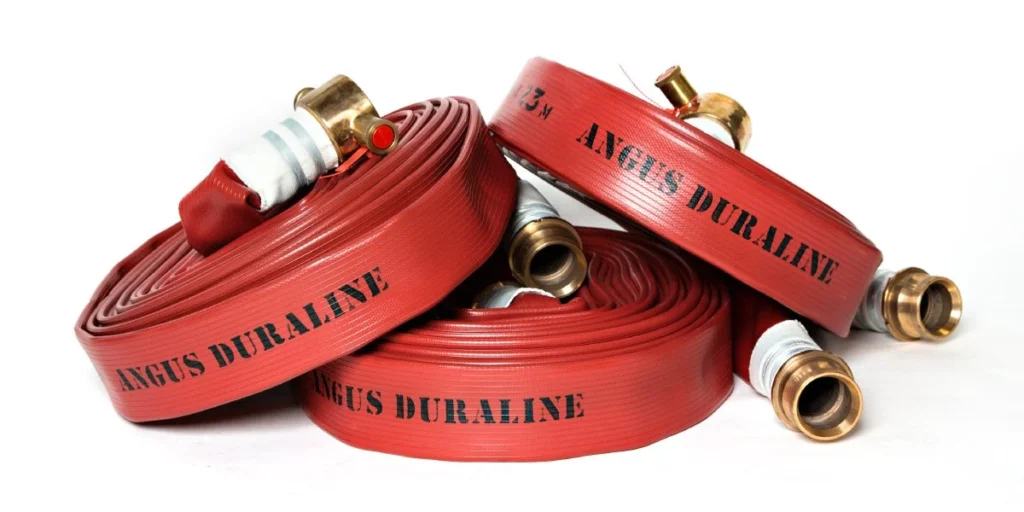
Firefighting equipment plays a vital role in safeguarding ships, cargo, and crew. Among all firefighting tools, the fire hose stands out as one of the most essential components for combating onboard fires. According to the International Convention for the Safety of Life at Sea (SOLAS), every vessel must carry a specific number of fire hoses that meet strict performance and testing standards. Understanding their maintenance, testing, and usage is crucial for every seafarer.
1. Fire Hose Requirements as per SOLAS
Under SOLAS Chapter II-2, Regulation 10 and the FSS Code, every ship must carry fire hoses that comply with approved standards.
a) Quantity
- Passenger ships: One fire hose for every hydrant required by SOLAS.
- Cargo ships (≥ 1000 GT): One hose for every hydrant plus one spare.
- Cargo ships (< 1000 GT): Minimum of three fire hoses.
b) Length and Diameter
- The standard length of a fire hose is not more than 20 meters (15 m on small ships).
- Diameter usually ranges from 38 mm to 64 mm depending on the fire main system design.
c) Material
- Hoses must be made of non-perishable, rot-proof, and corrosion-resistant materials.
- They should remain flexible even after long storage periods and exposure to saltwater.
d) Fittings and Couplings
- All hoses should have standard international shore connections and instantaneous couplings to ensure quick connection to hydrants and nozzles.
2. Location and Storage
Each fire hose must be:
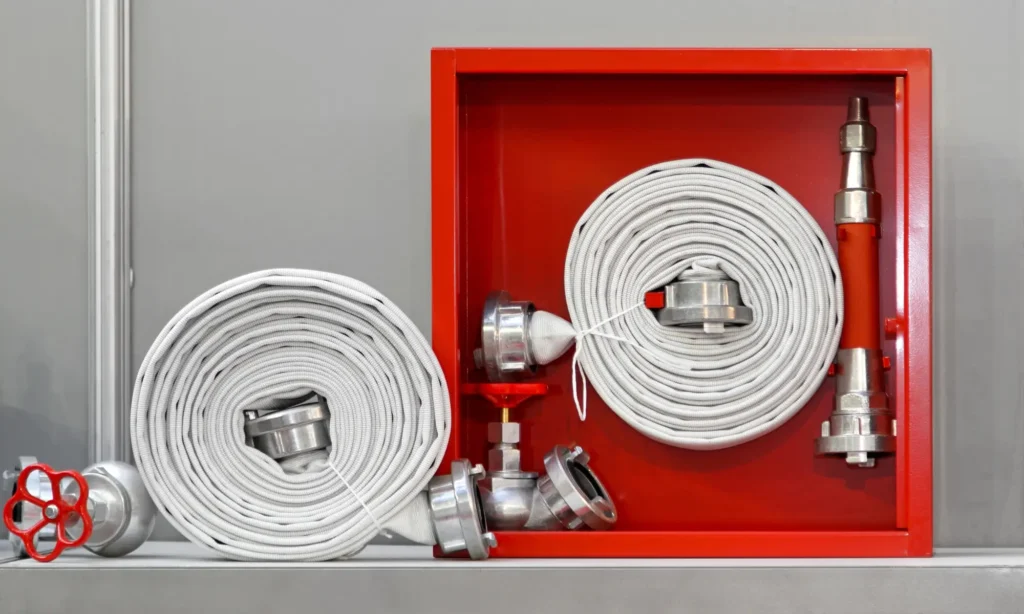
- Kept in its own cabinet or box near the associated hydrant.
- Ready for immediate use in case of emergency.
- Stored in a coiled and dry condition with the nozzle attached and secured properly.
Labels should indicate the location number, making it easy for crew to identify during drills or emergencies.
3. Nozzles and Accessories
Every fire hose set must include:
- A dual-purpose nozzle (jet and spray).
- A spanner or key for coupling.
- A hydraulic testing plug when required.
The nozzle must provide both jet and spray patterns, allowing flexibility in firefighting operations.
4. Maintenance and Inspection
Proper maintenance ensures reliability and readiness. SOLAS and the FSS Code (Chapter II) recommend periodic inspection and testing as part of the ship’s Safety Management System (SMS).
Weekly Checks
- Ensure hoses are in place, properly coiled, and easily accessible.
- Inspect for cracks, leaks, or signs of wear on the outer cover.
Monthly Checks
- Unroll hoses and check couplings and gaskets.
- Verify that nozzles operate correctly.
- Record findings in the firefighting equipment logbook.
5. Hydrostatic Testing of Fire Hoses Onboard Ship
While SOLAS mandates hydrostatic testing every five years, it is good practice to conduct hydro testing every three months onboard as part of the Planned Maintenance System (PMS). This ensures the hoses can safely withstand firefighting pressures.
Testing Procedure
- Unroll the hose completely and connect it to a hydrant.
- Inspect for visible damage, cracks, or deformities.
- Close the nozzle and pressurize the hose using the ship’s fire pump.
- Maintain pressure at 1.5 × working pressure (around 18 bar) for 5 minutes.
- Observe for leaks, bulges, or joint movement.
- Depressurize slowly, drain the hose, dry it, and roll it back properly.
Record Keeping
- All testing details should be entered in the Fire Hose Maintenance Record or Fire Safety Equipment Logbook.
- Include the following details:
- Hose ID or location
- Date of test
- Test pressure and duration
- Remarks (pass/fail)
- Signature of responsible officer
Any defective hose must be replaced immediately with a spare that meets SOLAS standards.
6. Replacement and Spare Hoses
- At least one spare hose must be available onboard at all times.
- Hoses showing signs of leakage, aging, or mechanical damage should be replaced immediately.
- Spares must be stored in a dry, ventilated location, away from sunlight or chemicals.
7. Crew Training and Drills
Every crew member must know:
- The location of fire hoses and hydrants.
- The correct method to connect, pressurize, and operate a hose.
- How to handle hose deployment during emergency drills.
Frequent drills, as required by SOLAS, help maintain quick response and firefighting efficiency.
8. Summary
Fire hoses are vital components of a ship’s fire safety system. Regular inspection, three-monthly hydro testing, and proper storage ensure their reliability during emergencies. Following SOLAS and FSS Code guidelines keeps both the vessel and crew safe while maintaining compliance with international maritime regulations.