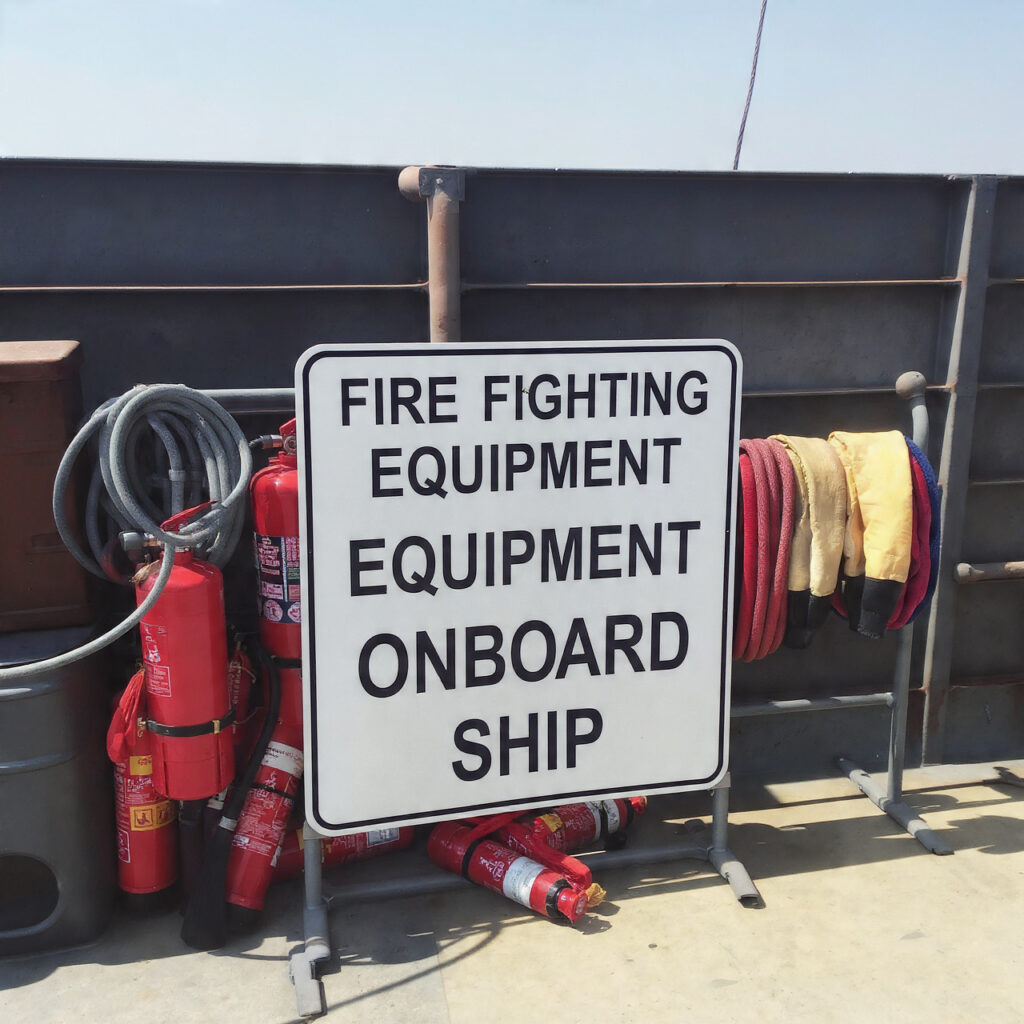
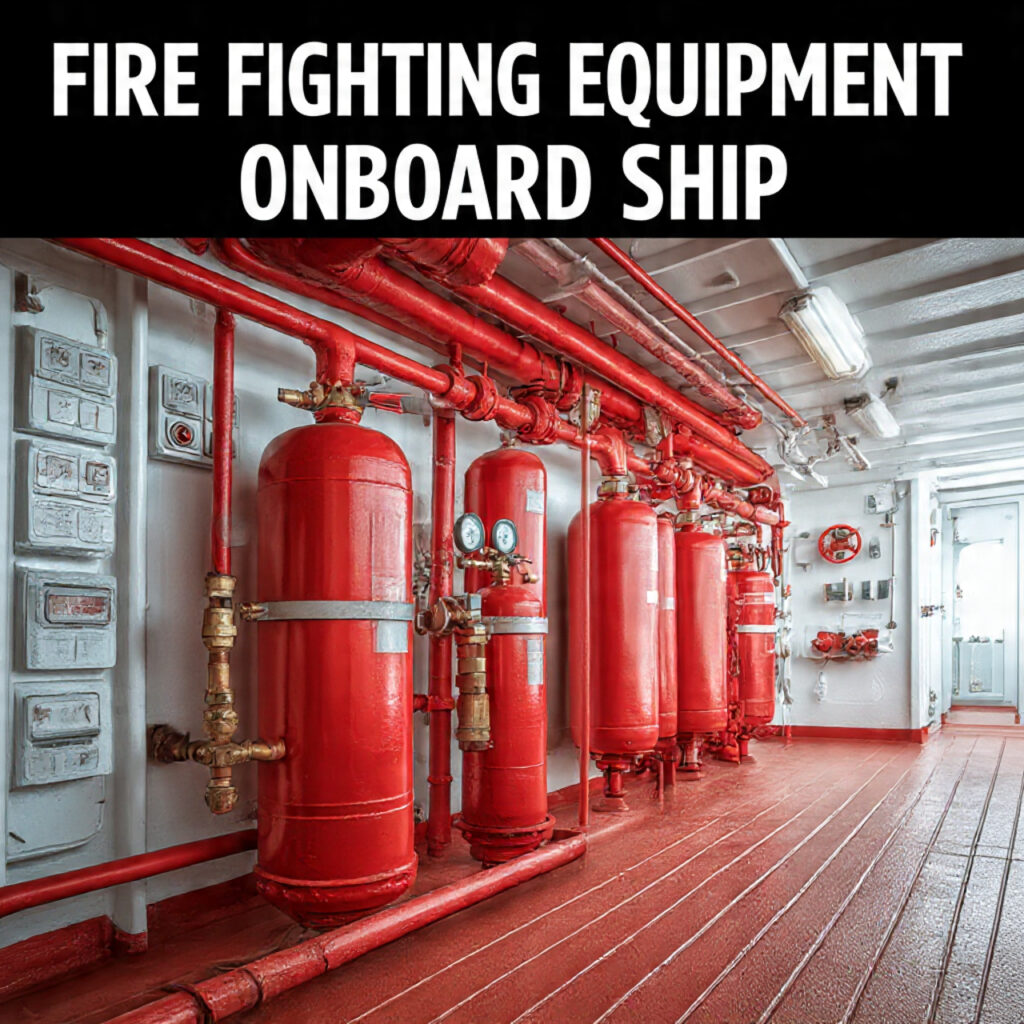
Fire safety is one of the top priorities at sea because even a small fire can turn disastrous within minutes. Fire Fighting Equipment onboard ship ensures that the crew can detect, control, and extinguish fires quickly. According to SOLAS and the FSS Code, all vessels must carry a comprehensive range of firefighting systems and equipment to protect human life, cargo, and the ship itself.
🚨 Why Fire Fighting Equipment is Necessary at Sea?
Ships sail far from land, often carrying flammable fuels, oils, chemicals, and cargo. Therefore:
- Fire spreads faster in enclosed spaces
- Limited escape options increase risks
- Emergency help takes time to arrive
Because of these challenges, ships must stay completely self-sufficient in firefighting capability.
🔥 Types of Fire Fighting Equipment Onboard Ship
Firefighting equipment is divided into various systems based on purpose, location, and type of fire emergency.
1️⃣ Fire Detection and Alarm System
This system warns the crew at the earliest signs of fire.
Includes:
- Smoke and heat detectors
- Manual Call Points (MCP)
- Audible and visual alarms
- Central Fire Control Panel
Continuous monitoring ensures quick response.
2️⃣ Portable Fire Extinguishers
Located throughout the vessel and marked clearly.
Types:
- CO₂ extinguisher – for electrical and engine room fires
- Foam extinguisher – for fuel and liquid fires
- Dry Powder extinguisher – for chemical fires
- Water & Water Mist extinguisher – for solid combustibles
Crew must get trained to use the correct extinguisher for each fire class.
3️⃣ Fire Hydrants, Fire Hoses & Nozzles
Part of the Fire Main System, they:
- Deliver seawater to fight large fires
- Provide boundary cooling
- Must cover every part of the ship with two jets of water
Hydrants are located strategically across decks.
4️⃣ Emergency Fire Pump
It supplies water if the main fire pump fails. Also, it is located outside the engine room to remain safe during machinery fires.
5️⃣ Fixed Fire Extinguishing Systems
Used for high-risk machinery and cargo spaces:
- CO₂ Fixed System – Engine room & cargo holds
- Foam System – Oil tanker deck and pump room
- Water Mist System – Accommodation and machinery spaces
- Dry Chemical System – Tanker loading areas
Automatic systems help suppress major fires instantly.
6️⃣ Fireman’s Outfit & Breathing Apparatus
Firefighting teams onboard wear:
- Fireman’s protective suit
- Boots, gloves, helmet, and safety lamp
- SCBA (Self-Contained Breathing Apparatus)
Helps firefighters enter smoke-filled areas safely.
7️⃣ Fire Doors & Fire Dampers
They prevent fire and smoke from spreading into other compartments.
- Must close tightly
- Operated locally or remotely
These structural protections give crew time to respond.
8️⃣ Fire Blankets and Safety Tools
Additional important items:
- Fire blankets in galleys
- Axe and crowbar in fire control stations
- Boundary cooling devices
- Emergency escape breathing devices (EEBD)
Every tool plays a role in saving lives.
✅ Training, Testing & Maintenance
Fire equipment remains effective only when properly maintained. Therefore:
| Activity | Frequency |
|---|---|
| Fire drills | Weekly / Monthly |
| Extinguisher inspection | Monthly |
| Fire pump testing | Regular drills |
| Detector and alarm tests | Periodic checks |
| Inspection of breathing apparatus | Weekly |
Surveys also verify that all equipment is functional with no expired items.
✅ Conclusion
Firefighting equipment onboard ships protects not just property but every life at sea. Preparedness, regular drills, and correct knowledge ensure that even a dangerous fire remains under control. Following SOLAS and FSS Code requirements keeps the vessel compliant and fully ready for emergencies. Fire safety is a continuous responsibility — not just equipment onboard, but trained crew and quick action make the real difference.
✅ Disclaimer:The information shared in this blog is for general maritime awareness and educational purposes only. Although we aim to provide accurate details based on SOLAS and FSS Code, regulations may vary depending on ship type, flag state, and classification society. Readers should always refer to official IMO publications, approved manuals, and certified training resources for the latest requirements. The author and website shall not be held responsible for any errors, misuse, or actions taken based on this content.