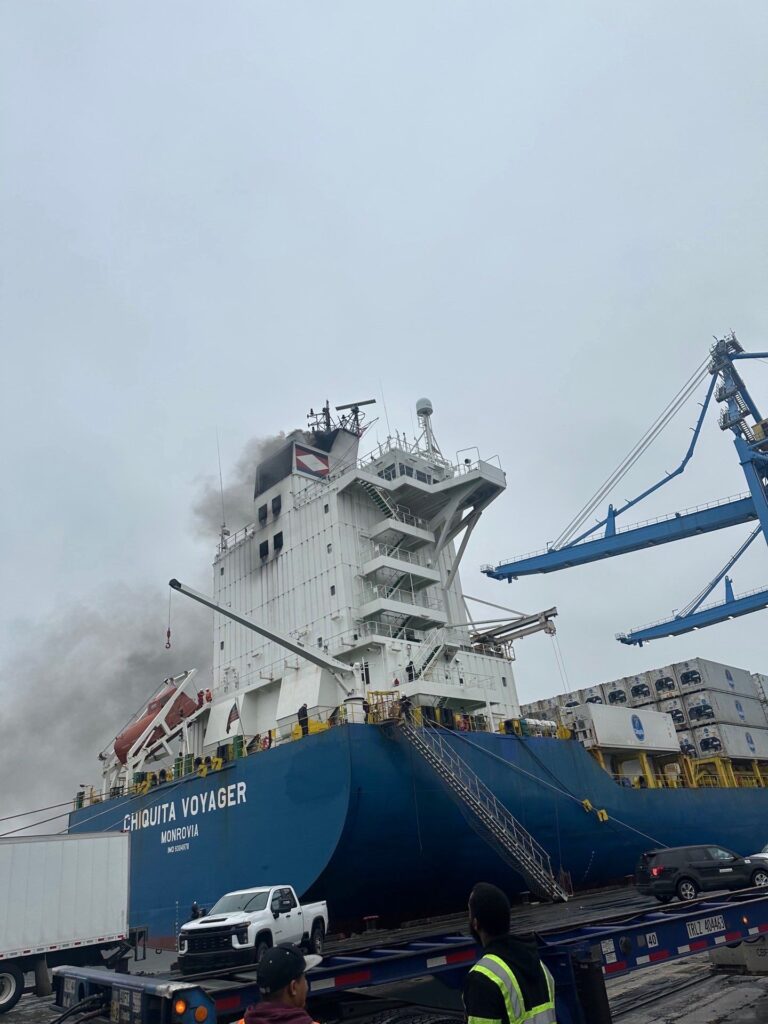
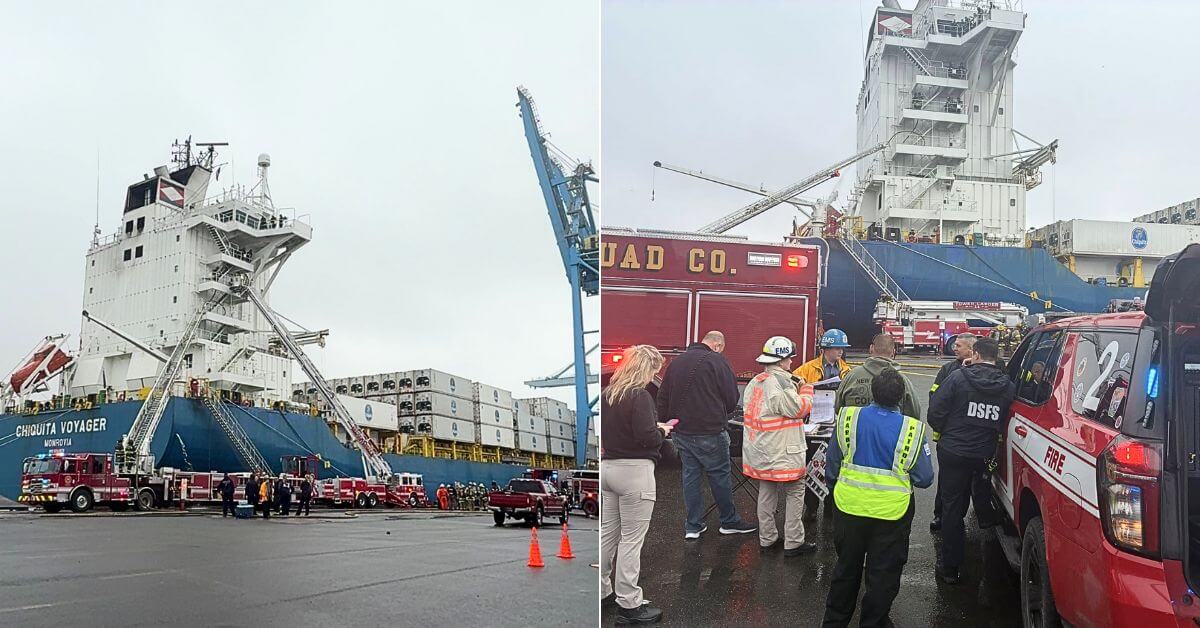
An intense engine room fire on the Chiquita Voyager disrupted operations at the Port of Wilmington and injured four crew members. The incident unfolded rapidly, and emergency teams moved fast to control the situation. Their coordinated action prevented a major maritime disaster and ensured the crew received immediate care.
🔥 How the Fire Started
Shortly after 9 a.m., crew members noticed smoke rising from the vessel’s engine room. They alerted shore authorities and activated onboard suppression systems. Although the crew tried to contain the blaze, thick smoke and heat forced them to evacuate the machinery space.
Meanwhile, the ship’s CO₂ system discharged automatically and slowed the fire’s spread. Because of this early action, firefighters managed to board the vessel without facing fully developed flames.
🚒 Emergency Response
Firefighters, paramedics and port security officials responded within minutes. As soon as they reached the quay, they boarded the Chiquita Voyager with breathing apparatus and thermal-imaging equipment. Their teams advanced through the accommodation block, checked for hot spots and continued cooling operations.
During the response, medical teams treated four injured crew members. One sailor sustained potential airway burns, while the others suffered minor burns on their hands and arms. Paramedics transported all of them to a nearby hospital for further evaluation.
🛠 Why the Fire Didn’t Escalate
Several safety factors worked together to prevent a larger catastrophe:
- The crew acted quickly and followed emergency procedures.
- Fire-detection and CO₂ systems responded immediately.
- Firefighters used a coordinated strategy to isolate heat and smoke pockets.
- Port authorities restricted surrounding operations to keep personnel away from risk.
Thanks to these measures, the fire stayed inside the engine room and caused no structural damage to the accommodation or cargo areas.
🧭 About the Vessel and Port
The Chiquita Voyager regularly transports refrigerated cargo through Wilmington. Because the vessel was already berthed during the incident, emergency teams accessed the ship quickly. Furthermore, port cranes and nearby cargo operations continued under precautionary controls, avoiding large-scale disruption.
🕵 Investigation and Possible Causes
Investigators have begun examining the area where the fire originated. Although the exact cause remains unclear, early observations suggest a potential equipment failure involving fuel or electrical components. Engineers are now reviewing maintenance logs, fuel-handling records and temperature-monitoring data.
The final report will determine whether the incident resulted from human error, equipment malfunction or a combination of factors.
🌍 What This Incident Teaches the Maritime Industry
Events like this highlight essential lessons for ship operators and port authorities:
- Regular inspections help identify worn-out machinery before it fails.
- Updated fire-detection systems reduce response delays.
- Frequent drills ensure the crew reacts calmly under pressure.
- Strong cooperation between ship officers and local emergency teams saves lives.
Moreover, more ports now emphasize integrated emergency planning, especially for engine-room fires, which remain one of the most common onboard hazards.
📝 Conclusion
The engine room fire aboard the Chiquita Voyager reminded everyone how quickly emergencies develop at sea and inside port facilities. Thankfully, the crew’s quick action and the rapid response from Wilmington’s emergency services prevented a far more serious outcome. As repair teams assess the vessel, safety investigators will use the findings to strengthen fire-prevention practices across the maritime sector.
✅ Disclaimer:This blog provides general information about the Chiquita Voyager engine room fire based on publicly available updates and typical maritime emergency procedures. It is not an official investigation report. Actual findings may differ once authorities release their final conclusions. Always rely on verified statements from port officials, vessel operators and maritime safety agencies for authoritative information.