Introduction
Safety onboard ships is always the top priority, especially when dealing with fire, smoke, or gas leaks. The Emergency Escape Breathing Device (EEBD) is one of the most vital pieces of life-saving equipment designed to help seafarers escape from smoke-filled or gas-contaminated spaces.
According to the Safety of Life at Sea (SOLAS) Chapter II-2, Regulation 13.3.4, every ship must carry EEBDs in accommodation areas and machinery spaces to ensure crew members can safely escape in emergencies.
What Is an EEBD?
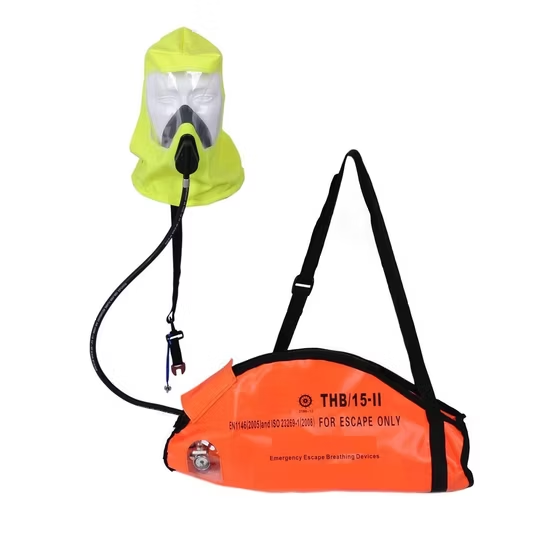
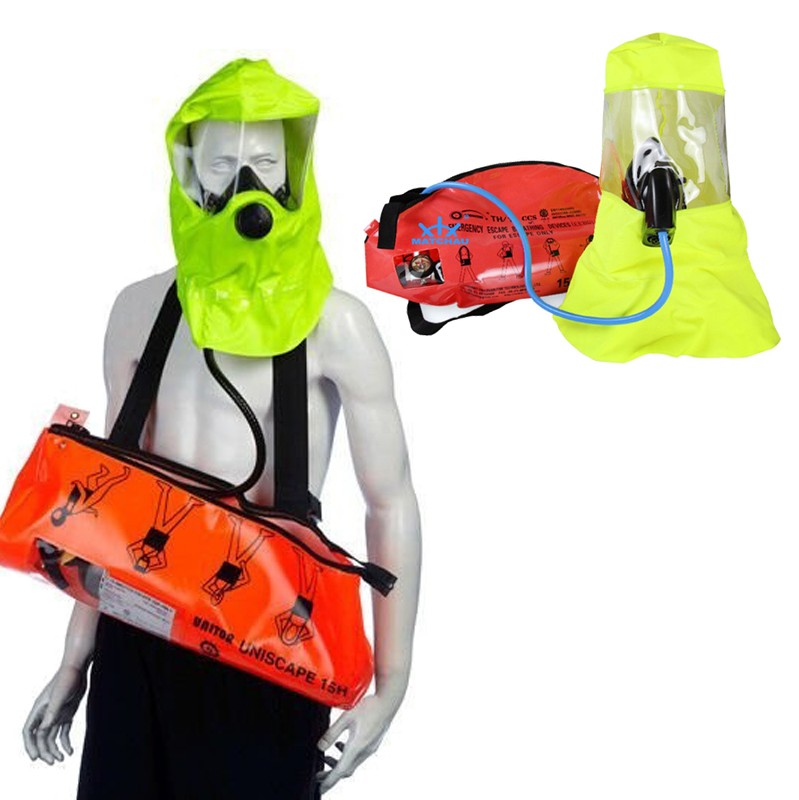
An Emergency Escape Breathing Device (EEBD) is a compact, self-contained breathing apparatus that provides short-term air supply (usually 10–15 minutes) to a person escaping from an area filled with smoke or toxic gases.
Unlike a Self-Contained Breathing Apparatus (SCBA), the EEBD is not for firefighting. It is only meant for escape purposes.
Construction and Components
A typical EEBD consists of:
- Compressed Air Cylinder: Contains breathable air under high pressure.
- Pressure Gauge: Shows the air pressure inside the cylinder, usually between 200–300 bar.
- Hood and Face Seal: A transparent, flame-resistant hood covering the entire head to protect eyes, nose, and mouth from smoke.
- Demand Valve or Constant Flow Valve: Regulates the air supply.
- Carrying Case or Wall Cabinet: Protects the unit from damage and makes it easily accessible in emergencies.
- Alarm Whistle: Sounds near the end of air supply to warn the user.
EEBD Requirements as per SOLAS
The International Maritime Organization (IMO) and SOLAS Chapter II-2 Regulation 13.3.4 specify the following:
- Minimum Quantity:
- At least two EEBDs must be carried in the accommodation areas.
- In machinery spaces, the number and location depend on the ship’s layout and size.
- Accessibility:
- EEBDs must be located along escape routes, clearly marked and easy to reach.
- They should not be kept inside lockers or hidden compartments.
- Usage Limitation:
- EEBDs are only for escape, not for rescue or firefighting.
- Training Requirement:
- Crew members must receive training and regular drills on how to use EEBDs correctly.
- Maintenance:
- Cylinders must be checked for pressure and expiry.
- The unit must be replaced immediately if used or found defective.
Typical Locations of EEBD Onboard
You can find EEBDs at key escape and operational areas, such as:
- Engine control room
- Engine room workshop
- Near escape trunks and stairways
- Main deck passageways
- Cargo control room
- Accommodation corridors
These placements ensure that every person working in machinery or accommodation areas can access an EEBD quickly during an emergency.
How to Use an EEBD
Using an EEBD is simple but requires prior training:
- Grab the EEBD from its bracket or case.
- Open the case and pull out the hood.
- Pull the quick-release pin or start the air flow automatically (depending on the model).
- Place the hood over your head and adjust for a tight seal.
- Breathe normally and proceed toward the nearest safe exit.
- Follow escape route markings until you reach a smoke-free area or muster station.
- Never attempt to rescue others with the same device—it is for self-escape only.
Difference Between EEBD and SCBA
| Feature | EEBD | SCBA |
|---|---|---|
| Purpose | Escape only | Firefighting and rescue |
| Duration | 10–15 minutes | 30–60 minutes |
| Training Requirement | Basic familiarization | Advanced firefighting training |
| Air Supply | Constant flow | Demand valve system |
| Weight | Light | Heavier |
Maintenance and Inspection
Proper care ensures reliability when needed:
- Check the cylinder pressure monthly; it should remain within the green zone.
- Inspect the hood and seal for cracks or wear.
- Ensure expiry dates are valid; replace the unit if expired or damaged.
- Conduct familiarization drills for crew as part of the ship’s safety management system (SMS).
- Keep records of inspection and replacement in the safety log.
Importance of EEBD in Emergencies
When a fire breaks out, smoke spreads faster than flames. Most casualties occur from inhalation of toxic gases rather than burns. EEBDs give crew members those critical 10–15 minutes needed to escape safely.
Quick access and proper training can make the difference between life and death during such emergencies.
Conclusion
The Emergency Escape Breathing Device (EEBD) is an essential life-saving tool onboard every ship. It provides precious time for the crew to escape smoke-filled compartments and reach safety. As per SOLAS, every ship must maintain the required number of EEBDs in working condition and ensure all crew know how to use them.
Safety at sea begins with preparation. Regular training, maintenance, and awareness ensure the EEBD performs when every second counts.
Disclaimer:This article is for educational purposes. Always follow your company’s safety procedures and SOLAS regulations during actual operations.