Introduction
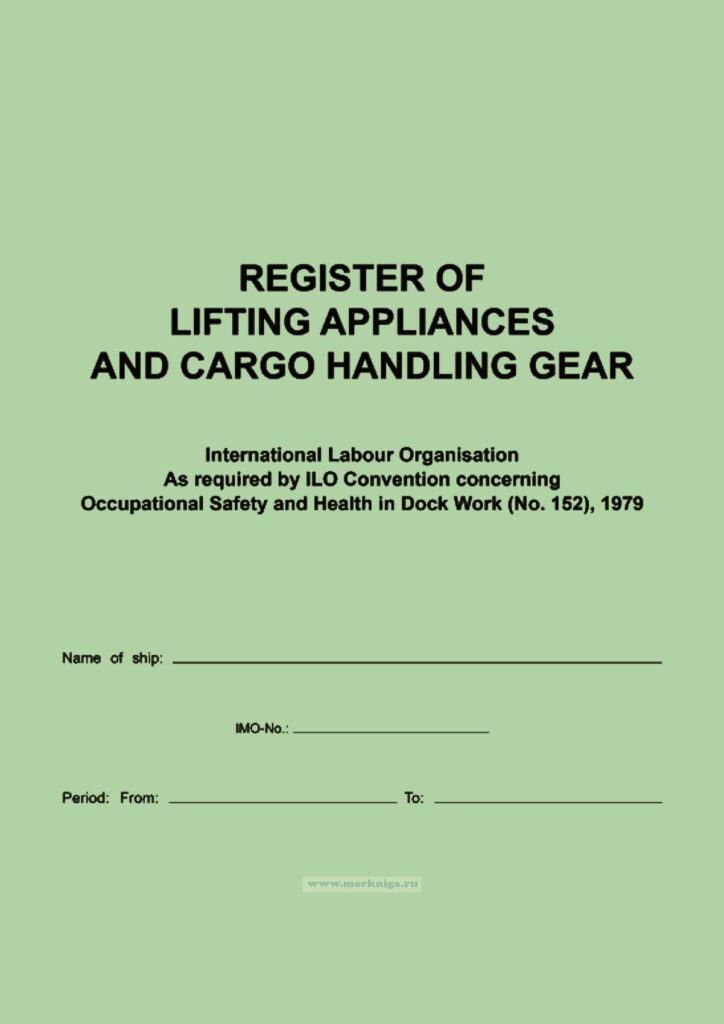
The Chain Register onboard ship is one of the most essential statutory records that every vessel must maintain. It keeps track of all anchor chains, lifting appliances, and loose gear used for mooring, anchoring, and cargo operations. Moreover, this document is a legal requirement under ILO Convention No.152, SOLAS Chapter II-1, and classification society rules.
By maintaining the Chain Register accurately, the ship’s crew ensures that all lifting and anchoring equipment remains safe, tested, and well-maintained. Ultimately, it serves as a proof of compliance and a strong commitment to safety at sea.
Purpose of the Chain Register
The Chain Register plays a crucial role in onboard safety and documentation. It helps to:
- Keep a complete record of all lifting and anchoring gear.
- Demonstrate compliance with international regulations.
- Support safe working practices by recording maintenance and inspections.
- Provide proof during flag state, class, or Port State Control surveys.
- Strengthen the ship’s Safety Management System (SMS) under the ISM Code.
Thus, the register acts as a continuous safety log that reflects both accountability and operational discipline.
Contents of the Chain Register
According to ILO Convention 152, the Chain Register usually has four main sections. Each section serves a specific purpose and keeps detailed information about shipboard lifting gear.
Part I – List of Lifting Appliances
This section contains all permanently fitted lifting equipment, including:
- Cargo cranes and derricks
- Lifeboat and rescue boat davits
- Provision cranes
- Engine-room hoists
- Winches and stores cranes
For each appliance, the register records:
- Maker’s name and type
- Safe Working Load (SWL)
- Location onboard
- Year of manufacture and installation
- Test certificate number
- Date of last proof load test and inspection
By maintaining this list, the ship ensures that all critical lifting appliances are traceable and compliant.
Part II – List of Loose Gear
Loose gear refers to detachable lifting equipment used with cranes and winches. Examples include:
- Shackles, hooks, and slings
- Wire ropes and chains
- Eye bolts, swivels, and spreader bars
- Blocks, rings, and sheaves
This section records:
- Identification number
- Description and size
- Safe Working Load (SWL)
- Certificate reference
- Test and inspection dates
- Remarks on condition
Therefore, every item of loose gear remains traceable from use to inspection, reducing the risk of accidents.
Part III – Record of Proof Load Tests, Thorough Examinations, and Heat Treatment
Every lifting appliance and loose gear item undergoes testing to confirm its strength and reliability. This part of the register records:
- Date and place of the test
- Description and ID number of the gear
- Type of test (e.g., proof load, NDT, heat treatment)
- Test load applied and results obtained
- Certificate or report reference
- Name and signature of the competent authority
In this way, the register provides an authentic record of every inspection and test conducted.
Part IV – Record of Periodic Inspections and Maintenance
This section is updated most frequently since it deals with daily and monthly checks. It includes:
- Date of inspection or maintenance
- Equipment identification number
- Description of work carried out
- Observations (e.g., worn, replaced, satisfactory)
- Signature of the responsible officer and Master
As a result, any defect or irregularity is identified early, ensuring that unsafe gear is never used onboard.
Testing and Certification Requirements
According to SOLAS and ILO standards, every lifting appliance and loose gear must undergo periodic testing and certification. These tests confirm that all equipment remains strong, functional, and safe.
| Type of Test | Interval | Purpose |
|---|---|---|
| Initial Test | Before first use | To verify compliance and strength |
| Annual Inspection | Every 12 months | To ensure continuous safe condition |
| Five-Year Proof Load Test | Every 5 years | To confirm load-bearing capacity |
| Additional Test | After major repair or accident | To reconfirm operational safety |
Maintenance of Lifting and Anchoring Gear
Regular maintenance is vital for both performance and safety. The Chief Officer must ensure that all lifting gear and anchor equipment are routinely inspected and maintained according to schedule.
Typical maintenance tasks include:
- Cleaning and greasing of anchor chains and joining shackles.
- Checking crane wires for broken strands, kinks, or corrosion.
- Inspecting hooks, slings, and shackles for cracks or deformation.
- Lubricating moving parts of winches and cranes.
- Replacing defective or expired items immediately.
- Applying paint and anti-corrosive coating to protect against rust.
In addition, every maintenance activity must be recorded in the Chain Register to maintain full traceability.
Importance of the Chain Register
Keeping the Chain Register up to date brings several operational and safety benefits. It helps:
- Prevent equipment failures and accidents.
- Maintain compliance with SOLAS, ILO, and class requirements.
- Provide ready evidence during audits and inspections.
- Support planned maintenance systems (PMS).
- Build a strong safety culture onboard.
Ultimately, a well-maintained register enhances both efficiency and crew confidence during lifting and anchoring operations.
Conclusion
To conclude, the Chain Register onboard ship is more than just a record book—it is a vital safety document. It ensures that all anchor chains, lifting appliances, and loose gear are properly inspected, tested, and maintained. Furthermore, it provides clear proof of compliance with international maritime safety standards.
When officers keep it accurate and updated, they not only meet regulations but also protect lives, property, and the ship’s reputation. Therefore, the Chain Register must always remain complete, current, and ready for inspection.
Disclaimer:This article is for educational purposes only. Always refer to the latest ILO Convention No.152, SOLAS, and Classification Society guidelines for official inspection, testing, and certification procedures.