
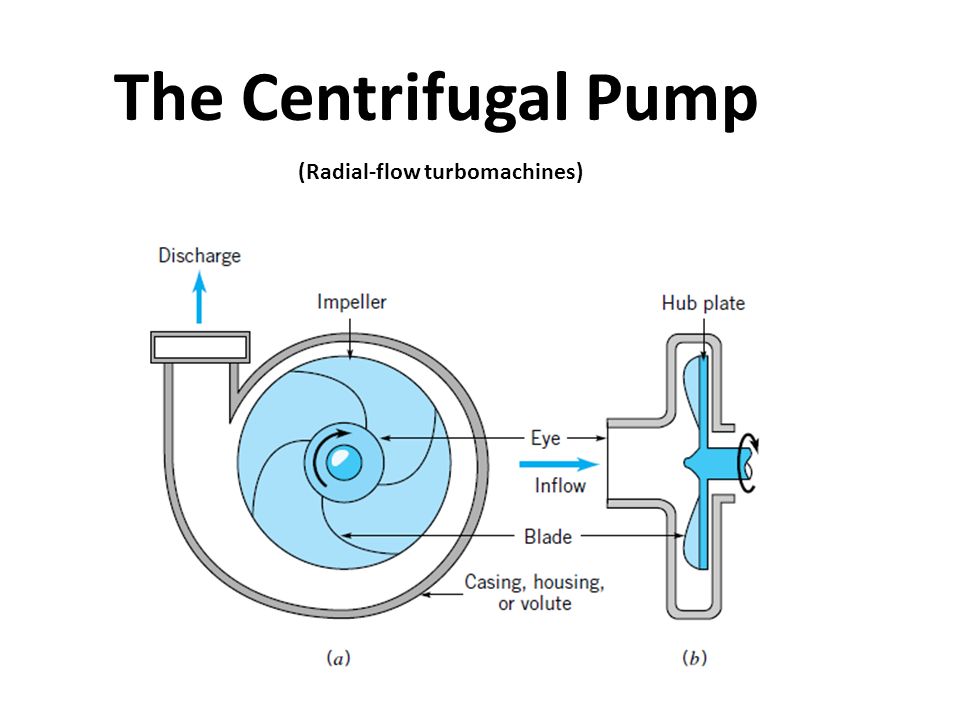
A centrifugal pump onboard ship is one of the most commonly used machines for handling large volumes of liquid. Marine vessels depend heavily on these pumps for cooling, ballast operations, bilge removal, firefighting, and general liquid transfer. Because ships operate continuously at sea, a centrifugal pump must deliver steady flow, easy maintenance, and reliable performance in all conditions. In this blog, we explain how a centrifugal pump works, its main components, important applications, and why it is widely used on ships.
What Is a Centrifugal Pump?
A centrifugal pump is a dynamic pump that moves liquid using centrifugal force. When the impeller rotates, it throws liquid outward, increasing its velocity. This velocity converts into pressure, which pushes the liquid out of the pump discharge.
How a Centrifugal Pump Works (Simple Explanation)
- Liquid enters through the suction side into the center of the impeller (called the eye).
- The impeller rotates, creating centrifugal force.
- This force pushes the liquid outward into the pump casing.
- Velocity energy is converted into pressure energy.
- Pressurized liquid exits through the discharge port.
Because of this simple and smooth process, centrifugal pumps are ideal for continuous shipboard operations.
Main Components of a Centrifugal Pump
A standard centrifugal pump onboard includes:
- Impeller – Rotating part that creates centrifugal force
- Casing – Holds liquid and directs flow
- Shaft – Connects impeller to the motor
- Mechanical Seal / Gland Packing – Prevents leakage
- Suction & Discharge Nozzles – Entry and exit points of liquid
- Wear Rings – Reduce friction and internal leakage
- Bearing Housing – Supports the shaft
Understanding these parts helps engineers troubleshoot and maintain pumps effectively.
Why Centrifugal Pumps Are Common Onboard Ships
Ships prefer centrifugal pumps because they offer:
- Smooth and continuous flow
- Simple design
- Easy maintenance
- High efficiency
- Capability to handle large volumes
- Compatibility with seawater systems
Additionally, they work well for fluids with low viscosity, such as seawater and freshwater.
Types of Centrifugal Pumps Used Onboard
Ships use several types of centrifugal pumps depending on their operations.
1. Single-Stage Centrifugal Pump
- Has one impeller
- Used for cooling water, bilge, ballast, general service
2. Multi-Stage Centrifugal Pump
- Has two or more impellers
- Used for high-pressure applications such as boiler feed pumps
3. Submersible Centrifugal Pump
- Motor and pump together in a sealed unit
- Used for emergency dewatering, cargo hold bilges
4. Deepwell Centrifugal Pump
- Long vertical shaft with multiple stages
- Common on oil and chemical tankers for cargo discharge
5. Vertical Inline Pump
- Compact design
- Used in engine room for cooling and circulation
Where Centrifugal Pumps Are Used Onboard
Centrifugal pumps serve numerous shipboard systems, such as:
1. Seawater Cooling System
Main engine and generators need constant cooling.
Centrifugal pumps circulate seawater continuously.
2. Bilge System
Used for pumping out accumulated bilge water.
3. Ballast System
Helps maintain ship stability by pumping seawater in and out of ballast tanks.
4. Fire Main System
Main fire pump (as per SOLAS) is always a centrifugal pump.
5. General Service System
Used for deck washing, tank cleaning, freshwater transfer, and other routines.
6. Freshwater Cooling System
Used for jacket cooling water and central cooling systems.
Because these pumps operate reliably even during long voyages, they are essential in marine engineering.
Advantages of Centrifugal Pumps Onboard
- Easy installation
- Less maintenance compared to positive displacement pumps
- Cheaper and more durable
- Steady flow without pulsations
- Can handle corrosive seawater with proper material selection
These advantages make centrifugal pumps the preferred choice for most marine systems.
Common Problems and Troubleshooting
1. Pump Not Delivering Water
Possible causes:
- Air lock
- Suction line leakage
- Blocked suction strainer
- Improper priming
2. Excessive Vibration
Causes:
- Misalignment
- Impeller imbalance
- Worn bearings
3. Overheating
Usually due to low flow or mechanical seal failure.
Regular maintenance helps prevent most of these issues.
Conclusion
The centrifugal pump onboard ship is an essential machine that supports crucial operations such as cooling, firefighting, ballast handling, and bilge pumping. Its simple design, smooth operation, and reliability make it one of the most widely used pumps at sea. For marine engineers and cadets, understanding its working principles, components, and applications is important for safe and efficient ship operations.