Blogging

2nd Mate (FG)

2nd Mate (Foreign Going) MMD Exams

A career in the Merchant Navy demands continuous learning and certification. For deck cadets and trainee officers, the 2nd Mate (Foreign Going) examination marks the first big step toward becoming a certified watchkeeping officer on international ships. The Mercantile Marine Department (MMD) under the Directorate General of Shipping, India, conducts these exams. This blog explains

2nd Mate (Foreign Going) MMD Exams Read More »

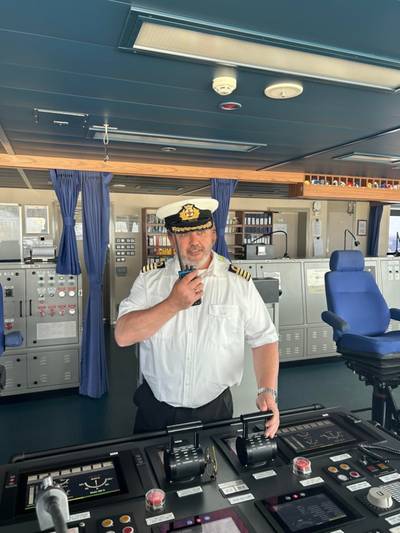
British Captain Chris Phillips

British Captain Receives Merchant Navy Medal for Saving 89 Lives

British Captain Receives Merchant Navy Medal for Saving 89 Lives after a daring and heroic operation at sea. His leadership and courage helped rescue 89 people from certain disaster. The Merchant Navy Medal for Meritorious Service is one of the highest maritime honors in the United Kingdom. This recognition highlights the captain’s bravery, seamanship, and

British Captain Receives Merchant Navy Medal for Saving 89 Lives Read More »

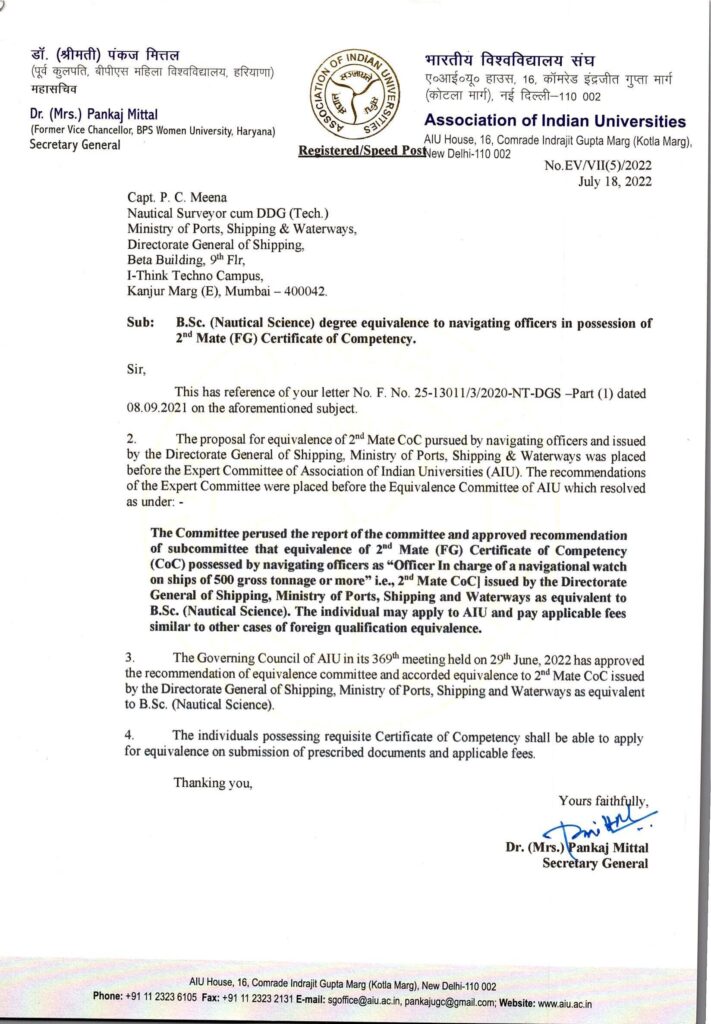
2nd Mate (FG) CoC Equivalent to B.Sc. (Nautical Science) Degree

2nd Mate (FG) CoC Equivalent to B.Sc. (Nautical Science) Degree

The Association of Indian Universities (AIU) has issued an important notification for seafarers. On 18th July 2022, AIU officially recognized that the B.Sc. (Nautical Science) degree is equivalent to navigating officers in possession of a 2nd Mate (FG) Certificate of Competency (CoC). This recognition not only gives professional certification academic value but also opens the

2nd Mate (FG) CoC Equivalent to B.Sc. (Nautical Science) Degree Read More »

MARPOL Annexes I–VI: Objectives & Special Areas

MARPOL Annexes I–VI: Objectives & Special Areas

The MARPOL Annexes I–VI: Objectives & Special Areas represent the core framework of the International Convention for the Prevention of Pollution from Ships (MARPOL 73/78). These six annexes address oil, chemicals, packaged harmful substances, sewage, garbage, and air pollution. Additionally, they designate special areas where stricter discharge standards apply to protect vulnerable marine ecosystems. Understanding

MARPOL Annexes I–VI: Objectives & Special Areas Read More »

MARPOL Annex VI

MARPOL Annex VI: Prevention of Air Pollution from Ships

The International Convention for the Prevention of Pollution from Ships (MARPOL 73/78) serves as the cornerstone of international maritime environmental law. Among its six annexes, MARPOL Annex VI focuses on the Prevention of Air Pollution from Ships. This annex entered into force on 19 May 2005 and has since undergone several significant amendments to address

MARPOL Annex VI: Prevention of Air Pollution from Ships Read More »

MARPOL Annex V: Prevention of Pollution by Garbage from Ships

MARPOL Annex V: Prevention of Pollution by Garbage from Ships

The International Convention for the Prevention of Pollution from Ships (MARPOL 73/78) sets the global framework for preventing marine pollution. Among its six annexes, MARPOL Annex V focuses on the Prevention of Pollution by Garbage from Ships. It entered into force on 31 December 1988 and has since been strengthened through amendments to reduce marine

MARPOL Annex V: Prevention of Pollution by Garbage from Ships Read More »

MARPOL Annex III regulates harmful substances in packaged form

MARPOL Annex III: Prevention of Pollution by Harmful Substances in Packaged Form

The International Convention for the Prevention of Pollution from Ships (MARPOL 73/78) sets global rules to minimize marine pollution from ships. It consists of six annexes, each focusing on different pollution sources. MARPOL Annex III addresses the Prevention of Pollution by Harmful Substances Carried at Sea in Packaged Form. The annex entered into force on

MARPOL Annex III: Prevention of Pollution by Harmful Substances in Packaged Form Read More »

Scroll to Top