
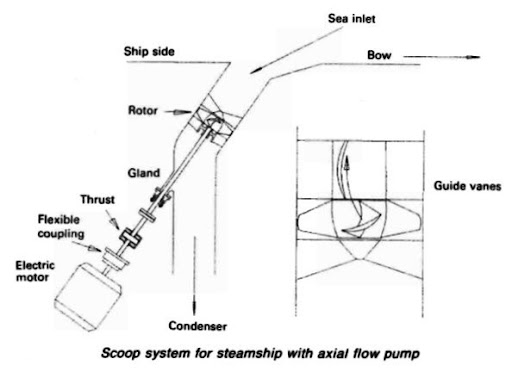
An Axial Pump onboard ship is a type of dynamic pump designed to move large volumes of water at low pressure. Unlike centrifugal or positive displacement pumps, the axial pump pushes water in a straight line along the pump shaft. Because of this design, it becomes extremely efficient for high-flow operations, especially where fast water movement is required.
On many ships, axial pumps support essential systems such as seawater cooling, ballast operations, and circulation systems. Their ability to deliver huge flow rates with minimal energy makes them valuable in marine engineering.
What Is an Axial Pump?
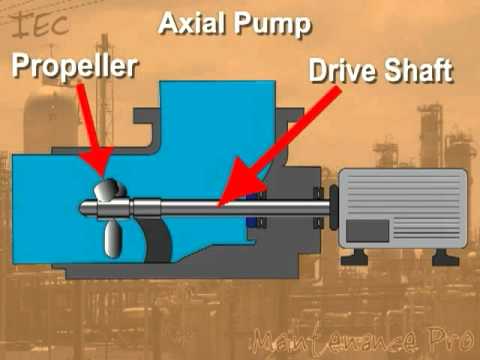
An axial pump moves water parallel to the pump shaft, similar to the action of a propeller. As the impeller blades rotate, they generate lift and push the fluid forward in a continuous stream. This allows the pump to shift massive amounts of water very quickly.
Axial pumps are best suited for applications needing high flow and low pressure, which makes them ideal for large vessels and power-intensive systems.
How an Axial Pump Works – Simple Explanation
The working principle is easy to understand:
- The impeller rotates, just like a ship’s propeller.
- As the blades spin, they lift the water axially along the pump casing.
- The water moves in a straight line and exits at high flow but moderate pressure.
- A diffuser or guide vane then redirects the flow smoothly, improving efficiency.
Because the water does not change direction inside the pump, energy losses remain low, allowing continuous, strong flow.
Where Axial Pumps Are Used Onboard Ships
Axial pumps appear in systems where huge water flow is needed. Common shipboard uses include:
- Main seawater cooling system
- Central cooling system circulation
- Ballast water pumping
- Firefighting support systems (certain high-capacity installations)
- General service water circulation
- Large cargo pump arrangements on certain vessels
Their efficiency and smooth flow make them ideal for high-volume applications.
Benefits of Using Axial Pumps Onboard
Axial pumps offer several advantages:
- Extremely high flow rate for large water movement
- Low energy consumption, improving overall machinery efficiency
- Smooth and continuous flow without pulsation
- Simple design, making the pump easier to maintain
- Suitable for seawater and cooling systems
Because of these benefits, ship designers often choose axial pumps for systems needing rapid water circulation.
Limitations of Axial Pumps
Although axial pumps are efficient, they also have certain limitations:
- They are not suitable for high-pressure applications.
- Efficiency drops when handling viscous liquids.
- They require large installation space compared to some other pumps.
For this reason, ships use them mainly in cooling and ballast systems rather than fuel or lube oil systems.
Maintenance of Axial Pumps
Proper maintenance ensures smooth operation and long service life. Engineers usually:
- Inspect impeller blades for corrosion or erosion
- Check shaft alignment and bearing condition
- Monitor vibration levels for any imbalance
- Ensure sealing arrangements are tight and leak-free
- Clean strainers and seawater filters regularly
- Lubricate bearings as per manufacturer guidelines
Regular checks help avoid breakdowns and protect important ship systems.
Conclusion
The axial pump plays an essential role in managing high-volume water flow onboard ships. Its simple working principle, low power consumption, and ability to move large quantities of water make it ideal for cooling and ballast operations. With proper maintenance, these pumps provide long-term reliability and help ensure safe and efficient ship operation.
Disclaimer:This blog provides general marine engineering information for educational purposes. Always follow your company’s Safety Management System (SMS), manufacturer manuals, and class requirements before operating or maintaining any onboard pump.