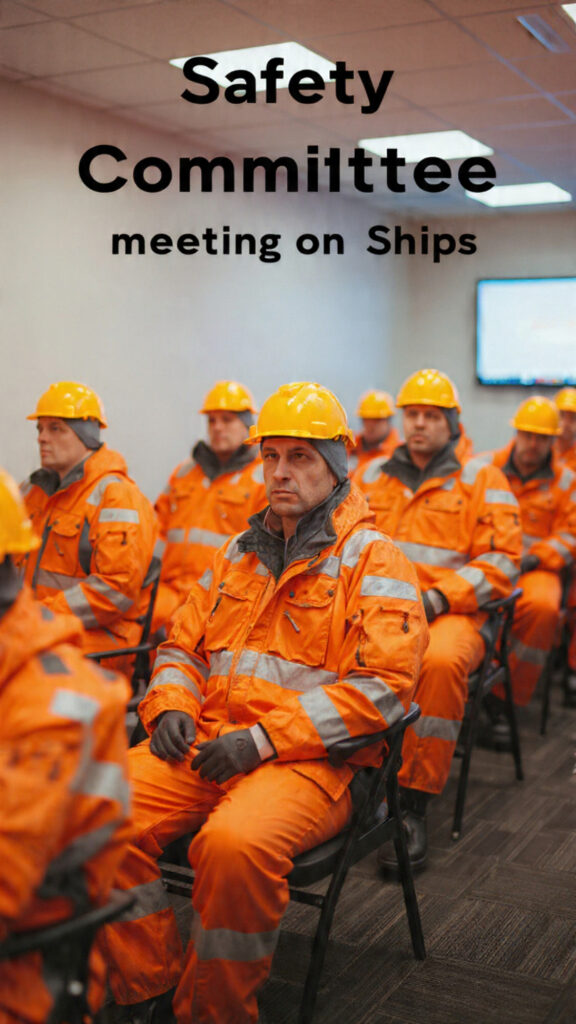
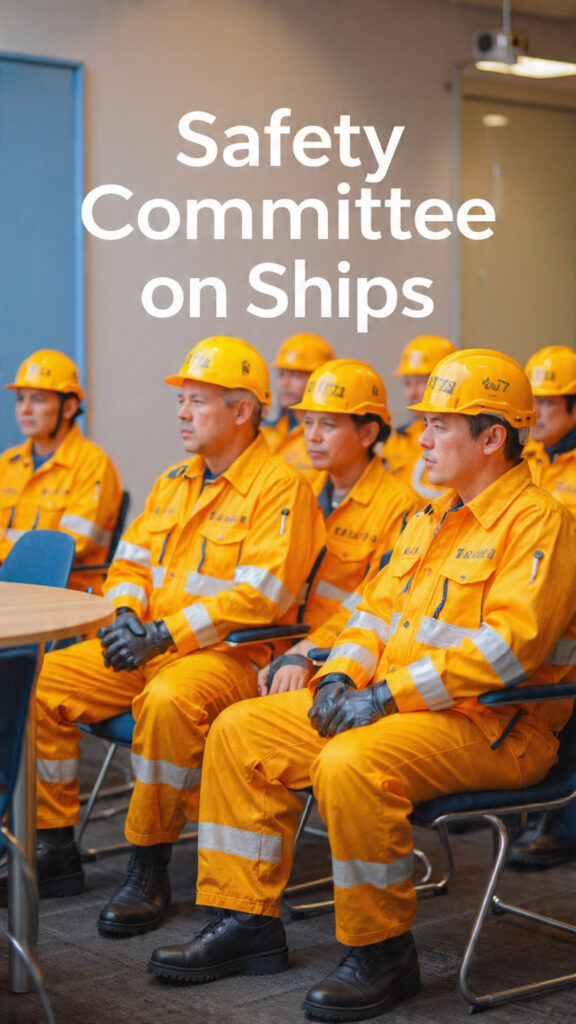
Shipping is a demanding industry where safety must always come first, both for the crew and the vessel. Understanding What is a Safety Committee on Ships is essential because this team plays a major role in maintaining safety standards, preventing accidents, and promoting a strong safety culture onboard. The Safety Committee ensures that risks are identified, procedures are followed, and every seafarer actively participates in creating a safer working environment at sea.
✅ What Is a Safety Committee on Ships?
A Safety Committee on ships is a group of appointed crew members responsible for monitoring, improving, and promoting safety standards onboard. It acts as a bridge between the ship’s management and the crew, ensuring that safety issues are addressed promptly and effectively.
Safety Committees are mandatory on many vessels as per ILO, ISM Code, and Flag State requirements, especially when the ship carries a large crew.
🛡️ Purpose of the Safety Committee
The main purpose of the Safety Committee is to:
- Create awareness of safe working practices
- Identify and eliminate hazards
- Reduce accidents and near-misses
- Improve emergency preparedness
- Promote communication between departments
- Ensure compliance with the company’s Safety Management System (SMS)
👥 Who Are the Members of the Safety Committee?
Membership may vary depending on the ship type and company policies, but generally includes:
- Master (Chairperson)
- Chief Officer
- Chief Engineer
- Safety Officer
- Department Heads (Deck & Engine)
- Training/Health Officer (if applicable)
- Elected crew representative
A crew representative is usually elected so that seafarers have a voice in safety discussions.
🔧 Key Responsibilities of the Safety Committee
1. Conduct Regular Safety Meetings
The committee meets periodically (usually monthly) to discuss safety issues, incidents, near-miss reports, and upcoming drills.
2. Review Accidents & Near Misses
They analyze the root causes and suggest preventive actions to avoid recurrence.
3. Inspect Work Areas
Committee members carry out safety rounds and hazard inspections on deck, in the engine room, accommodation, and cargo areas.
4. Improve Safety Procedures
They ensure the company’s Safety Management System (SMS) is followed correctly and suggest updates when needed.
5. Monitor PPE Compliance
The committee checks whether crew members are using proper protective equipment for their tasks.
6. Plan Emergency Drills
Fire, abandon ship, oil spill, enclosed space entry, and man-overboard drills are evaluated and improved.
7. Promote Training & Awareness
They ensure that new crew members are properly inducted and that all crew receive ongoing safety training.
📋 Safety Committee Meeting Agenda (Typical)
- Review of minutes from previous meeting
- Discussion on accidents, near misses, and hazard reports
- Review of safety rounds
- Evaluation of recent drills
- Status of safety equipment
- Concerns raised by crew representatives
- Planning future drills, trainings, and inspections
- Any new safety procedures or circulars
⚓ Why Is a Safety Committee Important?
A Safety Committee:
- Reduces accidents and injuries
- Improves communication between departments
- Ensures continuous improvement of onboard safety
- Boosts crew morale and confidence
- Supports compliance with international maritime laws
Ultimately, it helps create a safer working environment, which is essential in the high-risk maritime industry.
📝 Conclusion
The Safety Committee on ships is a vital part of safe vessel operations. By identifying hazards, discussing safety concerns, planning drills, and encouraging best practices, the committee ensures that every seafarer works in a secure and well-managed environment. A strong Safety Committee reflects a strong safety culture onboard.
Disclaimer:The information provided in this blog is for general awareness and educational purposes only. While efforts have been made to ensure accuracy, maritime regulations and company procedures may vary. This content should not be treated as professional or official guidance. Readers should refer to their company’s Safety Management System (SMS), flag state requirements, and IMO guidelines for precise instructions. The author and website are not responsible for any losses, actions, or decisions based on the information presented here.