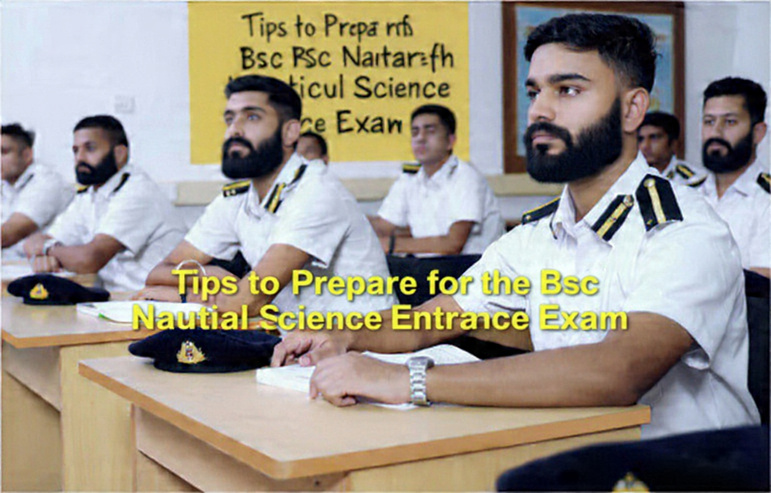
Are you preparing for the BSc Nautical Science Entrance Exam and feeling overwhelmed by the wide syllabus? Don’t worry—this is common among students. Managing subjects like Physics, Chemistry, Maths, English, GK, and Aptitude can feel challenging. That’s why following the right Tips to Prepare for the BSc Nautical Science Entrance Exam becomes essential. With the right strategy and consistent effort, you can make your preparation easier and more effective.
8 Tips to Follow
1) Understand the Exam Pattern
Why:
Knowing the exam pattern helps reduce uncertainty on exam day and makes your preparation more focused.
What to do:
Go through the official syllabus and check the types of questions (objective or descriptive), the marking system, number of questions per section, and whether negative marking applies. This helps you allocate time and effort based on the weightage of each topic.
2) Master the Basics
Why:
Your fundamental concepts in Physics, Mathematics, and Chemistry form the base for a career in Nautical Science.
What to do:
Strengthen your understanding of core concepts like mechanics, algebra, thermodynamics, calculus, and chemical reactions. Use standard textbooks, online lectures, and reference notes. Focus on problem-solving rather than memorizing formulas.
3) Practice Previous Years’ Papers
Why:
Solving past papers gives you a real feel of the exam and helps identify recurring question patterns.
What to do:
Practice previous year papers in a timed environment. After solving them, evaluate your mistakes honestly. Identify weak topics and work on them. Keep an eye on frequently repeated concepts—they are highly likely to appear again.
4) Manage Your Time Effectively
Why:
Good time management ensures that the syllabus is covered completely and revision is done properly.
What to do:
Create a weekly timetable dividing your study hours among subjects. Keep tough chapters earlier in the day and easier ones later. Include short breaks to avoid fatigue.
5) Improve General Knowledge
Why:
Entrance exams often test your awareness about national events, global developments, maritime history, and current shipping trends.
What to do:
Read newspapers, watch news summaries, and follow maritime-related articles. Learn about shipping companies, marine accidents, ports, and new technologies used in the maritime industry.
6) Strengthen Your English Skills
Why:
Strong English skills are essential both for the exam and for communication at sea, where English is the primary language.
What to do:
Work on your grammar, vocabulary, and reading comprehension. Read newspapers, short stories, or magazines daily. Practice error-spotting, passage-based questions, and sentence improvement exercises.
7) Take Mock Tests Regularly
Why:
Mock tests prepare you for the real-time pressure of the exam, boosting speed and accuracy.
What to do:
Try mock tests available online or through coaching institutes. Treat each test seriously. Review incorrect answers after every test and understand the concepts behind your mistakes.
8) Clarify Doubts & Strengthen Concepts
Why:
Understanding the logic behind every concept makes it easier to handle tricky questions.
What to do:
If you struggle with a topic, go back to the basics. Take help from teachers, classmates, or online tutorials. Join study groups or forums where students discuss doubts and share preparation tips.
BSc Nautical Science Entrance Exam Syllabus (Overview)
The syllabus is broad and covers multiple subjects. Here’s a quick breakdown:
Physics
Mechanics, Properties of Matter, Thermodynamics, Waves, Oscillations, Optics, Electromagnetism, Modern Physics.
Mathematics
Algebra, Trigonometry, Calculus, Coordinate Geometry, Probability, Statistics, Vector Algebra, Mathematical Reasoning.
Chemistry
Physical Chemistry, Organic Chemistry, Inorganic Chemistry, Environmental Chemistry.
English
Grammar, Vocabulary, Reading Comprehension, Writing Skills.
General Knowledge
Current Affairs, Maritime Awareness, History of Shipping, Logical Reasoning.
Aptitude
Numerical Ability, Mental Reasoning, Analytical Skills.
Conclusion
Preparing for the BSc Nautical Science Entrance Exam may seem challenging at first, but with the right approach and consistent effort, you can clear it successfully. Use these tips to stay organized, remain confident, and build a strong foundation in all subjects. Remember—your journey into the maritime world begins with this exam, so give it your best!
Disclaimer :The information provided in this blog is for general educational and informational purposes only. While we strive to maintain accuracy and up-to-date content, we make no guarantees regarding the completeness, reliability, or suitability of the information. Readers should not consider this article as professional advice for exam preparation or career decisions. Always verify details from official sources or consult qualified experts before taking action. The author and website are not responsible for any losses, errors, or damages arising from the use of the information presented here.