The United Nations Convention on the Law of the Sea (UNCLOS) is often called the “Constitution of the Oceans.” It is the most important international agreement that defines the rights, responsibilities, and jurisdiction of nations over the world’s oceans. Adopted in 1982 and enforced from 1994, UNCLOS governs everything from maritime boundaries and freedom of navigation to seabed resources, environmental protection, and settlement of maritime disputes.
Because almost all maritime activities follow UNCLOS rules, understanding the convention is essential for seafarers, coastal states, and maritime professionals.
🌊 Why UNCLOS Was Created
Before UNCLOS, ocean rules were unclear, and nations acted according to their own interests. This led to frequent conflicts over:
- Fishing areas
- Offshore oil and gas
- Territorial waters
- Navigation routes
- Pollution control
UNCLOS brought a single global framework, ensuring fairness, safety, and peaceful use of the oceans.
⚓ Main Maritime Zones Under UNCLOS
UNCLOS divides ocean space into different zones, each with specific rights and restrictions:
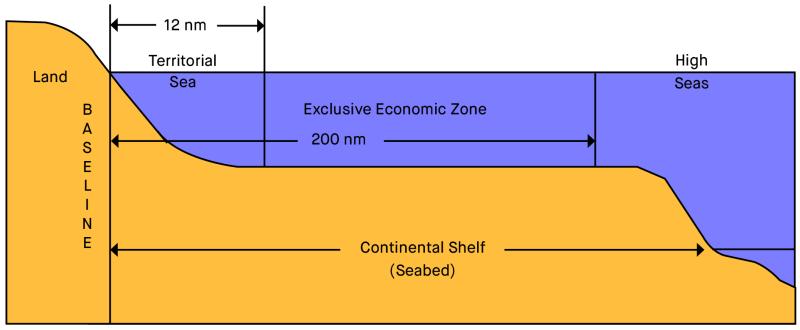
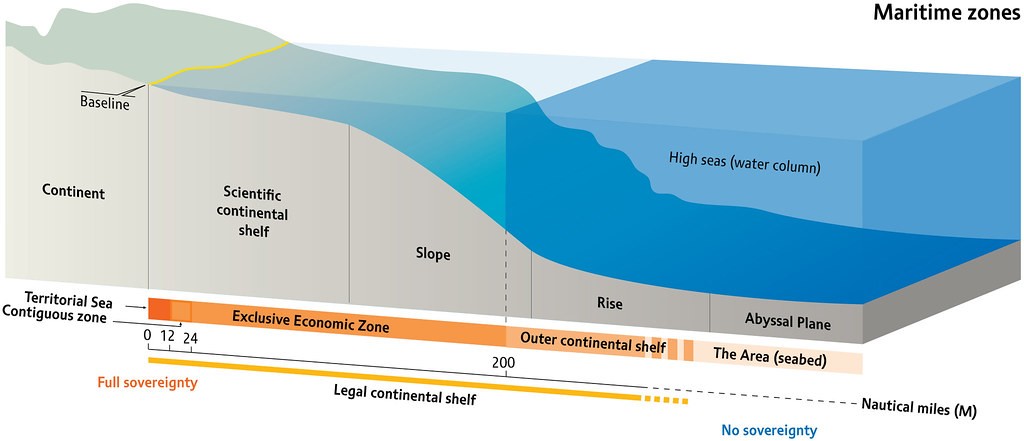
1. Territorial Sea – Up to 12 Nautical Miles
- The coastal state has full sovereignty, just like its land territory.
- Foreign ships enjoy innocent passage, as long as they do not threaten security.
2. Contiguous Zone – 12 to 24 Nautical Miles
Coastal states can enforce laws related to:
- Customs
- Immigration
- Sanitation
- Security
This helps prevent smuggling, illegal immigration, and health violations.
3. Exclusive Economic Zone (EEZ) – Up to 200 NM
One of UNCLOS’s most important contributions.
Coastal states have exclusive rights to:
- Fishing
- Mineral exploration
- Offshore energy (oil, gas, wind)
- Marine research
However, other states enjoy freedom of navigation and overflight.
4. Continental Shelf – Up to 350 NM (in some cases)
Coastal states can explore and exploit seabed minerals such as:
- Oil and gas
- Manganese nodules
- Polymetallic deposits
But the water above remains high seas for international use.
5. High Seas – Beyond National Jurisdiction
- Open to all states.
- No country can claim ownership.
- Freedom of navigation, fishing, and scientific research.
However, activities must be peaceful and environmentally responsible.
⚖️ Key Principles and Rights Under UNCLOS
UNCLOS establishes several important rules:
1. Freedom of Navigation
Ships of all nations can sail freely without interference.
2. Marine Environmental Protection
Countries must prevent:
- Marine pollution
- Oil spills
- Harmful dumping
- Destruction of marine ecosystems
3. Preservation of Marine Life
UNCLOS promotes sustainable fishing and biodiversity conservation.
4. Deep Seabed Mining Regulations
The International Seabed Authority (ISA) controls seabed mining in international waters.
5. Peaceful Settlement of Disputes
UNCLOS provides mechanisms such as:
- International Tribunal for the Law of the Sea (ITLOS)
- International Court of Justice (ICJ)
- Arbitration tribunals
These systems ensure peaceful resolution of maritime conflicts.
🇮🇳 India and UNCLOS
India is a strong supporter of UNCLOS. The country uses UNCLOS guidelines for:
- Maritime boundaries with neighbors
- EEZ exploitation
- Coastal security
- Port management
- Maritime law enforcement
UNCLOS also influences Indian laws like the Maritime Zones Act and the Merchant Shipping Act.
🌍 Importance of UNCLOS in Today’s World
UNCLOS remains crucial because:
- Global trade depends on safe navigation routes
- Offshore energy production is increasing
- Marine pollution is rising
- Fishing disputes are common
- Countries are expanding their maritime claims
UNCLOS provides the stability needed for peaceful and sustainable use of the oceans.
Conclusion
UNCLOS is the backbone of modern maritime law. It protects the rights of all nations, ensures environmental preservation, and promotes peaceful cooperation on the oceans. For seafarers, maritime students, and coastal authorities, understanding UNCLOS is essential because it defines how oceans are used, protected, and managed globally.
Disclaimer:This blog provides general information for educational and maritime awareness purposes. It should not be treated as legal advice or an official interpretation of UNCLOS. For any legal, operational, or regulatory decisions, users must refer to authorized maritime authorities, government publications, and certified legal experts.