A Gear Pump Onboard ship is one of the most dependable positive displacement pumps used in marine machinery. It moves liquid by trapping it between rotating gears and the pump casing. Because it delivers a steady and controlled flow, engineers rely on it for fuel, lube oil, and hydraulic systems. Since ships operate continuously, the gear pump becomes essential for many daily machinery operations
What Is a Gear Pump?
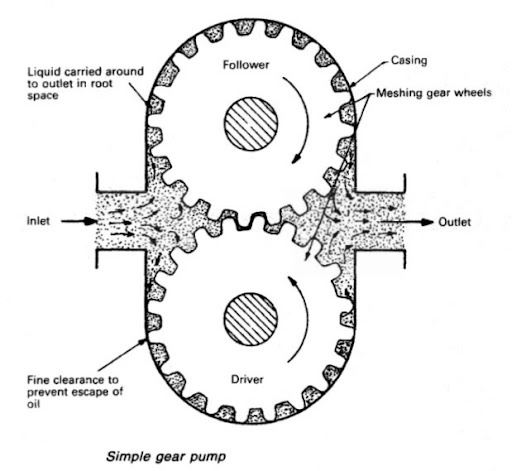
A gear pump uses two rotating gears to transfer liquid from the suction side to the discharge side. As the gears rotate, they create small pockets that carry the liquid forward. This simple design makes the pump strong, compact, and easy to maintain.
Gear pumps work best with clean, low-viscosity liquids such as fuel oil, diesel oil, and lube oil.
How a Gear Pump Works – Simple Explanation
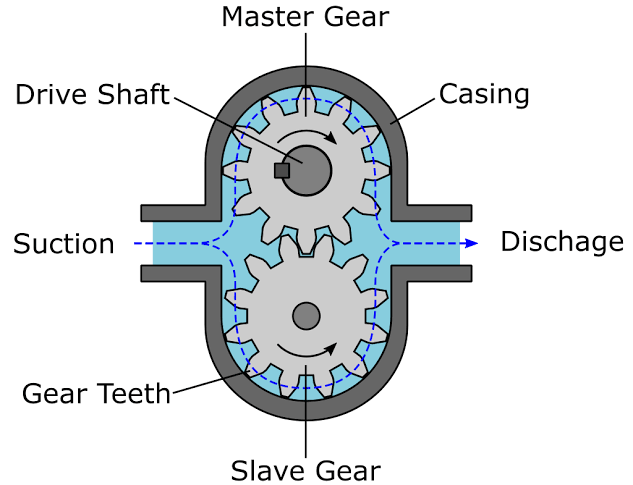
The working principle is easy to understand:
- Two gears rotate inside a tight casing.
- As the gears turn, liquid gets trapped between the teeth and the pump housing.
- The rotating movement pushes the liquid towards the discharge side.
- The teeth mesh again, forcing the liquid out under pressure.
Because the pump moves the same volume with every rotation, the flow remains steady and predictable.
Types of Gear Pumps Used Onboard Ships
There are two main types of gear pumps:
1. External Gear Pump
- Uses two identical gears on separate shafts.
- Creates high pressure and smooth flow.
- Commonly used in lube oil systems and fuel oil transfer.
2. Internal Gear Pump
- One large gear houses a smaller inner gear.
- Operates quietly with low pulsation.
- Used in hydraulic systems and fuel supply systems.
Both designs perform reliably, but the selection depends on pressure needs, temperature, and the type of liquid.
Where Gear Pumps Are Used Onboard
Gear pumps appear in many essential ship systems. They are commonly used in:
- Lube oil transfer and circulation
- Fuel oil transfer and supply
- Diesel oil systems
- Hydraulic power units
- Boiler fuel systems
- Steering gear hydraulic lines
- Auxiliary engine fuel circuits
Because these systems require consistent pressure and accurate flow, the gear pump becomes the preferred choice.
Advantages of Gear Pumps
Gear pumps offer several benefits that make them ideal for marine use:
- Reliable and simple design with few moving parts
- Steady and constant flow, even at high pressure
- Self-priming capability
- Compact size, fitting easily inside machinery spaces
- Low maintenance requirements
- Good performance with clean liquids
These strengths make gear pumps a long-lasting solution for daily engine-room operations.
Maintenance of Gear Pumps
Proper care helps prevent failures and ensures smooth operation. Engineers commonly:
- Check gear wear and casing clearance
- Monitor pump noise and vibration
- Inspect seals for leaks
- Keep filters and strainers clean
- Ensure correct alignment between the motor and pump
- Replace worn gears before they cause metal contamination
Routine checks allow the pump to operate safely and deliver consistent performance.
Conclusion
Gear pumps are vital components in ship machinery due to their reliability, simple design, and ability to deliver precise flow. Whether used for fuel oil, lube oil, or hydraulic systems, they support many critical operations onboard. With proper maintenance and correct handling, gear pumps continue to serve ships efficiently for years.
Disclaimer:This blog is for educational and informational use only. Machinery procedures may vary by vessel type, equipment maker, classification society, and company SMS. Always follow official manuals, SOLAS requirements, and safety guidelines when operating or maintaining pumps onboard.