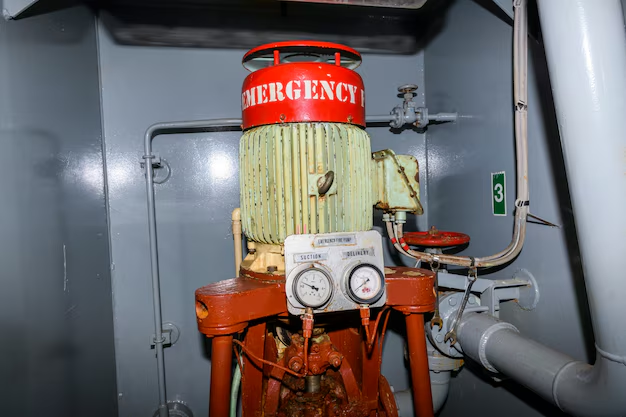
The Emergency Fire Pump onboard ship plays a life-saving role when the main fire pump fails during an emergency. According to the FSS (Fire Safety Systems) Code and SOLAS requirements, every ship must have an independent emergency fire pump to ensure continuous water supply for firefighting. This pump becomes the primary backup to protect lives, ship structure, and cargo from fire hazards.
✅ Purpose of the Emergency Fire Pump
The system ensures:
- Water supply for firefighting when the main system is lost
- Safety during flooding or engine room casualties
- Compliance with SOLAS Chapter II-2 regulations
- Crew confidence in tackling emergencies without delay
The emergency pump remains a vital part of the ship’s firefighting arrangement.
✅ Location Requirements (as per FSS Code)
To avoid failure due to a single fire incident:
- The emergency fire pump must be located outside the main machinery space
- Usually placed in the forecastle deck or a dedicated emergency pump room
- The compartment must have:
- Proper ventilation
- Fire-resistant boundaries
- Independent power and suction arrangements
This separation ensures the pump remains operational even if fire affects the engine room.
✅ Power Source Requirements
The emergency fire pump must have:
- Independent power from the emergency generator
- Automatic starting arrangement (where applicable)
- Capability to run without manual fuel preparation
Additionally, the power cables must be fire-protected or routed outside hazardous areas as much as possible.
✅ Performance Requirements
As per FSS Code:
- Pump must deliver at least 40% of the main fire pump capacity
- Minimum two hydrants should be fed effectively with good pressure
- It must develop required fire main pressure while operating one fire hose
- Pump must start quickly and remain reliable throughout the operation
Good performance ensures effective firefighting even during major system failures.
✅ Suction and Sea Connection
The suction line must:
- Take suction directly from the sea
- Have non-return valves and strainers
- Stay operational even when the ship is trimmed or heeled
Emergency sea suction ensures uninterrupted flow anytime.
✅ Accessibility and Safety Features
- Clearly marked access route
- Emergency lighting available in the pump area
- Quick access to controls and valves
- Fire protection measures around equipment
The crew must reach and start the pump easily without risk.
✅ Routine Testing & Maintenance
| Maintenance Activity | Frequency |
|---|---|
| Running test | Weekly / Monthly |
| Valve operation check | Monthly |
| Pressure performance test | Fire drills |
| Seawater suction inspection | Regular |
| Emergency generator functionality check | Weekly |
Proper maintenance ensures the pump runs instantly during real emergencies.
✅ Survey Requirements
Surveyors check the system during:
- Port State Control (PSC)
- Flag State inspections
- Annual & Renewal surveys
They inspect records, test pump performance, check suction arrangements, and verify valve conditions.
✅ Conclusion
The Emergency Fire Pump is a critical safety backup onboard every ship. It takes over the firefighting water supply when the main system fails due to fire or machinery damage. Therefore, correct installation, location, performance, and continuous maintenance as per the FSS Code remain essential. A fully functional emergency fire pump can prevent small fires from turning into catastrophic events at sea.